
Inside Asia's Baggage Revolution: How Japan, Singapore, and Regional Hubs Are Tackling Missing Luggage

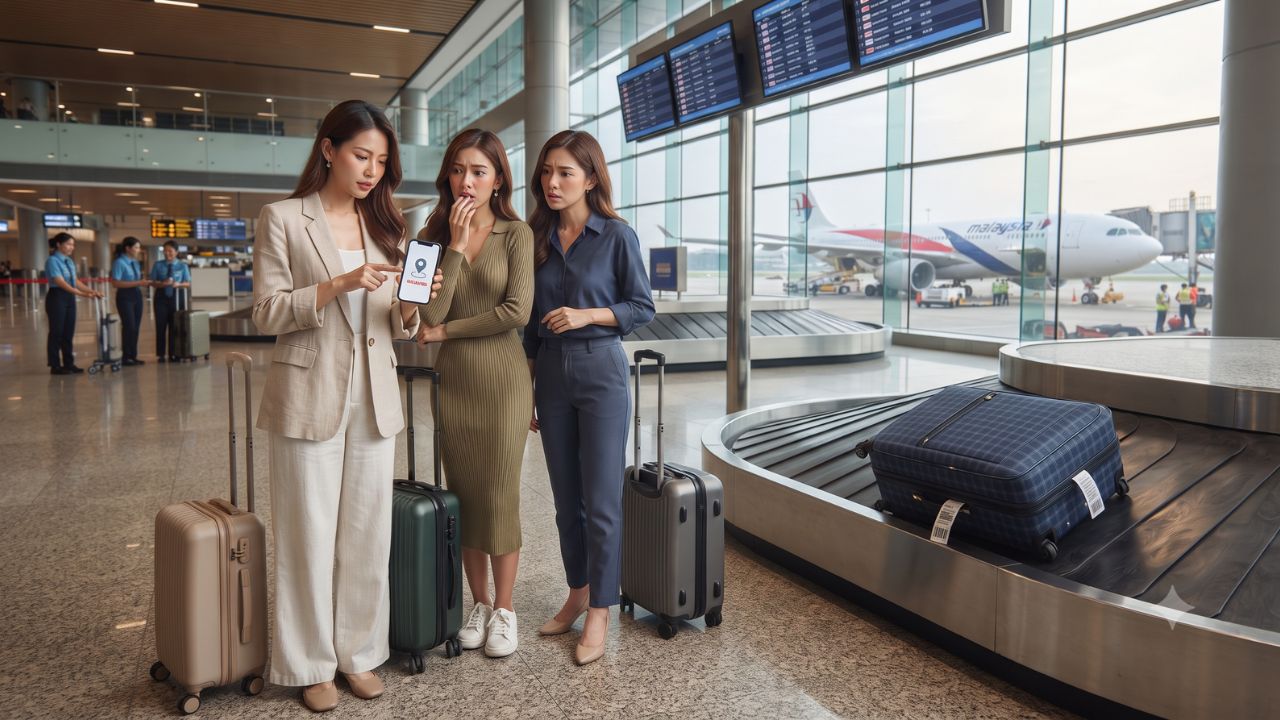
At Bangkok Suvarnabhumi and eight other Thai hubs, automated 'Auto Reflight' algorithms now rebook misdirected luggage onto new flights in just one second per bag—down from a manual three-minute administrative chore. Across the Asia-Pacific region, major aviation powerhouses—Japan, Singapore, South Korea, Malaysia, and Thailand—are transforming into real-world laboratories testing how consumer Bluetooth trackers, airport app notifications, and barcode architectures interact when flights get delayed or luggage misses an international connection.
According to SITA’s 2026 Baggage IT Insights report, global airlines mishandled 24 million bags out of five billion passengers flown in 2025. While that represents a 23 percent drop in the global mishandling rate to 4.9 bags per 1,000 travelers, transfer connections remain the primary pain point, responsible for 39 percent of all baggage disruptions worldwide (down slightly from 41 percent in 2024). In the United States alone, airlines mishandled 1.1 million of 226 million checked bags in the first half of 2026, according to reporting published on October 9, 2026.
How Five Asian Aviation Gateways Handle Baggage Tracing
Rather than operating on uniform global systems, major Asian transit hubs take distinctly different operational approaches to luggage recovery, digital transparency, and passenger updates.
| Asian Aviation Market | Flagship Hub & Carrier Baseline | Key Baggage Tracking Innovation | Primary Policy or Procedure for Travelers |
|---|---|---|---|
| Singapore | Changi Airport (SIN) | Changi App Baggage Tracker with first-to-last bag delivery indicators | Displays check-in, aircraft loading, and belt delivery for participating airlines |
| Japan | Tokyo Haneda & Narita (ANA / JAL) | Dedicated international digital tracing with structured search cycles | Structured 30–45 day investigations, extendable to 100 days upon request (JAL) |
| South Korea | Incheon International Airport (ICN) | High-speed automated sorting and self-service bag drops | Interline claims handled strictly by the operating carrier of the final flight leg |
| Thailand | Bangkok Suvarnabhumi (BKK) / Thai Airways | Auto Reflight automated rebooking across 9 domestic & international hubs | Slashes baggage rerouting processing from 3 minutes to 1 second per suitcase |
| Malaysia | Kuala Lumpur International (KUL) / Malaysia Airlines | Multi-terminal interline baggage tracing and transfer coordination | Mandatory Property Irregularity Report filing at terminal baggage desks |
What Makes Each Asian Aviation Hub Different
Navigating transit through Asia’s mega-hubs requires an understanding of how distinct airports divide responsibility between civil aviation authorities, local ground handlers, and airline alliances:
- Singapore Changi’s Airport-Led Transparency: At Changi, the airport authority integrates its own conveyor sensors with participating airline databases. Passengers using the iChangi app receive live event notifications from the moment a bag is scanned at the check-in counter, loaded into the aircraft hold, or placed onto the arrival carousel, complete with time stamps for the first and last bag delivered to the belt.
- Japan’s Meticulous Tracing Protocols: Both All Nippon Airways (ANA) and Japan Airlines (JAL) maintain dedicated digital tracing portals. Once an arriving passenger receives an incident reference file, they can monitor the investigation online without queuing at airport desks. JAL enforces a 30 to 45-day investigation window, with travelers able to request an extended search period of up to 100 days.
- Thailand’s Cloud Reflight Engine: Thai Airways has deployed automated baggage reflight software across nine airports. When a passenger’s tight connection causes their suitcase to miss an outbound flight, the system generates replacement bag tags and schedules the luggage onto the next available departure within a single second.
- South Korea’s Advanced Automated Sorting: Incheon utilizes extensive automated sorting infrastructure, though carrier accountability remains strictly segmented. For codeshare and alliance itineraries, passengers must register lost baggage claims directly with the carrier operating the final flight segment.
The Technological Divide: Barcodes, RFID, and Bluetooth Beacons
Under the International Air Transport Association (IATA) Resolution 753 mandate, airlines must verify luggage custody at four mandatory milestones: passenger check-in, aircraft loading, flight transfers, and final carousel return. In an IATA baseline survey of 155 airlines and 94 airports, 44 percent of airlines had fully deployed the standard, with 41 percent progressing toward completion, while 75 percent of airports maintained supporting infrastructure.
| Baggage Tracking System | Core Technology & Infrastructure | Industry Adoption Rate | Practical Limitation for Travelers |
|---|---|---|---|
| Optical Barcode Scanning | 10-digit printed paper labels scanned by line-of-sight laser readers | 73% of Surveyed Airports (IATA) | Torn or twisted labels cause missed checkpoint scans |
| RFID Radio Tracking | Microchip embedded inside baggage tag read by radio antennae | 27% Overall (54% at Mega Airports) | Requires specialized sorting antennas and tag printers |
| Consumer Bluetooth Trackers | Apple AirTag / Google Find Hub crowd-sourced device networks | Worldwide Consumer Adoption | SITA WorldTracer link cuts permanent loss by 90% and speeds recovery by 26% |
While SITA has connected Apple Find My and Google Find Hub location sharing into its WorldTracer platform across 2,800 airports, consumer tracking apps do not grant passengers access to restricted customs zones or ramp areas. Instead, they serve as vital corroborating evidence when presenting claims to airline baggage agents.
Visitor Insider Tips: Transiting Asia's Mega-Hubs in 2026
- Mind the Final Carrier Rule on Connecting Itineraries: If your multi-airline journey across Asia is disrupted (for example, flying from Tokyo to Kuala Lumpur via Singapore on separate partner airlines), always file your missing luggage claim with the carrier that operated your final flight leg into your destination.
- Leverage Airport-Specific Apps at Singapore Changi: If you are flying on a participating airline through Singapore, download the official Changi app before departure and link your boarding pass to activate real-time belt arrival alerts.
- Allow a Minimum 90-Minute Transfer Buffer: With flight transfers accounting for 39 percent of all mishandled baggage globally, avoid tight 45-minute transfers at sprawling multi-terminal gateways like Tokyo Narita, Incheon, or Suvarnabhumi.
- Preserve Physical Paper Claim Checks: Keep the printed adhesive baggage receipts issued at check-in securely affixed to your passport cover or boarding pass until your suitcases are physically retrieved from the belt.
Cultural and Environmental Context of Airport Logistics
The transition toward automated sorting, RFID tags, and paperless tracking systems across Asian gateways reflects broader environmental sustainability mandates. Traditional paper baggage tags and single-use plastic adhesive strips generate tons of landfill waste every year across high-traffic airports.
Moreover, reducing mishandled luggage directly curtails secondary carbon emissions. When suitcases miss connecting flights, airlines must transport them via secondary cargo flights, regional rail networks, or expedited road delivery vans to reach passengers at remote resort islands or provincial towns. Streamlining transfer logistics ensures that regional tourism growth across Southeast and East Asia remains resource-efficient.
FAQ: Luggage Tracking Across Asian Airports 2026
What is the global airline luggage mishandling rate?
According to SITA’s 2026 report, the global mishandling rate dropped 23 percent to 4.9 bags per 1,000 passengers in 2025 across five billion air travelers.
Which Asian airport offers real-time luggage delivery updates in its app?
Singapore Changi Airport provides real-time bag tracking through the Changi app for participating airlines, displaying baggage status from drop-off to the arrival carousel.
How long does Japan Airlines search for missing international luggage?
Japan Airlines conducts a standard 30 to 45-day tracing investigation, which passengers can request to extend up to 100 days.
Which airline handles my baggage claim on a multi-carrier codeshare ticket?
Under international aviation standards, the airline operating your final flight segment is responsible for taking your missing luggage report and coordinating recovery.
Digital baggage transparency across Asian hubs is bridging the gap between airline operations and traveler peace of mind.
Related Travel Guides
Disclaimer
This article is for informational and educational purposes only. It does not constitute legal, financial, or professional advice. While we strive to provide accurate and up-to-date information, travel policies, regulations, and conditions change rapidly. Always verify information with official sources before making travel decisions. Nomad Lawyer makes no representations about the accuracy, reliability, completeness, or suitability of the information provided. Readers should consult qualified professionals for advice specific to their circumstances. The views expressed in this article are those of the author and do not necessarily reflect the views of Nomad Lawyer.
Raushan Kumar
Founder & Lead Developer
Full-stack developer with 11+ years of experience and a passionate traveller. Raushan built Nomad Lawyer from the ground up with a vision to create the best travel and law experience on the web.
Learn more about our team →