
Asia Aviation Disruption: Over 4,400 Delays and 270 Cancellations Shake Regional Hubs

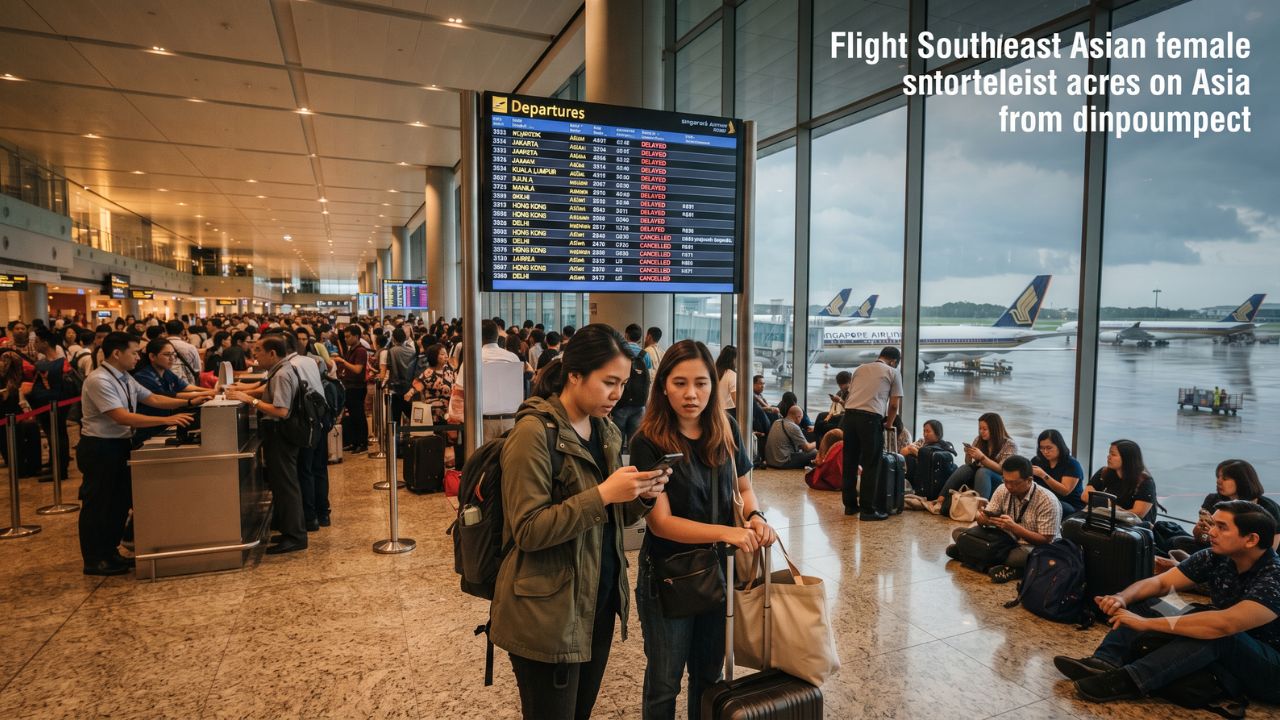
More than 4,400 flights ground to a halt or suffered multi-hour setbacks across Asian and Middle Eastern air hubs in a single 24-hour cycle, proving that even mega-airports operating at peak efficiency remain vulnerable when seasonal weather and geopolitical airspace detours collide. A cascade of 4,425 delays and 274 cancellations swept through transit hubs from Southeast Asia to the Arabian Peninsula, marking an escalation from the previous day's tally of 3,115 delays and 235 cancellations.
Aviation operational logs recorded on 6 October 2026 at 4:09 pm ET (corresponding to 7 October at 3:09 am GMT+7 in Hanoi) reveal a compounding bottleneck. Heavy convective thunderstorms and monsoon squalls across Southeast Asia intersected with heavy autumn holiday travel volumes in East Asia, while Middle Eastern air corridors absorbed severe pressure from security-related airspace restrictions and lengthened flight paths.
Gridlock Across Major Transit Gateways
The heaviest operational strain centered on Bangkok's Suvarnabhumi International Airport (BKK), which logged the highest absolute delay count across Asia with 350 delayed flights and two cancellations. Thailand's primary international gateway, tracked closely by the Tourism Authority of Thailand, struggled to maintain turnaround slots as seasonal squalls forced ground holds and extended holding patterns over the Gulf of Thailand.
In Saudi Arabia, Riyadh's King Khalid International Airport (RUH) followed immediately behind with 333 flight delays and 23 cancellations, showing a cancellation rate of 2% on origins and 3% on destinations. Combined with Jeddah's King Abdulaziz International Airport (JED)—which recorded 145 delays and 11 cancellations—the Kingdom faced severe flight disruption across domestic and intercontinental sectors.
East Asian arterial hubs saw massive schedule drift despite low cancellation rates. Taiwan Taoyuan International Airport (TPE) logged 309 delays against two cancellations, while Shanghai Pudong International Airport (PVG) handled 292 delays and one cancellation. In Southeast Asia, Jakarta's Soekarno-Hatta International Airport (CGK) recorded 236 delayed flights alongside 22 cancellations, while Singapore Changi Airport (SIN) recorded 203 delays and two cancellations as inbound aircraft arrived off-schedule from surrounding sectors.
The highest absolute cancellation volume occurred at Dubai International Airport (DXB), where 26 flights were scrubbed alongside 183 delays. Tel Aviv's Ben Gurion International Airport (TLV) also registered 183 delays and three cancellations, reflecting ongoing rerouting requirements and air traffic slot restrictions across the Levant and Gulf regions.
| Airport Gateway | IATA Code | Flight Delays | Flight Cancellations | Primary Operational Stress Factor |
|---|---|---|---|---|
| Bangkok Suvarnabhumi | BKK | 350 | 2 | Severe monsoon squalls and runway throughput limits |
| Riyadh King Khalid | RUH | 333 | 23 | Regional network re-timing and slot congestion |
| Taiwan Taoyuan | TPE | 309 | 2 | Heavy seasonal passenger demand and flow management |
| Shanghai Pudong | PVG | 292 | 1 | Terminal turnaround holds and East Asian corridor pacing |
| Jakarta Soekarno-Hatta | CGK | 236 | 22 | Heavy rain bands, aircraft rotation, and crew duty limits |
| Singapore Changi | SIN | 203 | 2 | Downstream rotation delays from regional feeder airports |
| Guangzhou Baiyun | CAN | 193 | 1 | Southern China airspace flow control |
| Dubai International | DXB | 183 | 26 | Extended regional flight paths and aircraft repositioning |
| Tel Aviv Ben Gurion | TLV | 183 | 3 | Airspace navigation restrictions and slot holds |
| Hong Kong International | HKG | 169 | 2 | Pearl River Delta airway sequencing delays |
| Delhi Indira Gandhi | DEL | 157 | 9 | Northern India slot holds and inbound aircraft delays |
| Istanbul Airport | IST | 150 | — | Cross-continental connecting schedule bottlenecks |
| Ho Chi Minh Tan Son Nhat | SGN | 146 | 13 | Tropical downpours and apron parking saturation |
| Jeddah King Abdulaziz | JED | 145 | 11 | Feeder connection breaks and regional flight re-timing |
| Manila Ninoy Aquino | MNL | 143 | 1 | Terminal ramp congestion and monsoon wind shifts |
| Tokyo Haneda | HND | 135 | 2 | High-density domestic gate rotation backups |
| Chengdu Tianfu | TFU | 135 | 7 | Western China regional airway routing adjustments |
| Hanoi Noi Bai | HAN | 124 | 5 | Wet-weather approach spacing and turnaround delays |
| Kunming Changshui | KMG | 107 | 3 | High-altitude weather holds and mountain corridor pacing |
| Mumbai Chhatrapati Shivaji | BOM | 102 | 5 | Runway single-operation limits and taxiway congestion |
What Makes Regional Disruptions Compound So Fast
Aviation networks across the Asia-Pacific and Middle East operate on tight rotational loops where a thirty-minute ground hold in Ho Chi Minh City or Guangzhou ripples through three subsequent flight legs by nightfall. The current disruption reflects a structural convergence: severe weather along the tropical Intertropical Convergence Zone (ITCZ) coincided with peak autumn festival holiday movements in Greater China and Southeast Asia.
Compounding this is the ongoing geographic rerouting across Middle Eastern airspace. Long-haul carriers operating between Europe, the Gulf, and South Asia must navigate restricted flight paths, burning extra fuel and exhausting crew flight duty period (FDP) limits. When long-haul widebodies arrive two hours late into hubs like Dubai, Doha, or Riyadh, connecting narrowbody flights either depart empty or wait, missing their allocated arrival slots at secondary airports.
Smaller regional outposts experienced the highest proportional cancellations. In Saudi Arabia, Najran Domestic Airport (EAM) saw 100% of origin and destination flights cancelled, Gizan Regional Airport (GIZ) suffered a 100% destination cancellation rate, and Abha Regional Airport (AHB) recorded 19 cancellations and 21 delays (representing a 25% origin cancellation rate). In Bhutan, Paro Airport (PBH)—governed by strict visual meteorological flight rules verified through the International Air Transport Association—recorded a 25% origin and 16% destination cancellation rate. In India, regional movements at Navi Mumbai (NMI) saw 14 cancellations and 20 delays, while Pune (PNQ) recorded 34 delays and four cancellations, and Ahmedabad (AMD) logged 20 delays and four cancellations.
Airline-specific data underscores the operational divide. IndiGo recorded the highest absolute delay volume of any individual airline across the continent, logging 277 delayed services (12% of its operations) alongside eight cancellations. Saudia followed with 184 delays (34%) and 23 cancellations (4%). Batik Air matched the 23-cancellation mark, reflecting a 7% cancellation rate and 77 delays (25%). Akasa Air posted 19 cancellations (7%) and 18 delays (7%), while Air China recorded 106 delays (5%) and 13 cancellations. Vietnam Airlines logged 52 delays (14%) and 13 cancellations (3%), and Gulf Air registered 15 delays (10%) and 13 cancellations (9%). Among regional operators, Israir experienced delays on 43% of its flights (35 delays), Bangkok Airways saw a 40% delay rate (49 delays), and flynas reported an 89-flight delay backlog (34%).
Visitor Insider Tips
Navigating high-density Asian transit hubs during widespread flight irregularities requires defensive booking tactics and proactive ground management:
- Buffer Connecting Windows: Never book tight 60-to-75-minute connections through mega-hubs like Bangkok Suvarnabhumi, Dubai, or Singapore Changi during monsoon transition months. Opt for minimum 3-hour layovers to safeguard onward legs.
- Track Inbound Aircraft Tail Numbers: Do not rely solely on departure board status. Use airline mobile applications or live radar tracking to monitor where your incoming plane is originating. If the incoming tail is stuck in a holding pattern two sectors prior, your gate departure will slip.
- Carry Essential Medication and Power in Cabin Bags: With 274 cancellations stranding checked luggage in automated baggage handling basements across hubs like Changi and Pudong, keep 48 hours of medications, universal adapters, and change of clothing in your carry-on.
- Leverage Airline Duty of Care Regulations: Under consumer protection mandates across jurisdictions like Singapore and Saudi Arabia, carriers must provide meal vouchers after two to three hours of delay and hotel accommodation for involuntary overnight stranding. Seek out transit customer service desks immediately before lounge queues swell.
Cultural and Environmental Context
The expanding frequency of weather-induced flight delays across Asia highlights the acute environmental pressures facing commercial aviation infrastructure. Low-lying coastal and delta-based airports—such as Bangkok Suvarnabhumi, built on reclaimed marshland, and Jakarta Soekarno-Hatta—face rising sea levels and intense precipitation cycles that test drainage pumps and runway friction thresholds.
Simultaneously, mass transit hubs serve as vital economic lifelines for cultural tourism in historic centers like Chiang Mai, Luang Prabang, and Yogyakarta. When regional feeder flights from Bangkok, Singapore, and Kuala Lumpur face rolling cancellations, local hospitality operators, heritage guides, and family-run guesthouses experience immediate revenue loss. Balancing high-frequency flight schedules with resilient, climate-adapted airport engineering has become an urgent public priority across ASEAN transport ministries.
FAQ: Visiting Asia During Flight Disruptions 2026
What should I do if my connecting flight in Bangkok or Singapore is delayed?
Monitor your airline's mobile app immediately to check if your onward connection is protected. If you miss a connection due to inbound delay, visit the transfer desk for automatic rebooking and meal or hotel vouchers.
Are budget airlines in Asia obligated to provide hotel rooms during weather cancellations?
Regulations vary by jurisdiction. In Southeast Asia, force majeure weather cancellations often exempt low-cost carriers from complimentary lodging, though full-service airlines usually assist with discounted transit hotel rates.
How can I avoid baggage loss when flights face widespread cancellations?
Carry high-value electronics, documents, and essential supplies in your overhead luggage. Avoid checking baggage on multi-carrier itineraries involving separate ticket bookings across different airline alliances.
When skies turn unpredictable across Asia's busiest transit corridors, the most valuable asset in your carry-on is a flexible itinerary paired with a verified transit backup plan.
Related Travel Guides
Disclaimer
This article is for informational and educational purposes only. It does not constitute legal, financial, or professional advice. While we strive to provide accurate and up-to-date information, travel policies, regulations, and conditions change rapidly. Always verify information with official sources before making travel decisions. Nomad Lawyer makes no representations about the accuracy, reliability, completeness, or suitability of the information provided. Readers should consult qualified professionals for advice specific to their circumstances. The views expressed in this article are those of the author and do not necessarily reflect the views of Nomad Lawyer.
Raushan Kumar
Founder & Lead Developer
Full-stack developer with 11+ years of experience and a passionate traveller. Raushan built Nomad Lawyer from the ground up with a vision to create the best travel and law experience on the web.
Learn more about our team →