
ANA Aircraft Maintenance Salaries Rise in 2026 as Japan Aviation Workforce Demand Hits New Peaks
All Nippon Airways (ANA) is seeing a surge in demand for aircraft maintenance experts, with experienced engineers securing salaries up to ¥11 million as Japan's aviation sector expands.

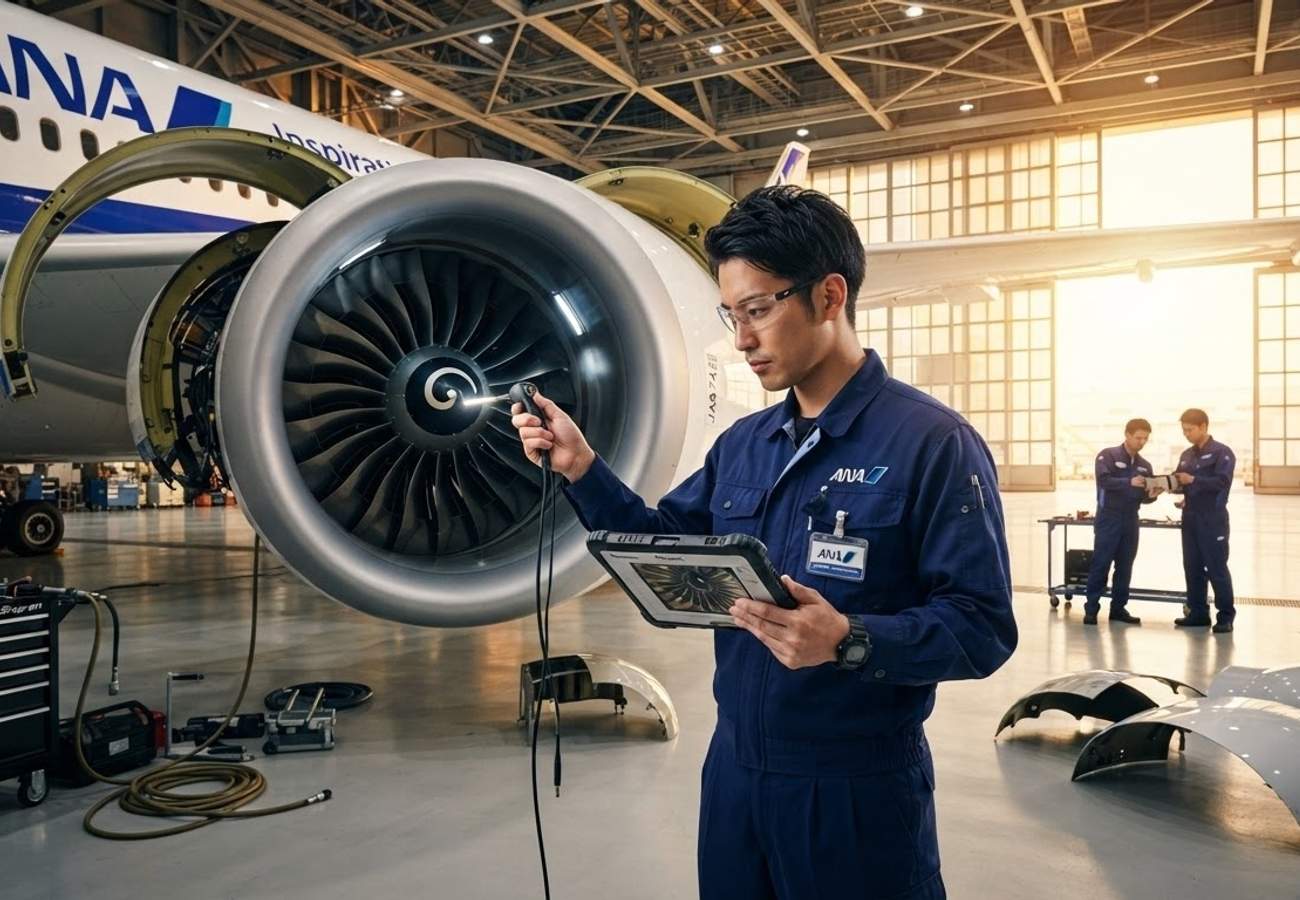
Image generated by AI
Japan's aviation sector is experiencing a significant workforce expansion in 2026, with All Nippon Airways (ANA) maintenance specialists securing higher compensation packages and accelerated career trajectories. As the demand for technical expertise grows alongside the adoption of next-generation aircraft, skilled engineers are now commanding premium salaries to ensure fleet reliability and operational safety.
The current landscape of Japanese aviation is defined by a critical need for highly trained technicians capable of managing increasingly complex aircraft systems. For ANA, the stability of its global network relies entirely on a workforce that can balance rigorous safety protocols with the efficiency required for high-frequency flight schedules. This reliance has shifted the leverage toward skilled labor, resulting in a measurable increase in earning potential for those with specialized certifications.
Compensation Trends for ANA Aircraft Maintenance Engineers
In the current 2026 market, financial rewards for aircraft maintenance professionals in Japan are closely tied to their level of certification and technical authority. Entry-level engineers who have completed their degrees typically enter the workforce with annual salaries ranging from ¥6 million to ¥9 million.
As these professionals accumulate flight-hour experience and take on greater responsibility, their earning potential climbs significantly. Industry data indicates that experienced specialists, particularly those holding advanced certifications and overseeing critical maintenance tasks, can earn between ¥8.5 million and ¥11 million per year.
These figures reflect more than just a cost-of-living adjustment; they represent the high stakes associated with aircraft safety. Engineers who possess the legal authority to sign off on maintenance work—effectively certifying an aircraft as airworthy—are the most highly compensated due to the immense professional liability and expertise required for such roles.
Technical Specializations Driving Salary Growth
The ability to command a top-tier salary at ANA is often dependent on a professional's specific area of expertise. Generalist knowledge is sufficient for entry, but "Information Gain" in the form of niche certifications is what drives vertical movement in pay scales.
Professionals who specialize in the following domains are currently in highest demand:
- Avionics Technology: Managing the complex electronic systems and flight decks of modern jets.
- Power Systems and Engines: Specialized knowledge of fuel-efficient, next-generation propulsion.
- Aircraft Structures: Expertise in composite materials and airframe integrity.
- Heavy Maintenance Operations: Managing "C" and "D" checks which require deep systemic overhauls.
- Safety Systems: Ensuring redundant safety mechanisms meet international regulatory standards.
By mastering these specific pillars, engineers move from routine maintenance roles into senior technical positions, where their value to the airline is maximized.
Career Progression for Maintenance Technicians
While engineers handle the high-level certification and planning, aircraft maintenance technicians provide the essential manual and technical execution of repairs. This role serves as a primary pipeline for future engineers.
The financial trajectory for technicians follows a clear, tiered structure based on tenure and skill acquisition:
| Position Level | Annual Salary Range (JPY) | Key Responsibilities |
|---|---|---|
| Entry-Level Technician | ¥3.5 million – ¥5 million | Routine inspections, component replacement |
| Experienced Technician | ¥5 million – ¥7 million | Complex repairs, system troubleshooting |
| Senior Technician | ¥7 million – ¥9 million | Team leadership, specialist technical tasks |
For many technicians, the goal is to leverage this experience into a certified engineering role, which unlocks the higher ¥11 million ceiling.
Technological Shifts and Future Workforce Demands
The aviation industry is currently undergoing a digital transformation that is redefining the "skilled worker" profile. The transition toward sustainable aviation fuels (SAF) and more autonomous flight systems means that mechanical skill alone is no longer sufficient.
Future-proofing a career at ANA now requires a hybrid skill set. The next generation of maintenance professionals must be proficient in computer-based diagnostics and digital aircraft health monitoring systems. These tools allow for "predictive maintenance," where parts are replaced based on data trends before a failure occurs, rather than on a fixed calendar schedule.
Because these safety-critical decisions require human judgment and legal certification, this sector remains largely insulated from the automation trends affecting other industries. The human element remains the final authority in aviation safety.
Comprehensive Benefits Beyond Base Pay
Employment within a major carrier like ANA extends beyond the base salary. The total compensation package for maintenance staff is designed to support a demanding lifestyle that often involves shift work and high-pressure environments.
Standard benefits for these roles typically include:
- Performance Incentives: Annual bonuses based on operational safety and efficiency.
- Operational Allowances: Additional pay for overtime and irregular shift patterns.
- Professional Development: Fully funded training programs to keep pace with evolving safety regulations.
- Long-term Security: Comprehensive retirement benefits and employee welfare support.
Why This Matters: The Impact on Global Travel
For the average traveler, the rise in salaries and demand for ANA maintenance experts is a positive indicator of systemic safety. When airlines invest heavily in their technical workforce, it directly correlates to reduced mechanical delays and a higher standard of fleet reliability.
From a logistical standpoint, the trend suggests that Japan is positioning itself as a hub for aviation technical excellence. By offering competitive salaries up to ¥11 million, ANA is not just filling jobs; it is attracting the top engineering talent globally. This ensures that as aircraft become more complex, the humans maintaining them are equally sophisticated in their approach. For the passenger, this means a lower probability of technical cancellations and a higher confidence in the airworthiness of the vessel.
The ascent of technical salaries in Japan signals a new era where the "invisible" workforce of the hangar is as valued as the crew in the cockpit.
Related Travel Guides
Disclaimer
This article is for informational and educational purposes only. It does not constitute legal, financial, or professional advice. While we strive to provide accurate and up-to-date information, travel policies, regulations, and conditions change rapidly. Always verify information with official sources before making travel decisions. Nomad Lawyer makes no representations about the accuracy, reliability, completeness, or suitability of the information provided. Readers should consult qualified professionals for advice specific to their circumstances. The views expressed in this article are those of the author and do not necessarily reflect the views of Nomad Lawyer.
Raushan Kumar
Founder & Lead Developer
Full-stack developer with 11+ years of experience and a passionate traveller. Raushan built Nomad Lawyer from the ground up with a vision to create the best travel and law experience on the web.
Learn more about our team →