
Amsterdam, Venice, Barcelona Join Europe's Historic Hotel Bans and Rental Crackdown in 2026
Six European capitals implement unprecedented hotel freezes and rental limits to combat overtourism, protect residents, and preserve urban heritage in 2026.

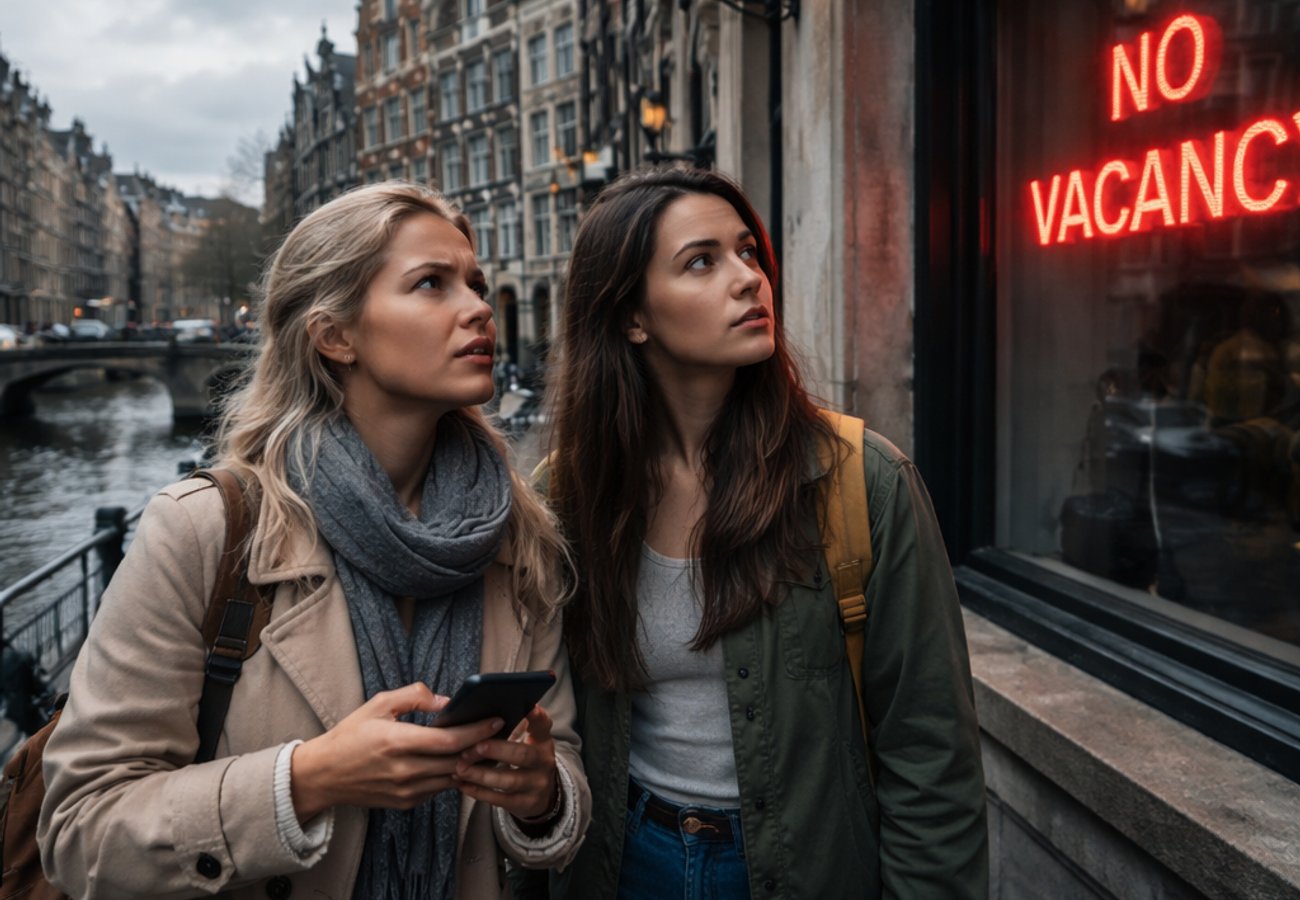
Image generated by AI
Europe's most treasured cities are drawing a hard line against mass tourism. Amsterdam, Venice, Barcelona, Paris, Rome, and Dubrovnik are implementing sweeping hotel bans and rental restrictions that fundamentally reshape how travelers access these destinations in 2026. What started as post-COVID reflection has evolved into a continental battle to reclaim urban spaces for residents, restore livability, and preserve centuries-old heritage. The stakes are enormous—and the legal implications are only beginning to emerge.
Amsterdam's Nuclear Option: The Beddenstop and 15-Night Rental Cap
Amsterdam has become the poster child for Europe's anti-tourism revolt. The Dutch capital's situation is dire: narrow 17th-century canal houses were designed for families, not rotating tourist hordes. The city's response? Ruthless.
In November 2024, Amsterdam imposed a "beddenstop"—a complete freeze on adding new hotel beds citywide. Only projects with environmental permits can replace existing accommodations, effectively locking tourism growth in place. But the real hammer blow came in April 2026: the city slashed permitted short-term rental nights from 30 to 15 per year in eight central neighbourhoods, with threatened total bans if disturbances persist.
The strategy is crystal clear. Amsterdam isn't trying to eliminate tourism—it's trying to strangle party tourism and Airbnb speculation. Local residents, many of whom hadn't experienced their own neighborhoods without constant tourist chaos since before 2020, pushed hard for these measures. The Dutch Council of State validated the 30-night rule in court, setting a critical legal precedent across Europe.
Reddit: "I lived in Amsterdam for three years before the beddenstop. The difference in noise and livability after April 2026? Night and day. My rent actually went down." — r/Amsterdam
Venice's Last Stand: The Hotel Freeze That Never Ends
Venice faces an existential threat that transcends overtourism—it faces extinction. With barely 260,000 residents and over 30 million visitors annually, Venice is slowly drowning under human weight rather than water.
Article 21-bis, introduced in 2018, already prohibited new hospitality licenses in buildings without prior authorization. In 2026, Venice doubled down by approving rehabilitation of just eleven existing hotels while rejecting conversions of residential buildings into accommodations. The message: no more replacing Venetian homes with tourist beds.
Rental regulations now cap tourist leases at 120 days annually for those registered within specific windows, transforming Venice from a transient theme park into something approaching an actual living city. Property owners who converted ancestral homes into short-term rentals are watching their income streams evaporate—intentionally.
Barcelona's Zoning Masterclass: The PEUAT Strategy
Barcelona's approach is more surgical than Amsterdam's sledgehammer. The city's Plan Especial Urbanístico de Alojamientos Turísticos (PEUAT) divides Barcelona into four distinct zones, each with different rules.
Central districts like Ciutat Vella and Eixample—the neighborhoods drowning in tourists—are now "zero-growth zones" where no new tourist accommodation licenses are issued. If an existing tourist apartment ceases operations, its license cannot be renewed in these areas; it can only relocate to designated controlled-growth zones. Existing establishments cannot expand.
This creates a deliberate geographic diffusion strategy: push tourism outward, preserve neighborhood character inward. Barcelona recognizes what many cities don't—controlling where tourists stay matters as much as how many there are.
Paris Empowers Mayors: The 90-Day Rule and Registration Mandate
Paris has weaponized municipal authority. Law No. 2024-1039 requires all short-term rentals to be registered through a national online portal and proves they are primary residences—not investment properties.
From 2025 onward, mayors can reduce rental days from 120 to 90 per year and levy fines up to €15,000 for violations. This isn't theoretical—Paris has already begun enforcement. The law also mandates energy-efficiency requirements from 2028, making older rental properties increasingly uneconomical to operate as tourist accommodations.
What makes Paris's approach legally significant is the unprecedented delegation of power to municipal leaders. This creates a template other European cities are studying: give mayors the authority to enforce housing protection directly.
Rome's Brewing Regulatory Storm
Rome moved more cautiously, but momentum is building. A June 2025 memorandum initiated drafting new regulations on tourist rentals after acknowledging their devastating impact on residential housing stock and gentrification. Coordination among city departments—urban planning, tourism, housing—is ongoing.
Once enforced, Rome's regulations will prioritize residential use and align the Eternal City with Amsterdam, Venice, and Barcelona. For property owners holding tourist rentals, the countdown has begun.
Dubrovnik's Medieval City Reclamation
Dubrovnik's Old Town, a UNESCO World Heritage site and Game of Thrones filming location, is suffocating under cruise-ship tourism. The city intends to freeze new holiday apartment permits, reclaim properties, and repopulate its medieval core with actual residents rather than tourist beds.
Following Croatia's 2023 Tourism Act, Dubrovnik's government is moving toward formal bylaws. A local referendum may cement the ban permanently, making it politically difficult for future administrations to reverse.
The Continental Wave: Berlin, Florence, Madrid, Porto, Bruges
Europe isn't stopping at six cities. Berlin fines illegal short-term rentals up to €500,000. Florence plans a moratorium on converting historic-center apartments. Madrid limits rental days and mandates special permits. Even smaller destinations like Porto and Bruges are capping cruise passenger arrivals and restricting new tourist accommodations.
This represents a fundamental philosophical shift: European cities are choosing livability over revenue maximization.
The Legal Battleground: Property Rights vs. Public Interest
Opposition is fierce. Some French property owners claim registration rules constitute excessive state surveillance. In Amsterdam and Venice, stakeholders warn that hotel freezes will inflate suburban rents and push tourism to less-regulated regions. Property rights advocates argue these measures constitute unlawful takings without compensation.
Yet courts consistently validate these restrictions. Italy's Constitutional Court dismissed challenges to municipal hotel bans, and the Dutch Council of State upheld Amsterdam's rental caps. Judges reason that cities can restrict tourism if they demonstrate it threatens housing availability and community cohesion.
Legal battles will intensify as Rome and Dubrovnik formalize policies. Expect appeals to European Court of Human Rights claiming violation of property rights protections.
Enforcement: Where Regulations Live or Die
Restrictions mean nothing without enforcement. Amsterdam uses digital registration systems and door-to-door inspections. Venice deploys municipal police to identify illegal hotels by monitoring booking platforms. Paris is building a national rental registry with cross-referencing capabilities. Barcelona uses data-scraping technology, neighborhood reporting systems, and escalating fines.
Without rigorous enforcement, landlords simply delist from regulated platforms and advertise on unregulated websites. Rome is exploring cross-referencing utility usage with rental platforms—if a residential apartment suddenly spikes electricity and water consumption while listed as a tourist rental, authorities flag it.
The Traveler's Dilemma: Access, Cost, and Availability
These regulations will reshape travel to Europe. Fewer hotel beds means higher prices. Rental freezes eliminate budget accommodation options. Late 2026 and 2027 will likely see increased travel costs to these six cities, potentially driving visitors to secondary destinations.
For travelers accustomed to finding €30-per-night Airbnbs in central Amsterdam or Venice, that era is finished. The trade-off: cities where residents can actually afford to live, where historic neighborhoods don't transform into outdoor museums, and where local culture survives contact with mass tourism.
Reddit: "Went to Barcelona in June 2026. Hotels cost 40% more than 2024. But the Gothic Quarter actually felt like a neighborhood, not a theme park. Worth it." — r/travel
What's Next: The Precedent for Global Cities
These European regulations are creating international precedent that cities worldwide are watching. New York, London, Sydney, and Tokyo are studying Barcelona's zoning approach and Amsterdam's rental caps. The question isn't whether other cities will adopt similar measures—it's how quickly they'll move.
Europe's soul may indeed depend on these radical steps. Whether they work remains to be seen. But in 2026, Europe's most iconic cities are betting that protecting residents and heritage matters more than maximizing tourism revenue.
Europe's historic cities are choosing community over crowds—and the legal fallout is only beginning.
Related Travel Guides
US Jet Fuel Shortage Sparks Massive Flight Cancellations Across Major Airports Including JFK and LAX
SAS Cancels 4 Flights at Oslo Gardermoen on June 7, 2026: 18 Delays Disrupt European Routes
Disclaimer
This article is for informational and educational purposes only. It does not constitute legal, financial, or professional advice. While we strive to provide accurate and up-to-date information, travel policies, regulations, and conditions change rapidly. Always verify information with official sources before making travel decisions. Nomad Lawyer makes no representations about the accuracy, reliability, completeness, or suitability of the information provided. Readers should consult qualified professionals for advice specific to their circumstances. The views expressed in this article are those of the author and do not necessarily reflect the views of Nomad Lawyer.
Kunal K Choudhary
Co-Founder & Contributor
A passionate traveller and tech enthusiast. Kunal contributes to the vision and growth of Nomad Lawyer, bringing fresh perspectives and driving the community forward.
Learn more about our team →