
Amsterdam Tightens Holiday Rental Limits and Hotel Caps in 2026 as Netherlands Inbound Tourism Surpasses 23 Million
Amsterdam enforces a 15-night holiday rental cap across historic districts and bans new hotels as national Netherlands tourism targets 23 million foreign visitors.

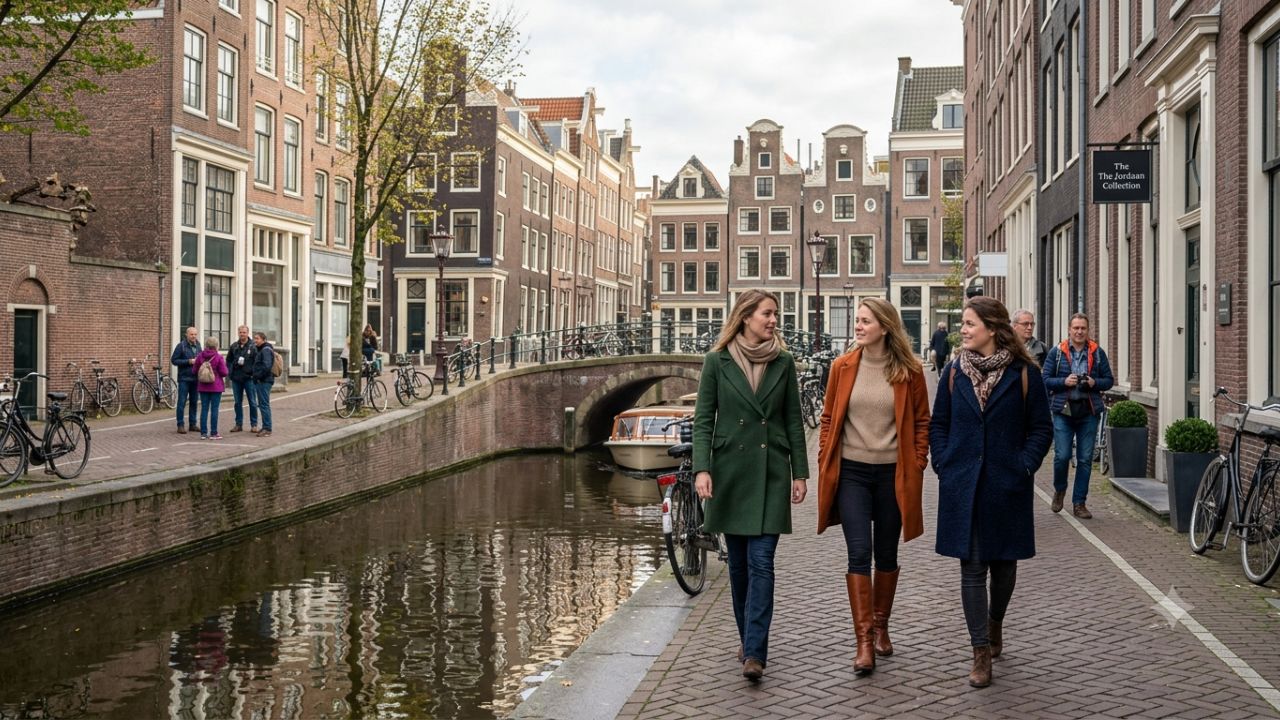
Amsterdam has enacted strict 15-night annual caps on holiday rentals across eight central districts to curb overtourism while maintaining residential liveability.
Amsterdam has significantly tightened its residential accommodation regulations, capping short-stay holiday rentals to just 15 nights per year across eight central districts and halting new hotel construction as the city grapples with 23.7 million annual tourist overnight stays. While the Dutch capital acts aggressively to defend residential liveability after exceeding its 20-million visitor policy threshold by 18.5%, national tourism forecasts from the Netherlands Board of Tourism & Conventions (NBTC) project nationwide inbound travel to expand by 2.4% to reach 23 million international overnight visitors in 2026, driven by solid demand from Germany, the United Kingdom, Belgium, and the United States.
The diverging trends highlight a major policy contrast between national tourism promotion and municipal containment, reshuffling how international city-break travelers book lodging, navigate a 21% accommodation value-added tax (VAT), and explore regional alternatives beyond the crowded canal ring.
Amsterdam's Municipal Threshold and Neighbourhood Rental Restrictions
Amsterdam's Research and Statistics Department projects that without intervention, annual overnight stays could surge between 25 million and 29.4 million by 2028. To counter severe neighborhood congestion, municipal authorities implemented strict structural constraints:
| Regulatory & Tourism Indicator | Official Policy Baseline | 2026 Operational Status |
|---|---|---|
| Annual Tourism Threshold | 20.0 million overnight stays | Exceeded: 23.7 million stays in 2025 (+18.5% over ceiling) |
| Projected 2028 Stays | 25.0 to 29.4 million stays | Municipal caps imposed to halt unchecked expansion |
| Holiday Rental Cap (Restricted Zones) | Reduced from 30 to 15 nights/year | Enforced since 1 April 2026 across 8 central neighborhoods |
| Standard Holiday Rental Cap | 30 nights/year maximum | Applicable to outer residential districts with permits |
| New 2027 Proposed Zone | Helmersbuurt under review | Proposed 15-night limit open for consultation until 8 Nov 2026 |
| Maximum Guest Occupancy | Strictly 4 guests per rental | Mandatory listing registration number and owner permits |
| New Hotel Development | Citywide moratorium | Strict ban on new hotel properties unless replacing an existing venue |
The 15-night annual holiday-rental restriction currently applies to eight historic districts: Haarlemmerbuurt, Jordaan, Grachtengordel-West, Grachtengordel-Zuid, Weteringschans, Burgwallen-Nieuwe Zijde, Nieuwmarkt/Lastage, and Oude Pijp. On 5 October 2026, the municipality proposed expanding the restriction to a ninth district, Helmersbuurt, following surveys showing over 30% of local residents reported tourism-related nuisance.
National Netherlands Inbound Travel and Inbound Source Markets
While Amsterdam restricts tourist concentrations, the wider Dutch visitor economy continues to grow. According to the Netherlands Board of Tourism & Conventions, the nation is set to host approximately 53 million total overnight guests in 2026 (+0.5% overall):
| Inbound Source Market | 2026 Projected Volume / Growth | Defining Traveler Characteristics |
|---|---|---|
| Germany (Top Market) | ~8.0 million guests (+0.5%) | Highly price-conscious; shifting toward campsites and regional provinces |
| United States (Fastest Growth) | +5.0% inbound expansion | High-spending long-haul visitors; primary consumers of cultural museums |
| United Kingdom | +1.0% inbound growth | Seeking weekend city breaks; sensitive to airfares and hotel pricing |
| Belgium | +1.0% inbound growth | Short-stay regional travelers exploring Zeeland, Utrecht, and Rotterdam |
| Domestic Dutch Travelers | ~30.0 million guests (−1.0%) | Contracting slightly as outbound European holidays recover |
European travelers generate approximately 80% of all international overnight stays in the Netherlands, but American visitors are expanding at five times the pace of European arrivals, requiring international online travel agencies (OTAs) to verify property compliance closely.
National VAT Increase and Accommodation Sector Impact
Compounding Amsterdam's regulatory caps, a major national fiscal reform took effect on 1 January 2026, raising the value-added tax (VAT) on short-stay lodging from 9% to 21%:
- Hotel Sector Contraction: Statistics Netherlands (CBS) recorded a 2.0% year-on-year drop in hotel turnover during the second quarter of 2026, reflecting consumer resistance to higher room bills.
- Resilience in Camping and Rentals: Conversely, turnover across campsites and self-catering holiday parks grew by 1.5%, demonstrating that domestic and European travelers are shifting toward lower-cost outdoor accommodations.
- Booking Compliance Checks: Travelers booking apartments through platforms like Airbnb or Vrbo must verify that host listings clearly display an official municipal registration number to prevent abrupt booking cancellations by city inspectors.
Strategic Advice for Travelers Visiting the Netherlands
Travelers planning Dutch getaways in late 2026 and 2027 should incorporate several practical adjustments:
- Book Accommodations Months Ahead: With hotel supply frozen and holiday rentals capped at 15 nights in central neighborhoods, lodging availability in central Amsterdam sells out quickly during peak seasons.
- Consider Alternative Dutch Cities: High-speed rail corridors link Amsterdam Schiphol Airport directly to vibrant regional hubs such as Utrecht (25 minutes), Rotterdam (40 minutes), and The Hague (45 minutes), where hotel rooms are more affordable and short-stay regulations are less restrictive.
- Budget for Tourism Tax and VAT: Amsterdam levies one of Europe's highest tourist taxes (12.5% of room rate), which, combined with the 21% national VAT, significantly elevates total lodging expenditures.
Related Travel Guides
- Namibia and Morocco Spearhead African Tourism Renaissance With Direct Flight Links, Global Roadshows, and Luxury Retreats
- Ethiopia and Nigeria Advance Bilateral Talks on Visa Facilitation, Aviation Connectivity, and Cross-Border Investment
- Portugal Investment Forum Spotlights Algarve, Lisbon, and Porto to Drive Sustainable Luxury Tourism and Capital Inflows
Frequently Asked Questions
What are Amsterdam's new holiday rental limits in 2026?
From 1 April 2026, short-stay residential holiday rentals in eight central Amsterdam neighbourhoods are restricted to a maximum of 15 nights per calendar year.
Which Amsterdam neighbourhoods are capped at 15 rental nights?
The 15-night limit applies to Haarlemmerbuurt, Jordaan, Grachtengordel-West, Grachtengordel-Zuid, Weteringschans, Burgwallen-Nieuwe Zijde, Nieuwmarkt/Lastage, and Oude Pijp.
Has the Netherlands increased taxes on hotel rooms?
Yes. On 1 January 2026, the Dutch government increased the VAT on short-stay hotel and holiday accommodations from 9% to 21%.
Is there an entry ban on tourists visiting Amsterdam?
No. There is no tourist entry ban; the municipal measures strictly regulate accommodation supply, holiday-rental permits, and new hotel development.
Disclaimer
This article is for informational and educational purposes only. It does not constitute legal, financial, or professional advice. While we strive to provide accurate and up-to-date information, travel policies, regulations, and conditions change rapidly. Always verify information with official sources before making travel decisions. Nomad Lawyer makes no representations about the accuracy, reliability, completeness, or suitability of the information provided. Readers should consult qualified professionals for advice specific to their circumstances. The views expressed in this article are those of the author and do not necessarily reflect the views of Nomad Lawyer.
Raushan Kumar
Founder & Lead Developer
Full-stack developer with 11+ years of experience and a passionate traveller. Raushan built Nomad Lawyer from the ground up with a vision to create the best travel and law experience on the web.
Learn more about our team →