
America's 10 Most Stunning Natural Landscapes: Wyoming, California, Texas Lead Scenic Destination Rankings in 2026
From Wyoming's Rocky peaks to California's Pacific cliffs, discover America's most visually diverse travel destinations featuring national parks, mountains, lakes, deserts, and coastal wonders.

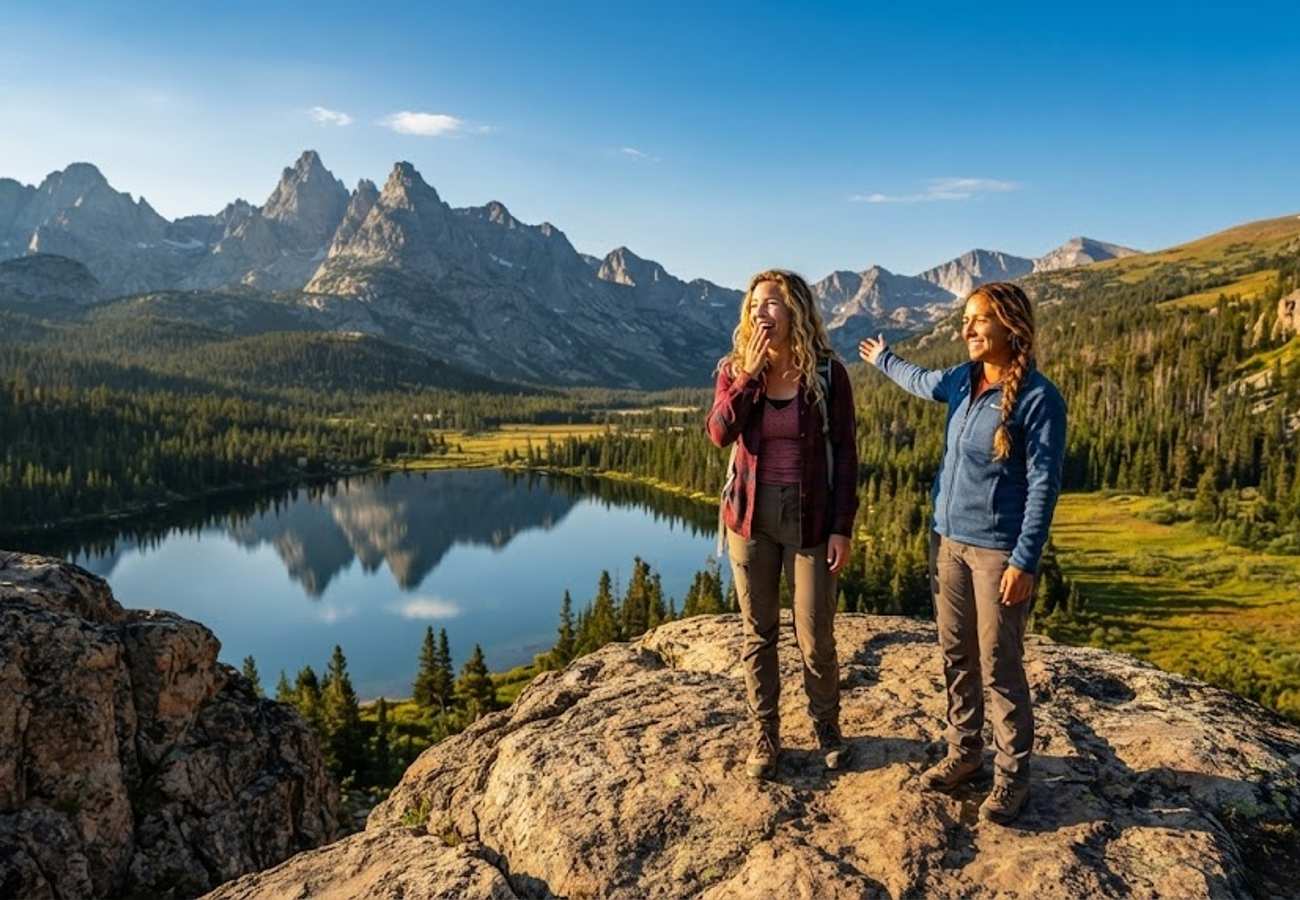
Image generated by AI
When Geography Becomes Art: America's Unmatched Natural Canvas
The United States stretches across a continent of contradictions. Desert meets mountain. Forest borders ocean. River systems carve through ancient stone. What emerges is not just landscape—it's a geological narrative spanning millions of years, now open to travelers seeking raw, undeniable beauty.
Wyoming, California, Texas, New Mexico, Mississippi, Michigan, Wisconsin, Maine, New York, and several other states form a collective masterpiece of American geography. Each region tells a different story. Each demands to be seen.
Reddit: "I've traveled to 30 countries. Nothing prepared me for the scale of American wilderness. Wyoming alone humbled me." — r/travel
Wyoming: Where Silence Has Mass
Wyoming doesn't whisper. It roars.
The state represents the American wilderness at its most uncompromising. Towering Rocky Mountain peaks pierce the sky, their jagged summits still bearing glacial ice from prehistoric eras. Alpine lakes sit perfectly still, reflecting summits so precisely they seem like digital duplicates.
Elevation reshapes everything here. The air thins. Wildlife roams freely across unfenced plains. Geological formations—carved by ancient tectonic movement—rise as monuments to time itself. This is not a state you visit for comfort. You visit for awe.
The sense of scale in Wyoming is genuinely disorienting. A single vista can stretch 100 miles in every direction without a human structure breaking the horizon.
California: The Continent's Most Visual Contradiction
California is geographically impossible. It shouldn't work.
Along the Pacific Coast, sea cliffs drop vertically into churning ocean. The Monterey Peninsula seems designed by someone with unlimited creative budget. Inland, the Sierra Nevada mountains rise with such sudden drama that valleys below feel pressed flat by comparison.
Then there's the desert. Then there's the redwood forests. All within a single state.
Seasonal transformation here is theatrical. Spring brings emerald meadows and wildflower explosions. Summer dries the landscape to golden tan. Autumn brings subtle color shifts. Winter blankets the high country in snow while coastal regions remain temperate.
According to the U.S. National Park Service, California hosts eight national parks—more than any other state except Alaska. The variety is literally unmatched.
Texas: Beauty Through Immensity
Texas operates on a different scale entirely. This isn't about dramatic peaks or plunging cliffs. It's about endless space.
Wide plains stretch to horizons so distant they seem theoretical. Desert regions create an almost Martian aesthetic—rust-colored earth, minimal vegetation, sky that dominates the landscape. Then river canyons cut through the monotony with sudden vertical drama.
The Rio Grande carves boundaries and ecosystems. Wetlands in East Texas add ecological richness. The overall impression is one of raw, unfiltered geography. No softening. No compromise.
What makes Texas visually compelling isn't elegance—it's honesty. The land shows itself exactly as it is.
New Mexico: Otherworldly Deserts
New Mexico exists on a different visual frequency entirely.
The White Sands National Park presents dunes that seem imported from another planet—brilliant white gypsum reflecting sunlight in almost blinding intensity. Red rock formations elsewhere create a palette that seems too vivid to be real.
Night skies here are astronomically significant. Light pollution is minimal. Star density is genuinely overwhelming. The International Dark Sky Association recognizes multiple certified dark sky areas in New Mexico, making it prime territory for celestial observation.
This landscape wasn't shaped by water or glaciation in recent geological time. Wind and mineral composition created environments that feel genuinely alien. Standing in New Mexico's desert, you're not entirely sure you're on Earth.
Mississippi: The Quiet Landscape
Mississippi represents America's interior wetland ecosystems.
Slow rivers wind through dense forests. Bayous and swamp environments create mysterious, atmospheric settings where water dominates terrain. Vegetation grows thick and layered. Wildlife thrives in these hidden ecosystems—alligators, herons, fish populations sustaining both ecology and regional culture.
The landscape is fundamentally different from western drama. It's introspective. Humid. Connected to water systems that shaped human history for centuries. The bayous didn't just develop naturally—they shaped music, folklore, and cultural identity throughout the American South.
It's the contemplative counterpoint to western landscapes.
Michigan: Freshwater Oceanography
Michigan is surrounded by freshwater coastlines that genuinely resemble ocean environments.
The Great Lakes create sandy beaches, dramatic dunes, and rocky shorelines indistinguishable from coastal regions. The thermal mass of these massive freshwater bodies creates distinct climate zones. Forests extend inland, creating layered ecosystems.
Autumn transforms Michigan into a color explosion. Maple forests turn crimson and gold. Temperature shifts trigger migration patterns. Summer brings beach culture. Winter delivers stark, frozen beauty.
The Great Lakes region represents ecological richness that freshwater environments rarely achieve on this scale.
Wisconsin: Rural Beauty and Historic Charm
Wisconsin combines agricultural landscape with natural water features.
Hundreds of lakes scatter across rolling farmland. Forested peninsulas jut into the lakes, creating scenic overlooks and peaceful waterfront communities. Historic lighthouses sit along shorelines. Small towns maintain architectural heritage alongside working farms.
The aesthetic here is one of balance—human infrastructure integrated respectfully into natural landscape. It's neither fully wild nor fully developed. It's genuinely livable geography.
Maine: Atlantic Raw Power
Maine's identity is written in rocky Atlantic shores and dense northeastern forests.
Fishing villages cluster along dramatic coastlines shaped by tides and storms. Lighthouses mark dangerous navigation points with historical significance. Offshore islands support seabird colonies and marine ecosystems.
Sunrise over the Atlantic Ocean at Maine's easternmost points represents some of the earliest light in the continental United States. The visual experience combines rugged beauty with genuine maritime history.
Maine's landscape tells stories of centuries of human adaptation to challenging coastal geography.
New York Beyond Manhattan
Outside the urban skyline, New York State reveals spectacular natural geography.
The Hudson Valley showcases rolling hills, historic estates, and river vistas of genuine grandeur. Forested mountains extend across the state. The Catskills and Adirondacks deliver wilderness experiences that millions of East Coast residents can access within driving distance.
Autumn foliage season transforms New York into a color palette so vivid that photographs seem artificially enhanced. Seasonal transformation here is dramatic enough to reset psychological baselines.
New York proves that cultural significance and natural beauty aren't mutually exclusive.
The Connected Ecosystems
These ten states don't exist in isolation. They're part of larger ecological and geographical systems.
River valleys connect multiple states. The Mississippi River System supports ecosystems across the entire central United States. The Rocky Mountain spine runs from Canada to New Mexico, creating wildlife corridors and climate zones.
The Great Lakes form the world's largest freshwater system, shared across multiple states and creating interconnected ecosystems. According to the Great Lakes Commission, the region supports 30 million people while maintaining critical natural habitats.
The Pacific Coastline creates continuous scenic transitions from Washington through California. Desert systems span state boundaries. Forest ecosystems overlap multiple jurisdictions.
America's natural beauty is fundamentally interconnected. You can't fully understand Wyoming's mountains without understanding how they feed water systems flowing through multiple states. You can't appreciate California's deserts without recognizing their connection to larger climatic patterns.
What Defines American Travel Beauty in 2026
The strongest travel destinations in America aren't selected for single defining features. They're compelling because they represent geological, ecological, and climatic diversity compressed into accessible territory.
Wyoming delivers wilderness at scale. California offers unprecedented variety. Texas showcases immensity. New Mexico provides otherworldly aesthetics. Mississippi represents ecosystem richness. Michigan, Wisconsin, Maine, and New York each contribute specific environmental and cultural layers.
Together, they form the most visually diverse travel nation on Earth—a continent compressed into individual states, each telling its own complete geological and ecological story.
The beauty isn't just visual. It's intellectual. Standing in these landscapes, you're observing millions of years of geological time, climate systems, and evolutionary processes rendered visible.
America's natural landscapes aren't just worth visiting—they're essential reminders of how spectacular Earth can actually be.
Related Travel Guides
Disclaimer
This article is for informational and educational purposes only. It does not constitute legal, financial, or professional advice. While we strive to provide accurate and up-to-date information, travel policies, regulations, and conditions change rapidly. Always verify information with official sources before making travel decisions. Nomad Lawyer makes no representations about the accuracy, reliability, completeness, or suitability of the information provided. Readers should consult qualified professionals for advice specific to their circumstances. The views expressed in this article are those of the author and do not necessarily reflect the views of Nomad Lawyer.
Kunal K Choudhary
Co-Founder & Contributor
A passionate traveller and tech enthusiast. Kunal contributes to the vision and growth of Nomad Lawyer, bringing fresh perspectives and driving the community forward.
Learn more about our team →