
American, Delta, United Airlines Adopt Identical Loyalty Math in 2026
American Airlines, Delta, and United have quietly standardized their loyalty earning formulas for 2026, eliminating decades of competitive mileage differentiation that allowed frequent travelers to strategically optimize their rewards.

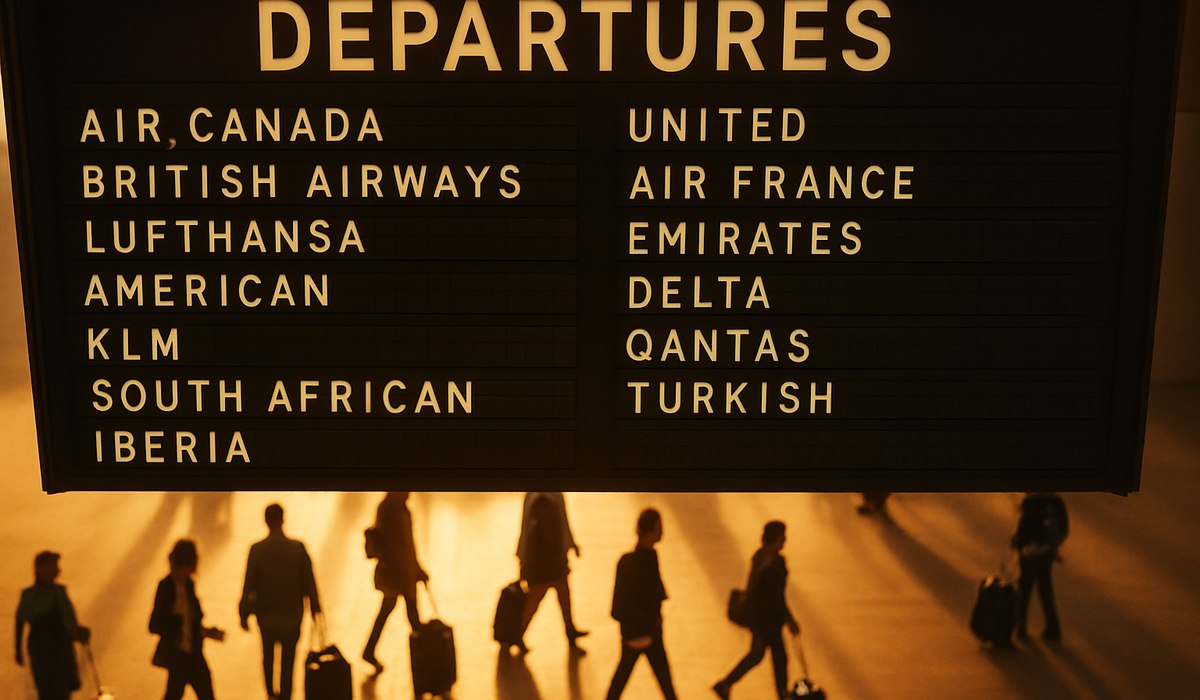
Image generated by AI
Three Major Carriers Eliminate Competitive Edge in Mileage Earning Structure
American Airlines, Delta Air Lines, and United Airlines have quietly standardized their loyalty program earning formulas heading into 2026, marking the end of an era where strategic passengers could leverage different mileage mathematics to maximize rewards. For nearly four decades, the earning structures across these carriers offered genuine differentiation—allowing frequent travelers to make calculated decisions about which airline deserved their loyalty based on mathematical advantage. Now, all three carriers have adopted nearly identical point-earning models, erasing a fundamental competitive distinction that once gave discerning business and leisure travelers meaningful reasons to concentrate their flying with one carrier over another.
The End of Airline Loyalty Math Competition
The shift represents a seismic change in how frequent flyer programs operate. Previously, a traveler earning 50,000 miles annually might calculate which carrier offered the best return based on elite status thresholds, bonus multipliers, and redemption efficiency. American Airlines historically tilted toward distance-based earning, while Delta emphasized elite tier benefits, and United offered variable multipliers depending on cabin class and fare type. These differences created genuine strategic value for passengers willing to optimize their loyalty decisions.
Industry analysts suggest the standardization stems from converging business pressures. As airline revenues stabilized post-pandemic, carriers recognized that maintaining separate earning structures created operational complexity without meaningful revenue advantage. The loyalty programs now function more as revenue-sharing instruments with credit card partners than as competitive differentiators. When most frequent travelers earn miles primarily through credit card spend rather than actual flights, the mathematical differences between carriers matter less to the bottom line.
What Changed in 2026 Loyalty Programs
All three carriers now employ a base earning formula of 1 mile per dollar spent in base fares, plus a consistent tier multiplier system ranging from 1.25x to 2.5x depending on elite status level. Previously, these multipliers varied significantly. United Airlines historically offered more aggressive elite benefits, while American Airlines traditionally provided broader earning across ancillary purchases. Delta positioned itself as the middle ground with balanced earning and redemption value.
The new unified structure also standardizes elite status qualification pathways. All three carriers now require identical combinations of flight segments, miles flown, and credit card spending to achieve Platinum, Diamond, and top-tier status. This removes the advantage that frequent travelers once enjoyed by shopping elite status based on which airline offered the easiest threshold to clear.
Redemption values have also begun converging. Economy awards formerly ranged from 25,000 to 30,000 miles on these carriers. Now, all three charge 25,000 miles for domestic economy redemptions in most markets. Business class international awards have similarly standardized around 100,000-120,000 miles. The mathematical edge that once allowed savvy passengers to compare cost-per-mile efficiency across carriers has essentially vanished.
Visit FlightAware to track real-time information about these carriers' operations.
Why Airlines Standardized Their Programs
The business case for standardization reflects structural changes in airline revenue models. Today, 60-70% of frequent flyer miles are earned through co-branded credit card spend rather than actual ticket purchases. This shift means the airline-to-passenger earning relationship matters far less than the credit card processor-to-passenger relationship. When two-thirds of miles come from shopping at partner merchants or transferring credit card points, the airline's earning multiplier becomes secondary.
Additionally, frequent flyer program liabilities represent massive balance sheet obligations. Standardized earning reduces the complexity of forecasting and managing these liabilities. When earning patterns are predictable across all three carriers, accounting becomes simpler, and mile depreciation through inflation can be managed more systematically.
Competitive pressure from international carriers also influenced this decision. Foreign airlines like Singapore Airlines and Lufthansa operate simpler earning structures that passengers find easier to understand. American carriers recognized that complex, differentiated earning formulas confused modern travelers rather than attracted them. Standardization paradoxically improves customer clarity while reducing competitive loyalty-switching.
The FAA and US DOT oversee airline operations, though loyalty program standardization falls outside direct regulatory scrutiny.
How This Affects Frequent Travelers
The standardization creates both challenges and unexpected opportunities for frequent flyers. The most significant impact hits elite-status optimizers who once shopped earning efficiency across carriers. If you previously concentrated flying with American Airlines because its earning structure favored your travel patterns, you've lost that mathematical advantage. The same applies to Delta and United loyalists who benefited from carrier-specific earning advantages.
However, this change simplifies decision-making for business travelers. Rather than analyzing earning formulas, passengers can now choose carriers based purely on schedule, pricing, and airport proximity. This reduces cognitive load and eliminates the temptation to book suboptimal flights just to chase carrier-specific earning bonuses.
For elite travelers, the standardization may actually increase leverage during negotiations with airline customer service. When all three carriers operate identical programs, customer satisfaction and service quality become the primary differentiators—potentially giving elite passengers more bargaining power if they threaten to switch loyalty.
The credit card partnership structure remains intact and differentiated, meaning that American Airlines, Delta, and United credit cards still offer distinct benefits. Choosing among these cards now becomes the primary loyalty optimization decision rather than choosing among airline earning structures.
Key Changes Affecting Your Loyalty Strategy
| Program Element | Previous Model | 2026 Standardized Model | Impact |
|---|---|---|---|
| Base Earning | Varied 1.0-1.5x per $ | 1.0x per dollar spent | Eliminates mathematical advantages |
| Elite Tier Multiplier | 1.25x to 3.0x range | 1.25x to 2.5x consistent | Standardized benefits across carriers |
| Status Qualification | Different thresholds per carrier | Identical across all three | Equal difficulty to achieve elite status |
| Domestic Economy Awards | 22,500-28,000 miles | 25,000 miles | Eliminates value-shopping opportunities |
| International Business | 85,000-125,000 miles | 100,000-120,000 miles | Removes redemption arbitrage opportunities |
| Co-Brand Card Benefits | Variable annual miles bonuses | Standardized annual bonuses | Less differentiation in card benefits |
What This Means for Travelers: Actionable Steps for 2026
The loyalty program standardization requires a strategic reset for frequent travelers. Here's how to adapt your loyalty strategy:
-
Evaluate your current elite status across all three carriers. If you've maintained Platinum status with American but you actually fly Delta more frequently, you're potentially wasting status with the wrong carrier. Redirect your flying to your preferred airline now that earning efficiency no longer varies.
-
Consolidate your credit card strategy. Rather than minimizing earning differences between carriers, focus on which co-branded credit card offers the best annual benefits, sign-up bonuses, and category multipliers. This becomes your primary loyalty lever.
-
Compare award availability instead of earning rates. With standardized redemption values, the real value now comes from booking award seats on less-competitive routes. Research which carrier offers better award availability on your most-traveled city pairs.
-
Reassess your loyalty program membership value. If you maintained status primarily for earning optimization, determine whether the lounge access, boarding priority, and baggage benefits justify remaining elite. This decision can now be based on actual service quality rather than mathematical advantage.
-
Monitor future redemption changes. Airlines may attempt to recover lost loyalty-switching incentives by degrading award availability or raising mile requirements. Watch for new peak-pricing models or reduced saver-award availability that might signal future changes.
Frequently Asked Questions
**
Disclaimer
This article is for informational and educational purposes only. It does not constitute legal, financial, or professional advice. While we strive to provide accurate and up-to-date information, travel policies, regulations, and conditions change rapidly. Always verify information with official sources before making travel decisions. Nomad Lawyer makes no representations about the accuracy, reliability, completeness, or suitability of the information provided. Readers should consult qualified professionals for advice specific to their circumstances. The views expressed in this article are those of the author and do not necessarily reflect the views of Nomad Lawyer.
Kunal K Choudhary
Co-Founder & Contributor
A passionate traveller and tech enthusiast. Kunal contributes to the vision and growth of Nomad Lawyer, bringing fresh perspectives and driving the community forward.
Learn more about our team →