
American Airlines Leadership Shakeup 2026: Strategic Pivot to Challenge Delta Air Lines' Premium Dominance
American Airlines is restructuring its senior executive team in a strategic effort to bridge the operational and premium service gap with Delta Air Lines.

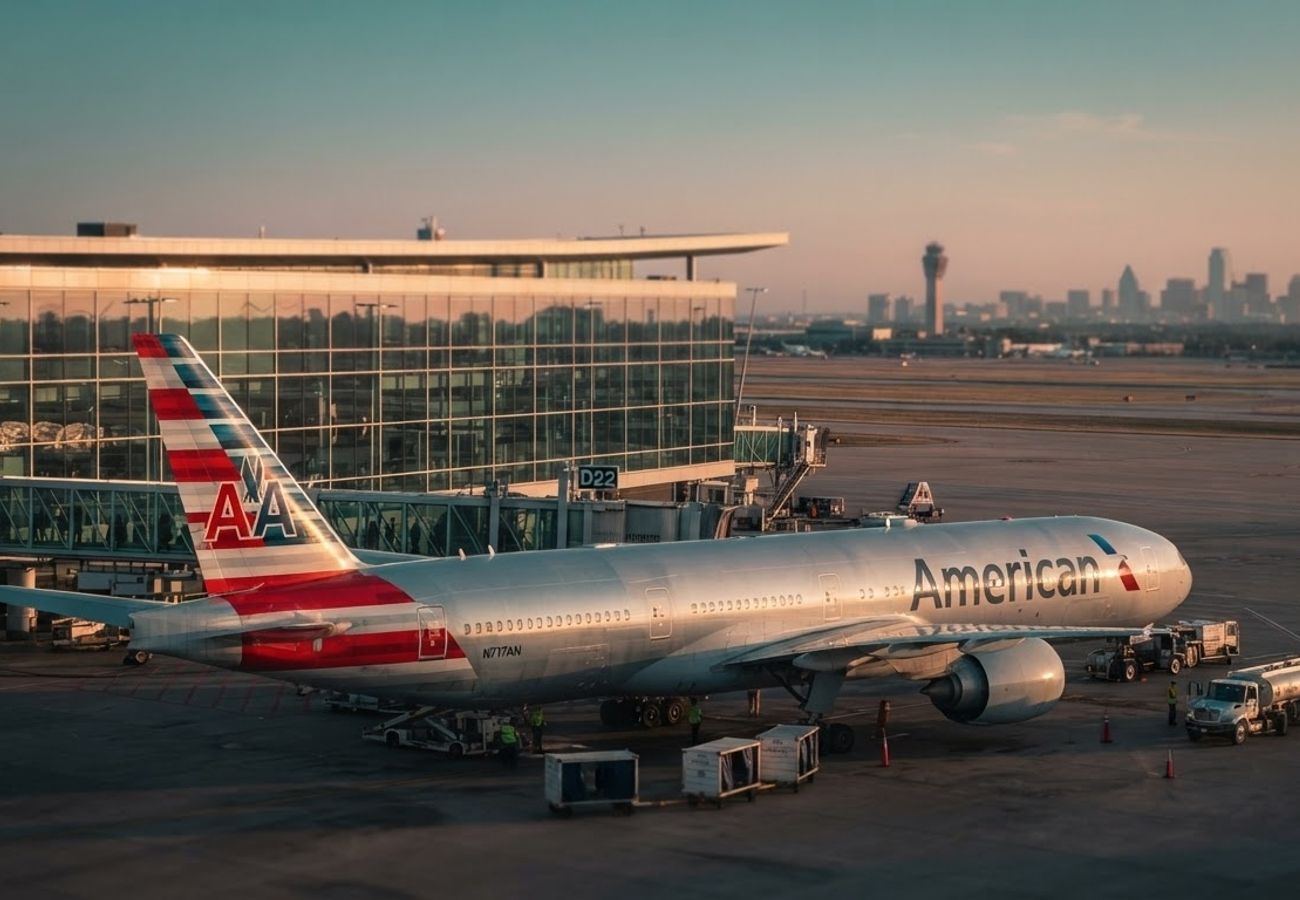
Image generated by AI
American Airlines is restructuring its senior executive ranks in a high-stakes bid to reclaim ground from Delta Air Lines across premium service, operational reliability, and global network efficiency.
The move comes as the carrier faces intensifying pressure from investors and passengers to stabilize its financial margins and eliminate the service inconsistencies that have plagued its peak travel seasons. By introducing new operational leadership and redistributing executive responsibilities, the airline aims to pivot its strategy toward a more disciplined, high-yield model.
Strategic Pivot in Senior Leadership
The recent overhaul of the senior management team at American Airlines signals a fundamental shift in how the carrier intends to compete in the crowded U.S. aviation landscape. Reports indicate that the airline has integrated outside talent specifically to manage technical operations, while simultaneously shifting the mandates of existing executives to better align with current market demands.
Industry observers suggest that such leadership turnover is rarely superficial; it typically serves as a precursor to sweeping changes in fleet acquisition, route optimization, and the deployment of passenger-facing technology. For American, this reset follows a period of volatile financial performance and operational hiccups that have left its customer satisfaction ratings trailing behind those of Delta.
The primary objective for the new leadership team is the tightening of cost controls and a drastic improvement in reliability. These two metrics have become the gold standard for the industry, with Delta frequently cited as the benchmark for network carriers. With labor costs and fuel prices remaining high, the board is pushing for a leaner, more dependable operation that can sustain higher profit margins.
Delta's Dominance in Premium Travel and Reliability
For over a decade, Delta Air Lines has successfully branded itself as the "premium" choice among the Big Three U.S. carriers. This positioning is backed by a rigorous focus on operational consistency, the rollout of luxury cabin upgrades, and a highly lucrative co-branded credit card ecosystem.
Financial data reveals that Delta's strategy has yielded industry-leading profits, driven largely by high-yield corporate and luxury leisure travelers. These passengers demonstrate a higher willingness to pay premium fares in exchange for guaranteed reliability and superior onboard comfort.
Operational metrics further solidify this lead. Delta has consistently reported superior on-time performance and lower rates of mishandled luggage compared to its peers. Furthermore, the continuous introduction of next-generation business-class suites on long-haul routes has allowed Delta to capture a larger share of the high-spend corporate market. For American's new executives, erasing this perceived quality gap is the most immediate and difficult challenge.
Analyzing Market Share and Capacity Economics
Despite the premium lead held by Delta, American Airlines maintains a significant advantage in sheer scale. Industry data confirms that American remains the largest U.S. airline by scheduled capacity, controlling the highest volume of seats in the domestic market. This dominance is anchored by massive hubs in Dallas Fort Worth, Charlotte, and Miami.
However, the economics of the 2026 aviation market prove that scale does not automatically equate to profitability. The current competitive environment requires a surgical approach to revenue management. Carriers must constantly adjust fares and capacity on a route-by-route basis to prevent "yield dilution"—a scenario where too many seats are offered, forcing prices down.
The rivalry is further complicated by the rise of ultra-low-cost carriers (ULCCs). While American and Delta fight for the premium tier, discounters are aggressively siphoning off fare-sensitive travelers in secondary markets. This forces legacy carriers to maintain a delicate balance: offering enough frequency to keep corporate clients loyal while ensuring their massive networks don't become a financial liability.
The Technology and Loyalty Battleground
A central pillar of the leadership shakeup is the need to modernize the passenger experience. The battle for high-value travelers is now being fought through loyalty programs and digital integration. Delta has leveraged its SkyMiles program and credit card partnerships to create a closed loop of loyalty, using ancillary revenue to fund further service improvements.
American is attempting to mirror this success by aligning its operational reliability with its loyalty rewards. The logic is simple: a loyalty program is only as effective as the service it rewards. If a frequent flyer experiences repeated delays or poor onboard service, the incentive to remain loyal to a specific credit card or airline diminishes.
Technology is the primary tool for this recovery. American has prioritized investments in:
- Advanced mobile application interfaces.
- Automated rebooking tools for irregular operations.
- Enhanced airport self-service kiosks.
While Delta has long used data analytics to personalize offers and manage disruptions in real-time, American is now racing to implement similar tools to reduce friction during travel delays.
Global Network Expansion and Regional Strengths
On the international stage, the two carriers are pursuing divergent strategies. American Airlines continues to leverage its dominant position in the Latin American market, using it as a fortress to fend off competitors. Simultaneously, it relies on joint ventures to maintain its presence in Europe and Asia.
Conversely, Delta has focused on building deep commercial equity and direct ties with foreign carriers to broaden its global reach. Industry analysis suggests that American's commercial team intends to double down on its Latin American lead while attempting to modernize its transatlantic product to compete with high-rated European and Middle Eastern carriers.
As the industry grapples with pilot shortages and stricter environmental regulations, the capacity for growth is limited. This means the rivalry is no longer about who can grow the fastest, but who can extract the most value from every seat. American's leadership overhaul is a clear admission that the previous approach was insufficient to challenge Delta's grip on the premium market.
The outcome of this leadership gamble will likely determine which carrier defines the standard for American air travel over the next decade.
Related Travel Guides
Disclaimer
This article is for informational and educational purposes only. It does not constitute legal, financial, or professional advice. While we strive to provide accurate and up-to-date information, travel policies, regulations, and conditions change rapidly. Always verify information with official sources before making travel decisions. Nomad Lawyer makes no representations about the accuracy, reliability, completeness, or suitability of the information provided. Readers should consult qualified professionals for advice specific to their circumstances. The views expressed in this article are those of the author and do not necessarily reflect the views of Nomad Lawyer.
Raushan Kumar
Founder & Lead Developer
Full-stack developer with 11+ years of experience and a passionate traveller. Raushan built Nomad Lawyer from the ground up with a vision to create the best travel and law experience on the web.
Learn more about our team →