
American Airlines Passengers Report Biohazard Cleanup Failure Involving Alcohol Spray in 2026
Passengers on an American Airlines flight reported a failed biohazard cleanup of vomit-soiled seats, alleging the use of Tito's vodka and aerosolized alcohol that caused respiratory distress.

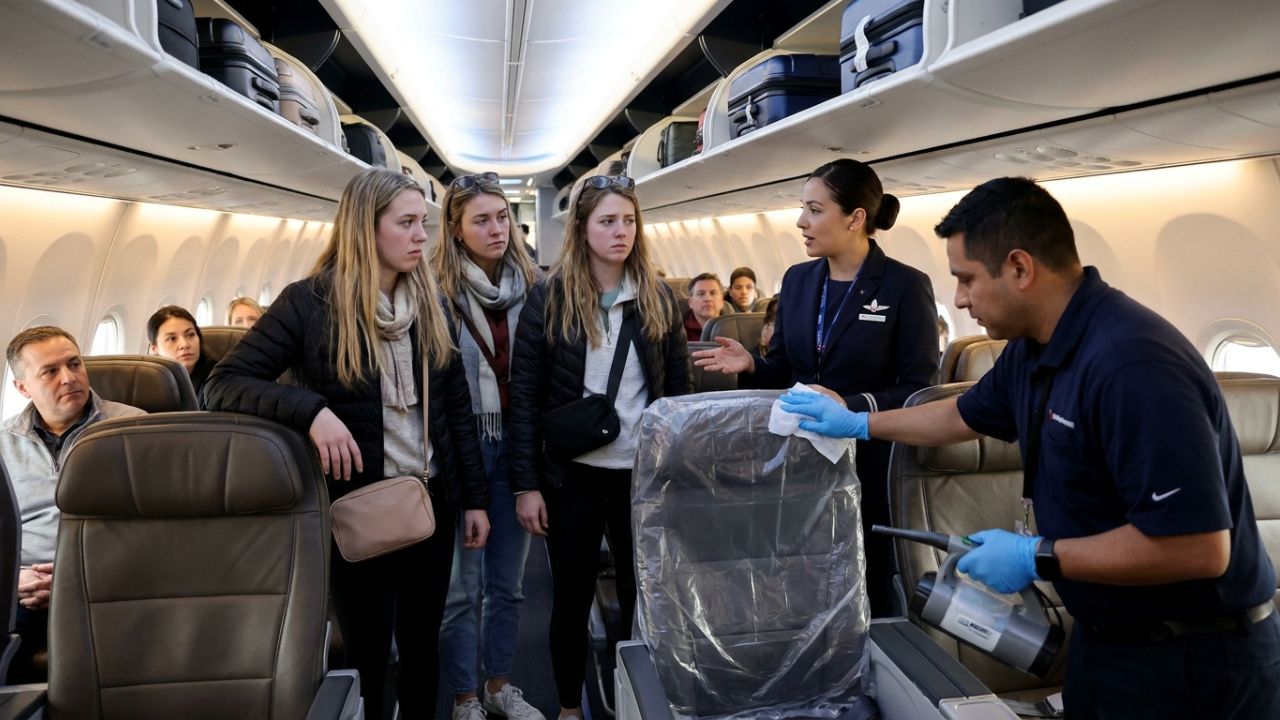
Image generated by AI
Passengers on a recent American Airlines flight have raised serious concerns regarding the handling of biohazardous waste, alleging that crew members attempted to clean vomit-soiled seats using vodka and high-concentration alcohol sprays.
The incident, detailed in a viral Reddit account, suggests a significant deviation from standard aviation sanitation protocols. According to the passenger, the contamination was discovered upon boarding, affecting a seat occupied by the traveler and his pregnant wife.
The Biohazard Incident and Cleanup Sequence
The passenger reported that upon taking their seats, a strong odor was detected. Upon further inspection, "chunks of vomit" were discovered on the seat. The passenger states that when a flight attendant lifted the seat cushion, vomit was found throughout the underside and embedded in the metal hardware of the seat frame.
The subsequent cleanup attempts described by the passenger occurred in three distinct stages:
- Initial Attempt: A flight attendant allegedly used a miniature bottle of Tito's vodka to wipe down the soiled area.
- Secondary Attempt: Maintenance workers arrived with paper towels and a spray; the passenger claims this caused the vomit to dissolve and drip onto the floor.
- Tertiary Attempt: Additional maintenance staff utilized a pump sprayer containing alcohol.
The final attempt reportedly led to an airborne crisis. The passenger described the fumes as "breathing Everclear," stating that the aerosolized alcohol caused nearby passengers to cough. One traveler reportedly requested an oxygen mask, and the passenger's pregnant wife experienced lightheadedness and distress.
Due to the flight being at full capacity, the passengers were forced to remain in the contaminated seats and were instructed to file a formal complaint via the American Airlines website.
Industry Standards for Aircraft Contamination
The reported actions contrast sharply with established health guidelines. The Centers for Disease Control and Prevention (CDC) mandates that vomit on aircraft be treated as potentially infectious.
Standard CDC and Aviation Cleaning Protocols:
- Hard Surfaces: Immediate removal of waste followed by thorough cleaning and disinfection.
- Soft Surfaces (Cushions): Use of absorbent materials to contain the waste, followed by disinfection.
- Waste Disposal: All contaminated materials must be placed in designated biohazard bags.
- Post-Flight: Mandatory notification of ground cleaning personnel for deep sterilization.
American Airlines has previously highlighted its commitment to these standards. In December 2020, the carrier became the first airline to achieve Global Biorisk Advisory Council (GBAC) STAR accreditation for its entire fleet and Admirals Club lounges. The airline maintains that it uses Environmental Protection Agency (EPA)-approved products for all high-touch surfaces.
Comparative Safety and Cleanliness Metrics
| Protocol Element | Reported Incident Action | CDC/GBAC Standard |
|---|---|---|
| Disinfectant Used | Tito's Vodka / Pump Alcohol | EPA-Approved Disinfectants |
| Waste Containment | Wiped/Sprayed (Liquid runoff) | Absorbent material & Biohazard bags |
| Air Quality | Aerosolized fumes causing coughs | Safe, non-toxic application |
| Passenger Placement | Forced to sit in soiled area | Seat typically removed from service |
Why This Matters: The Gap Between Accreditation and Execution
This incident highlights a critical disconnect between corporate-level certifications (such as the GBAC STAR accreditation) and on-the-ground operational execution. While American Airlines promotes a "rigorous cleaning program," the reported use of a miniature liquor bottle to address a biohazard suggests a failure in crew training or a lack of available medical-grade cleaning supplies.
Industry observers note that the pressure of "short aircraft turnarounds" often leads to superficial cleaning. However, the transition from a cleaning failure to a secondary health hazard—where aerosolized chemicals cause respiratory distress for a pregnant passenger—shifts the issue from a cleanliness complaint to a potential liability and safety violation.
Industry Outlook
Market trends indicate that passengers are increasingly sensitive to aircraft hygiene following the 2020-2022 pandemic era. This incident, coupled with the airline's reported low water safety score for 2026, may trigger stricter oversight from aviation authorities regarding cabin sanitation. Expect a push for more transparent, real-time reporting of cabin cleanliness and a potential re-evaluation of how "quick-turn" cleaning is audited by third-party regulators.
The discrepancy between EPA-approved promises and vodka-based cleaning remains a significant point of contention for passenger advocacy groups.
Related Travel Guides
Disclaimer
This article is for informational and educational purposes only. It does not constitute legal, financial, or professional advice. While we strive to provide accurate and up-to-date information, travel policies, regulations, and conditions change rapidly. Always verify information with official sources before making travel decisions. Nomad Lawyer makes no representations about the accuracy, reliability, completeness, or suitability of the information provided. Readers should consult qualified professionals for advice specific to their circumstances. The views expressed in this article are those of the author and do not necessarily reflect the views of Nomad Lawyer.
Kunal K Choudhary
Co-Founder & Contributor
A passionate traveller and tech enthusiast. Kunal contributes to the vision and growth of Nomad Lawyer, bringing fresh perspectives and driving the community forward.
Learn more about our team →