
American Airlines Narrowbody Overhaul: 4K Screens and Starlink Integration for 2026-2028
American Airlines is reversing its minimalist tech strategy by installing 4K seatback screens, USB-C ports, and Starlink internet across its narrowbody fleet.

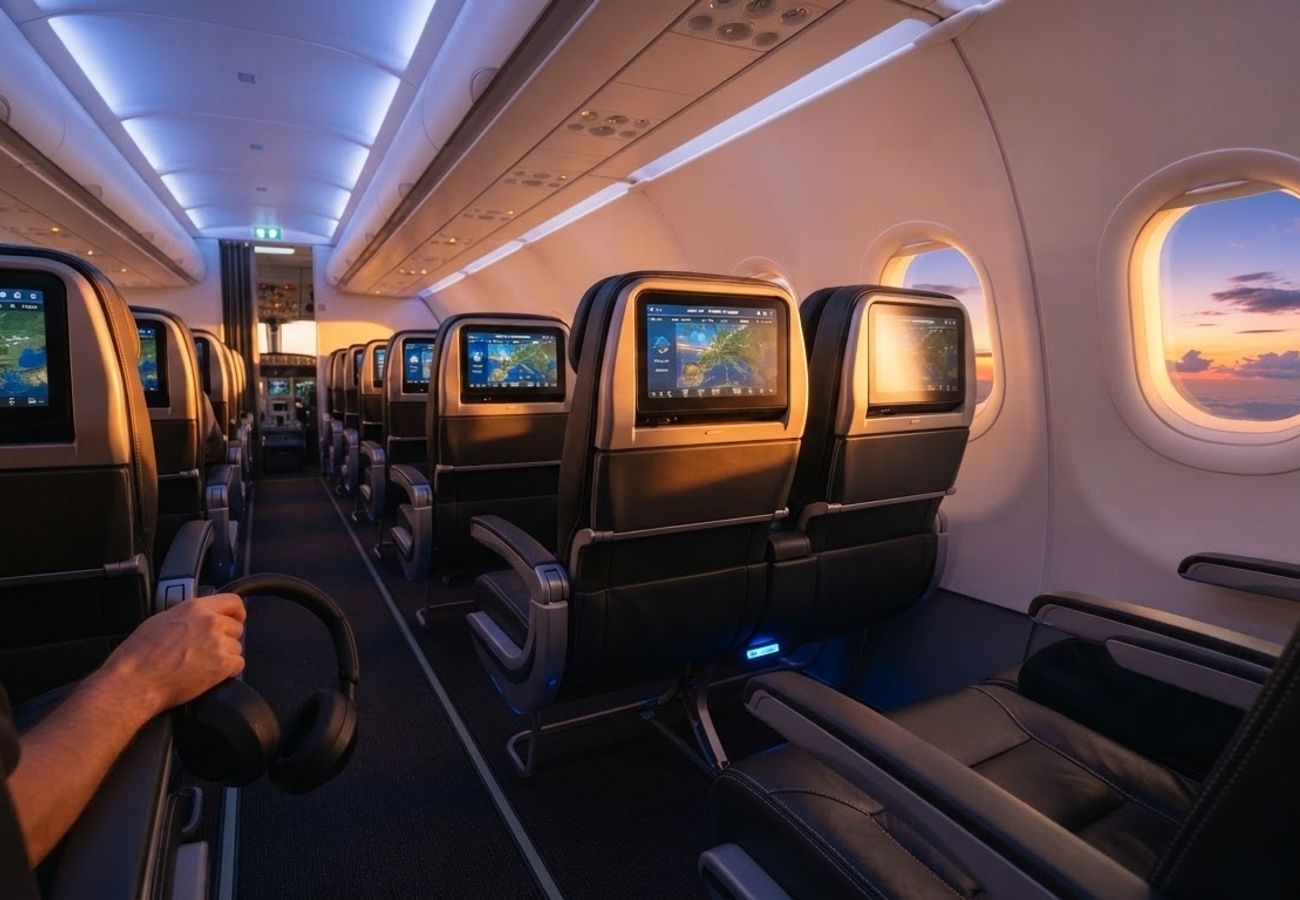
Image generated by AI
American Airlines is abandoning its "bring your own device" policy to install 4K seatback screens and high-speed Starlink internet across its domestic and regional fleet. The overhaul marks a systemic shift in cabin strategy to reclaim competitive parity in the premium travel segment.
Narrowbody Fleet Technology Transformation
American Airlines has announced a comprehensive strategic pivot for its narrowbody aircraft, which serve as the primary infrastructure for routes within the United States and the Caribbean. After years of removing seatback hardware to reduce aircraft weight and improve fuel efficiency, the carrier is now reintegrating embedded technology to meet shifting passenger demands.
The centerpiece of this upgrade is the installation of 4K resolution seatback screens at every seat, paired with Bluetooth audio connectivity. This allows passengers to use wireless headphones without the need for cumbersome adapters. To support modern hardware, the airline is replacing legacy USB-A ports with USB-C charging infrastructure to facilitate faster power delivery for mobile devices.
Deployment Timeline and Aircraft Specifications
The rollout is a multi-year initiative. While retrofits for existing aircraft will occur during scheduled maintenance, all new narrowbody deliveries starting in 2028 will feature these advanced display systems as standard equipment.
The most immediate impact will be seen on the newest additions to the fleet, specifically the Boeing 737 Max 10 and the Airbus A321neo. These models are designed with a standardized configuration of 24 First Class seats. Additionally, the Airbus A319 and A320 fleets are slated for retrofits that will add an additional row of First Class seating, expanding the capacity for both First Class and Main Cabin Extra.
Fleet Upgrade Specifications
| Feature | Specification / Detail | Implementation Timeline |
|---|---|---|
| Display Quality | 4K Resolution Seatback Screens | Rolling out through 2028 |
| Connectivity | Bluetooth Audio Pairing | Rolling out through 2028 |
| Power Supply | USB-C Fast Charging Ports | Rolling out through 2028 |
| Internet | High-speed Starlink Integration | 2027 |
| Key Aircraft | Boeing 737 Max 10, Airbus A321neo | New deliveries / Retrofits |
| Premium Seating | 24 First Class seats (Standard on new models) | Immediate / Ongoing |
| Capacity Boost | Additional First Class row (A319/A320) | During scheduled retrofits |
Traveler Logistics Guide: Navigating the Transition
From a ground-level perspective, the most challenging aspect of this rollout is the inconsistency of the fleet during the transition period. Because retrofits happen during scheduled maintenance, two flights on the same route may offer entirely different amenities.
Booking Strategy for Tech-Focused Travelers: To ensure you are on an upgraded aircraft, avoid generic booking and check the "Aircraft Type" during the reservation process. Prioritize the Boeing 737 Max 10 and Airbus A321neo, as these are the primary vehicles for the new tech suite.
Connectivity Tips: Once Starlink arrives in 2027, the airline will integrate the seatback interface with real-time flight insights and enhanced navigation maps. Travelers should ensure their devices are compatible with the latest Bluetooth standards to take full advantage of the wireless audio pairing.
Customs and Digital Transit: For those traveling to the Caribbean or domestic hubs, remember that while in-flight tech is improving, ground-side digital transit policies (such as updated TSA PreCheck or regional digital entry forms) remain separate. Always verify your digital travel credentials 48 hours before departure to ensure a seamless transition from the high-tech cabin to the terminal.
Infrastructure Impact Assessment
This shift signals a recognition that hardware is once again a primary metric for measuring airline quality. By moving away from a minimalist approach, American Airlines is targeting the premium travel segment, which remains a critical growth engine for the industry.
The integration of Starlink in 2027, combined with 4K hardware, creates a multi-layered entertainment ecosystem. This reduces the reliance on passenger-owned data plans and elevates the domestic flight experience to a standard previously reserved for long-haul international widebody aircraft. Regionally, this move forces other domestic carriers to accelerate their own cabin refreshes to avoid losing frequent flyers to a more connected competitor.
The era of the blank seatback is ending as the sky becomes a high-definition workspace.
Related Travel Guides
Disclaimer
This article is for informational and educational purposes only. It does not constitute legal, financial, or professional advice. While we strive to provide accurate and up-to-date information, travel policies, regulations, and conditions change rapidly. Always verify information with official sources before making travel decisions. Nomad Lawyer makes no representations about the accuracy, reliability, completeness, or suitability of the information provided. Readers should consult qualified professionals for advice specific to their circumstances. The views expressed in this article are those of the author and do not necessarily reflect the views of Nomad Lawyer.
Kunal K Choudhary
Co-Founder & Contributor
A passionate traveller and tech enthusiast. Kunal contributes to the vision and growth of Nomad Lawyer, bringing fresh perspectives and driving the community forward.
Learn more about our team →