
American Airlines Flight Attendants Fight 8-Hour CBT Training Claim in Binding Arbitration 2026
American Airlines flight attendants challenge the airline's claim that mandatory annual computer-based training takes just 8 hours, escalating dispute to binding arbitration over pay and workload.

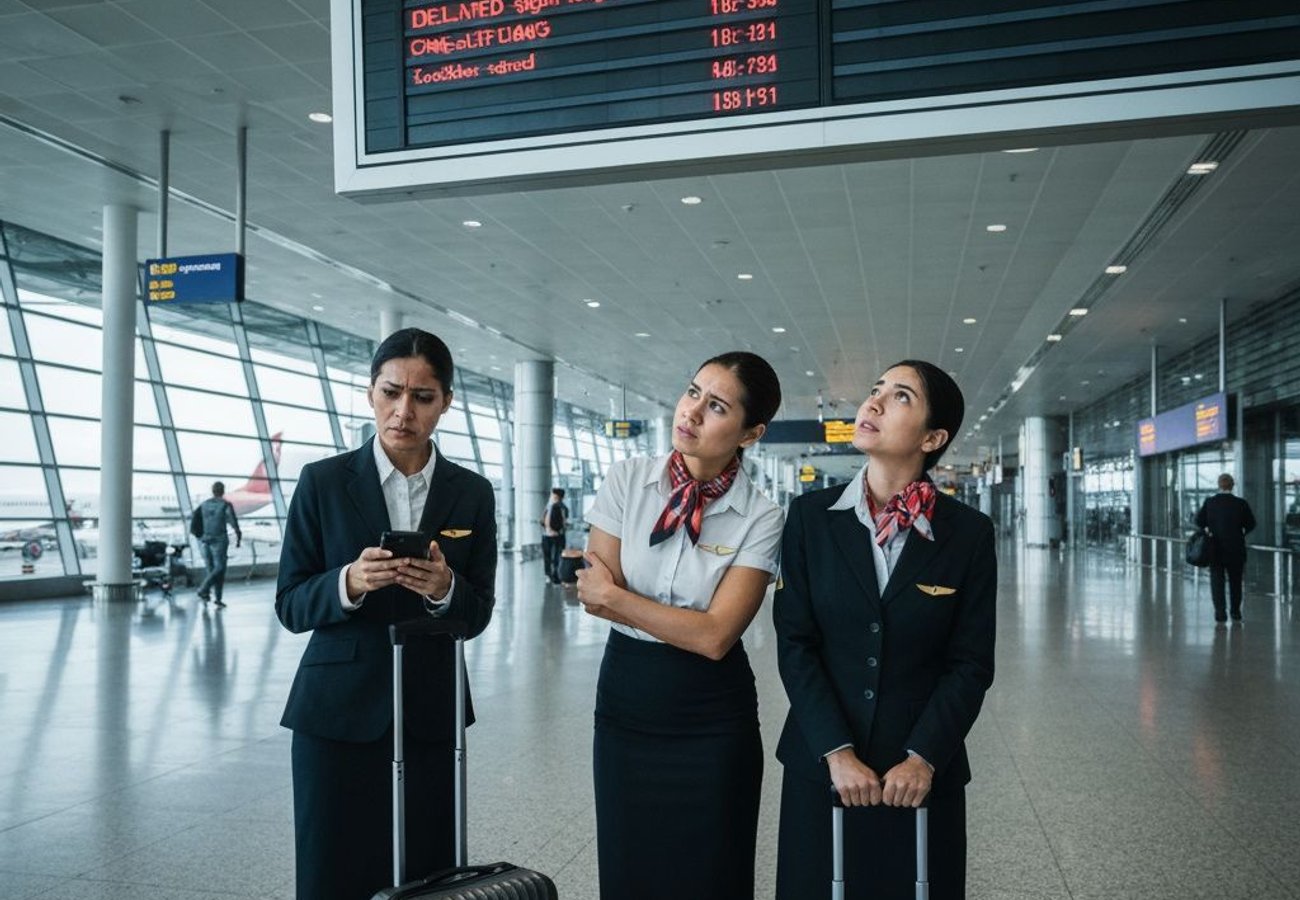
Image generated by AI
The 8-Hour Training Showdown at American Airlines
American Airlines flight attendants are locked in a high-stakes battle with their employer over one of the aviation industry's most contentious issues: how long mandatory annual training actually takes—and who should pay for it.
The dispute centers on Computer-Based Training (CBT) modules that the airline insists can be completed in just eight hours per year. The Association of Professional Flight Attendants (APFA), however, argues this estimate bears no resemblance to reality. Now the case is headed to binding arbitration, potentially reshaping how thousands of crew members are compensated for training time.
Reddit: "Eight hours to complete required training? Try double that. The company won't even show us the data proving their own estimate." — r/aviation
What's Actually Required: The Real Training Burden
At American Airlines' Dallas training hub, flight attendants must complete three days of annual Continuing Qualification (CQ) training to maintain active flying status. Two days happen in person—covering aircraft door operations, emergency evacuation procedures, and first aid certifications.
The third component is the CBT package, which the airline claims requires eight hours. Flight attendants currently receive $150 per day for the two in-person training days and an additional $150 flat payment for the CBT syllabus.
Here's where the conflict ignites: APFA argues the CBT workload has expanded significantly over time, yet compensation remains locked to that original eight-hour estimate. Many crew members reportedly spend well beyond that timeframe clicking through modules and completing required assessments.
The Smoking Gun That Went Missing
What makes this dispute especially contentious is that American Airlines possesses the technology to prove its claims—or to expose them as false.
Modern CBT platforms automatically track every user interaction, recording exactly how long each employee spends on individual modules and the complete training package. This data should exist in American Airlines' systems, timestamped and undeniable.
When APFA requested access to completion-time data that could settle the question definitively, American Airlines refused to provide it. The airline declined to hand over records that would show the average time flight attendants actually require to finish the annual syllabus.
That refusal to disclose is precisely why the case is now in arbitration. Without the airline voluntarily presenting data, an independent arbitrator will examine whatever evidence both sides can produce.
The Evidence That Could Turn the Case
Flight attendants may hold a crucial advantage: they can reportedly download their own training transcripts directly from American Airlines' systems.
These personal records show when each crew member started and completed their CBT modules—data that could paint a very different picture than the airline's eight-hour claim. If transcripts show completion times routinely exceeding eight hours, the arbitrator will be looking at patterns, not isolated complaints.
APFA is likely banking on transcripts from dozens or hundreds of flight attendants demonstrating consistent overages. Whether the airline can argue that employees deliberately work slowly to support the union's case remains another question—but the core dispute centers on whether the training workload itself has simply grown beyond the compensation model.
Learn more about aviation labor law and crew member protections through official regulatory resources.
Why This Case Matters Across the Industry
The outcome could reshape training compensation across commercial aviation, not just at American Airlines.
The broader issue is straightforward: mandatory recurrent training requirements have expanded substantially over the past decade, driven by regulatory changes and operational complexity. Yet compensation models remain frozen in time, often tied to estimates made years ago when training packages were smaller.
Flight attendants at other carriers face similar dynamics. When United, Delta, or Southwest expand their training requirements without adjusting payment, crew members face the same squeeze—working unpaid hours or receiving compensation that doesn't match actual workload.
An arbitrator's finding that American Airlines underpaid for expanded training could open the door to similar claims across the industry. Airlines would face pressure to update their compensation models or face grievances and arbitration costs of their own.
What Comes Next: The Arbitration Timeline
No hearing date has been publicly announced, but the arbitration process typically moves faster than traditional litigation.
The arbitrator will review evidence from both American Airlines and APFA, likely examining flight attendant transcripts, the airline's training platform data (if disclosed), and arguments from both sides about workload expansion over time. The airline may present evidence supporting its position that training can be completed within eight hours, though the refusal to provide actual completion data raises questions about the strength of that argument.
The decision could result in retroactive compensation for flight attendants who exceeded the eight-hour threshold in previous years, prospective rate adjustments, or a revision of how training time is measured and paid going forward.
This arbitration represents a critical test case for how the aviation industry handles the growing gap between mandatory training requirements and employee compensation—a gap that will likely widen as regulations evolve.
The skies are getting more complex. The question is whether training compensation will finally catch up.
Related Travel Guides
Disclaimer
This article is for informational and educational purposes only. It does not constitute legal, financial, or professional advice. While we strive to provide accurate and up-to-date information, travel policies, regulations, and conditions change rapidly. Always verify information with official sources before making travel decisions. Nomad Lawyer makes no representations about the accuracy, reliability, completeness, or suitability of the information provided. Readers should consult qualified professionals for advice specific to their circumstances. The views expressed in this article are those of the author and do not necessarily reflect the views of Nomad Lawyer.
Kunal K Choudhary
Co-Founder & Contributor
A passionate traveller and tech enthusiast. Kunal contributes to the vision and growth of Nomad Lawyer, bringing fresh perspectives and driving the community forward.
Learn more about our team →