
American Airlines Flight AAL1638 Airbus A320 Diverts Back to Denver International Airport from Phoenix in 2026
An American Airlines Airbus A320 operating flight AAL1638 was forced to divert back to Denver International Airport on July 13, 2026, after departing for Phoenix.

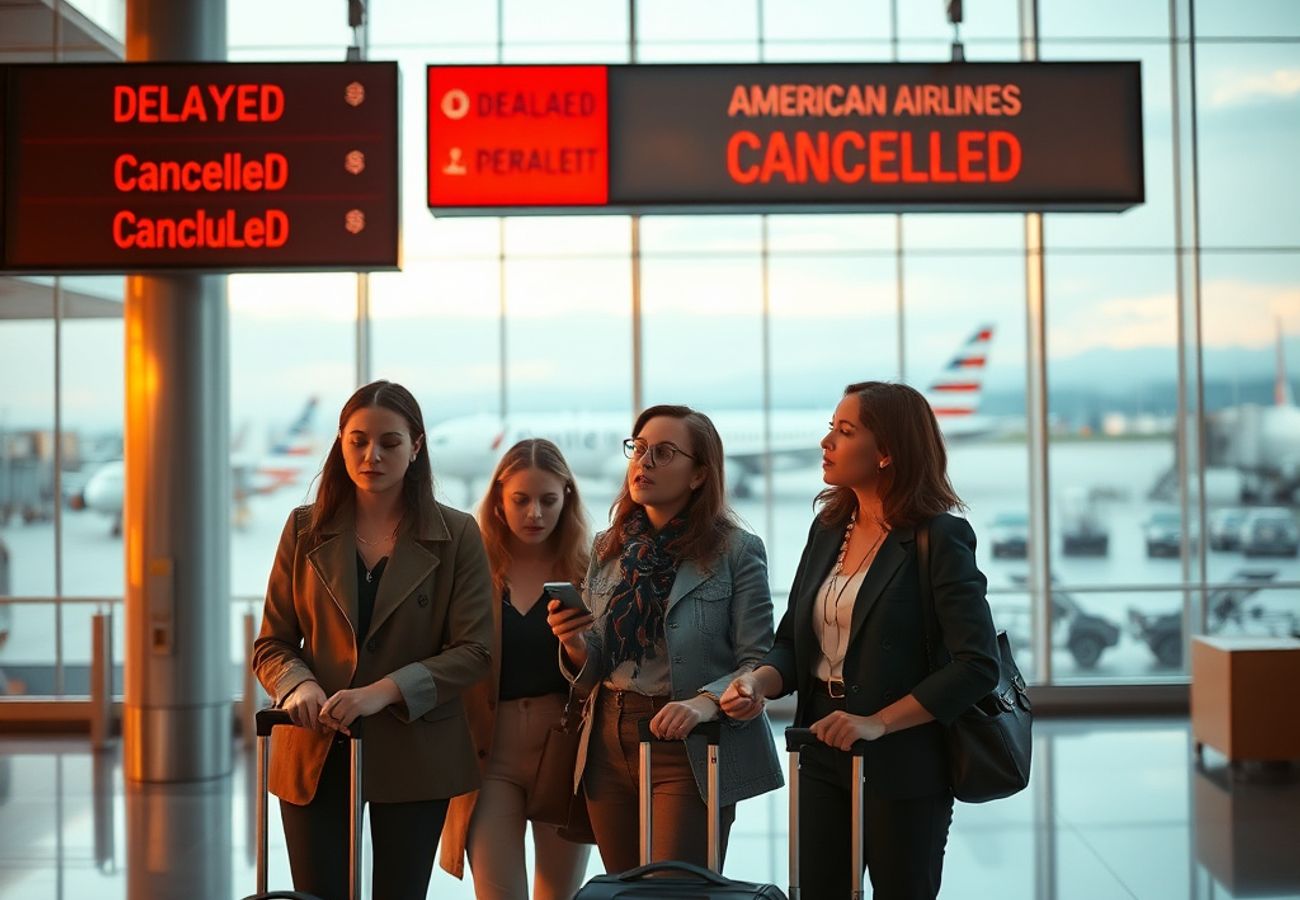
Image generated by AI
[Denver, July 15, 2026] — An American Airlines flight bound for Phoenix was forced to execute an unexpected turnaround on July 13, 2026, resulting in a diversion back to Denver International Airport. The aircraft, an Airbus A320, returned to its point of origin shortly after departure, disrupting the scheduled itinerary for all passengers on board.
The incident occurred during a routine domestic leg within the United States. While the aircraft had successfully departed, the flight crew determined that a return to the departure airport was the safest course of action. This move triggered standard aviation safety protocols designed to mitigate risk during unforeseen operational anomalies.
Flight Path Analysis of AAL1638 from Denver to Phoenix
According to flight tracking data provided by Flightradar24 and FlightAware, American Airlines flight AAL1638 departed from Denver International Airport (DEN) at 6:56 PM on July 13, 2026. The aircraft was scheduled to arrive at Phoenix Sky Harbor International Airport (PHX) with an estimated time of arrival (STA) of 7:50 PM EST.
Shortly after takeoff, the flight crew altered the planned trajectory. Rather than continuing toward Arizona, the aircraft performed a mid-air turn and began its descent back into Denver. The safe return to the origin airport allowed the airline to utilize existing ground support and maintenance teams already stationed at the hub.
Aircraft Specifications and Operational Details
The aircraft involved in the diversion was an Airbus A320, carrying the registration N650AW. This narrow-body jet is a staple of the American Airlines domestic fleet, designed for short-to-medium haul routes.
| Detail | Specification |
|---|---|
| Flight Number | AAL1638 |
| Aircraft Model | Airbus A320 |
| Registration Number | N650AW |
| Departure Airport | Denver International Airport (DEN) |
| Destination Airport | Phoenix Sky Harbor International Airport (PHX) |
| Departure Time | 6:56 PM (July 13, 2026) |
| Scheduled Arrival | 7:50 PM EST (July 13, 2026) |
| Event | Flight Diversion / Return to Origin |
Assessing Potential Causes for the Denver Diversion
As of the latest reports, American Airlines and federal aviation authorities have not released a specific reason for the diversion of AAL1638. In the absence of an official statement, industry observers note that such decisions are typically based on a variety of precautionary factors.
Flight crews may opt for a return to the departure airport due to technical malfunctions identified by onboard sensors, medical emergencies involving passengers or crew, or sudden changes in weather patterns. In many instances, a diversion is a proactive safety measure rather than a response to a critical failure. By returning to Denver, the crew ensured they were landing at a facility where they had full operational support and familiarity.
Passenger Impact and Ground Management at DEN
The unexpected return to Denver International Airport inevitably caused disruptions for the passengers traveling to Phoenix. Upon landing, the aircraft was met by ground personnel to facilitate the disembarkation process.
Following a diversion, airlines are required to manage several logistical hurdles. These include conducting a full technical inspection of the aircraft, updating passengers on their travel status, and coordinating new flight arrangements or hotel accommodations if the original aircraft is deemed unfit for immediate service. Reports indicate that the airline utilized Denver's infrastructure to support the passengers, though specific compensation or rebooking details remain subject to individual passenger notifications from the carrier.
Aviation Safety Protocols in the United States
The handling of flight AAL1638 underscores the rigorous safety framework governing U.S. aviation. Pilots are trained to prioritize the "safe state" of the aircraft over the adherence to a schedule. When a variable arises that does not meet strict safety margins, the standard operating procedure is to divert to the nearest suitable airport.
The fact that the Airbus A320 returned safely to Denver without reports of injuries or catastrophic failure suggests that the crew's decision-making process was effective. The U.S. aviation network is designed to handle such diversions through a coordinated effort between Air Traffic Control (ATC) and airline operations centers.
Why This Matters: The Broader Impact on Aviation Reliability
The diversion of AAL1638 provides a practical example of the "Safety First" culture in modern aviation. While passengers view diversions as inconveniences, from a journalistic and industry perspective, these events represent the system working as intended.
The decision to return to Denver rather than attempting to push through to Phoenix—or diverting to an intermediate city—indicates a preference for the highest level of support available. For the aviation industry, this highlights the importance of hub-and-spoke infrastructure; having a primary base like Denver International Airport allows an airline to resolve technical or medical issues with its own specialized equipment and staff, rather than relying on third-party contractors at a secondary airport.
Furthermore, this incident serves as a reminder of the inherent volatility of domestic flight operations. Even with advanced aircraft like the Airbus A320, operational variables can shift in minutes, requiring immediate human intervention and a deviation from the flight plan to ensure passenger security.
The airline is expected to provide further clarity following the completion of the aircraft's technical review.
Related Travel Guides
Disclaimer
This article is for informational and educational purposes only. It does not constitute legal, financial, or professional advice. While we strive to provide accurate and up-to-date information, travel policies, regulations, and conditions change rapidly. Always verify information with official sources before making travel decisions. Nomad Lawyer makes no representations about the accuracy, reliability, completeness, or suitability of the information provided. Readers should consult qualified professionals for advice specific to their circumstances. The views expressed in this article are those of the author and do not necessarily reflect the views of Nomad Lawyer.
Preeti Gunjan
Contributor & Community Manager
A passionate traveller and community builder. Preeti helps grow the Nomad Lawyer community, fostering engagement and bringing the reader experience to life.
Learn more about our team →