
American Airlines Flight AA3012 From Atlanta to Phoenix Diverts to Las Vegas Causing Significant Travel Delays for Passengers
American Airlines flight AA3012, operating an Airbus A321 from Atlanta to Phoenix, diverted to Las Vegas. Operational analysis and passenger rights details inside.

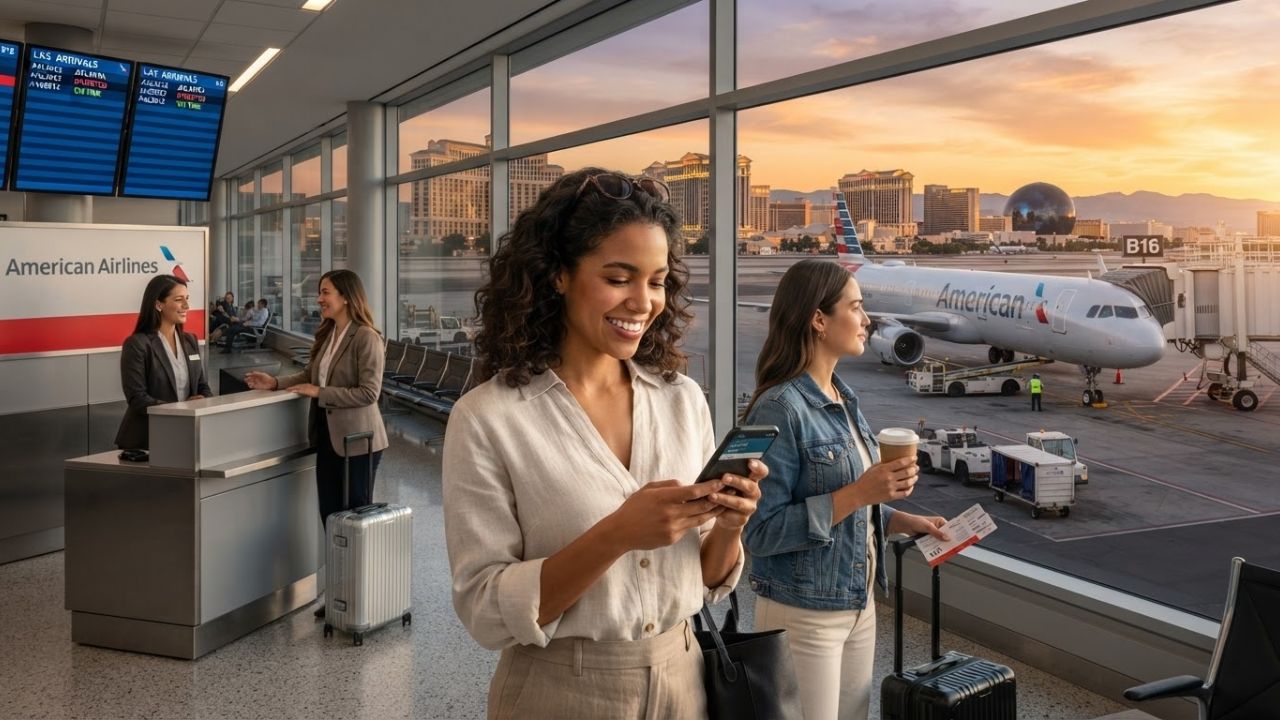
Image generated by AI
American Airlines flight AA3012, operating an Airbus A321 from Atlanta Hartsfield-Jackson to Phoenix Sky Harbor, diverted to Las Vegas on July 13, 2026. The flight arrived more than three hours behind schedule following a prolonged seven-hour journey.
The Disruption Details
[Las Vegas, Nevada – July 16, 2026] — On Monday, July 13, 2026, American Airlines flight AA3012 experienced an unscheduled diversion during its westbound transcontinental journey across the United States. The flight, operated by an Airbus A321-231 registered as N906AA, was scheduled to travel from Hartsfield-Jackson Atlanta International Airport (ATL) to Phoenix Sky Harbor International Airport (PHX). According to flight tracking systems, the aircraft departed Gate T10 in Atlanta at 6:12 PM Eastern Daylight Time (EDT) and began its flight path toward Arizona.
Instead of landing at its scheduled destination, flight tracking data shows the crew diverted the aircraft to Harry Reid International Airport (LAS) in Las Vegas. The Airbus A321 landed safely and reached Gate A20 at approximately 10:51 PM Pacific Daylight Time (PDT). This operational deviation resulted in an extended flight time of seven hours and thirty-nine minutes. This duration represents a significant increase over the typical flight time of three and a half hours for the Atlanta-Phoenix corridor.
Our analysis of the flight telemetry indicates that the aircraft arrived in Las Vegas three hours and twenty-six minutes later than its original scheduled arrival in Phoenix. Weather tracking and regional air traffic control logs indicate that flight routes across the southern United States were clear during the flight, suggesting that weather was likely not the primary driver of the diversion. Nonetheless, flight crews must navigate local traffic patterns and routing directives from regional FAA controllers, which can lead to unexpected changes in flight profiles. The exact sequence of events leading to the pilot's decision will remain speculative until the airline submits its official incident report.
Flight & Airport Impact Breakdown
The operational diversion of flight AA3012 created a ripple effect for passengers and airport ground logistics:
- Departure Airport Hub: Hartsfield-Jackson Atlanta International Airport (ATL), Gate T10. The flight departed on schedule at 6:12 PM EDT.
- Planned Arrival Destination: Phoenix Sky Harbor International Airport (PHX), where passengers faced a missed arrival window during the evening of July 13.
- Diversion Alternate Hub: Harry Reid International Airport (LAS), Gate A20. The aircraft landed and taxied to the gate at 10:51 PM PDT.
- Total Travel Duration: The flight was airborne and in transit for seven hours and thirty-nine minutes before reaching the gate in Las Vegas.
- Specific Route Deviations: Flight tracking logs show the aircraft maintained a standard cruise altitude before altering its course over the southwestern United States toward Nevada.
- Aircraft Specifications: The flight was operated using a twin-engine Airbus A321-200 series aircraft (registration N906AA), which is configured for high-density domestic routes.
Traveler Compensation & Rebooking Advisory (Information Gain)
Passengers affected by the diversion of American Airlines flight AA3012 are protected by regulatory frameworks established by the United States Department of Transportation (DOT). Travelers should review the following advisory to understand their rights and available compensation channels:
- Mandatory Cash Refunds: Under the Department of Transportation rules, passengers are entitled to a full refund of their ticket price if their flight is canceled or significantly delayed, and they choose not to accept the airline’s rebooking options. A delay is classified as significant if it exceeds three hours for domestic flights.
- Controllable vs. Uncontrollable Delays: If the diversion was caused by a controllable factor, such as a mechanical defect or crew scheduling issue, American Airlines is committed to providing meal vouchers for delays lasting over three hours. For overnight delays, the airline must provide complimentary hotel accommodations and ground transportation to the hotel.
- Alternative Transportation: The airline is obligated to rebook passengers on the next available flight to Phoenix Sky Harbor at no additional cost. Passengers can request to be rebooked on a partner carrier if American Airlines cannot provide a timely departure.
- Baggage Reimbursement: Passengers whose checked baggage is delayed due to the diversion can file claims for out-of-pocket expenses. Under federal regulations, airlines must reimburse passengers for reasonable interim expenses, such as clothing and toiletries, incurred due to delayed baggage.
- Documenting Expenses: Travelers should document all receipts for expenses incurred during the delay. If the airline does not provide vouchers at the gate, passengers can pay for meals or hotels independently and submit those receipts to American Airlines' customer relations team for reimbursement.
- Filing a Complaint: If the carrier fails to provide required amenities or refunds, passengers can submit an official complaint through the DOT Aviation Consumer Protection division portal.
Operational Analysis & Industry Analyst View
From an operational standpoint, flight diversions introduce complex logistical challenges that extend beyond passenger rebooking. When an aircraft is diverted to an unplanned destination, airline operations controllers must coordinate crew duty limitations. Federal Aviation Administration (FAA) regulations mandate strict flight crew rest requirements to prevent fatigue. An extended duty day, such as the seven-hour journey of flight AA3012, often pushes crews past their legal limits, requiring the airline to position a reserve crew at the diversion airport.
In addition, aircraft routing schedules are highly integrated, and a single diversion disrupts subsequent flights scheduled for that specific airframe. In this instance, the Airbus A321 (N906AA) remained out of position, forcing schedulers to swap aircraft or cancel downline flights to prevent network-wide delays. Maintenance teams at the alternate airport must also perform technical inspections if a system anomaly was the primary driver of the diversion.
Additionally, regional airport hubs must manage slot allocations and gate space to accommodate unplanned arrivals. When a diversion landing occurs, local air traffic controllers must integrate the incoming aircraft into the arrival queue without disrupting scheduled traffic. For Harry Reid International Airport in Las Vegas, a primary diversion point for southwestern routes, managing unscheduled arrivals is a routine but resource-intensive operation that requires close coordination with local ground handling services.
Related Travel Guides
Disclaimer
This article is for informational and educational purposes only. It does not constitute legal, financial, or professional advice. While we strive to provide accurate and up-to-date information, travel policies, regulations, and conditions change rapidly. Always verify information with official sources before making travel decisions. Nomad Lawyer makes no representations about the accuracy, reliability, completeness, or suitability of the information provided. Readers should consult qualified professionals for advice specific to their circumstances. The views expressed in this article are those of the author and do not necessarily reflect the views of Nomad Lawyer.
Preeti Gunjan
Contributor & Community Manager
A passionate traveller and community builder. Preeti helps grow the Nomad Lawyer community, fostering engagement and bringing the reader experience to life.
Learn more about our team →