
American Airlines Flight AA1811 Diverts to Harrisburg Due to Northeast Thunderstorms
American Airlines Flight AA1811 from Charlotte to New York diverted to Harrisburg International Airport after severe weather closed air corridors.

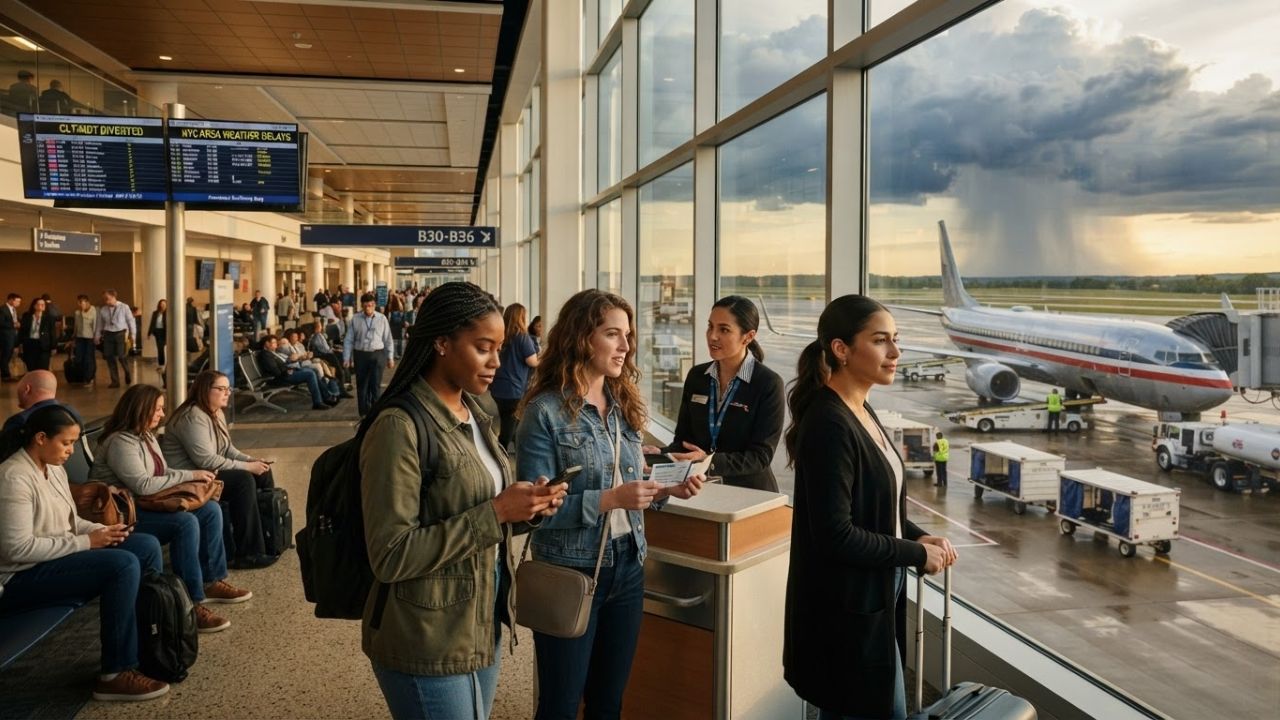
Image generated by AI
American Airlines Flight AA1811 from Charlotte to New York Diverts to Harrisburg Following Severe East Coast Thunderstorms
American Airlines Flight AA1811, carrying passengers from Charlotte to New York, diverted to Harrisburg International Airport after severe summer thunderstorms closed northeast airspace corridors on July 9, 2026. The Boeing 737-823 landed safely in Pennsylvania after holding due to wind shear and low visibility at its destination.
The Disruption Details
Our analysis indicates that severe convective weather can trigger immediate reroutings along the East Coast aviation corridors. On July 9, 2026, American Airlines Flight AA1811 departed Charlotte Douglas International Airport (CLT) at 4:43 PM, scheduled for a 5:18 PM arrival in New York. However, a fast-moving line of summer thunderstorms directly impacted the northeastern flight paths, producing heavy rain and dangerous wind shear near the destination hubs.
Flight tracking systems show the Boeing 737-823 aircraft, registered under the FAA database, entered holding patterns as air traffic control restricted incoming arrivals. With holding fuel depleting and the storm cells showing no signs of clearing, the flight crew executed a tactical diversion. The aircraft redirected to Harrisburg International Airport (MDT) in Middletown, Pennsylvania, landing safely at 6:39 PM.
Flight & Airport Impact Breakdown
The unscheduled landing at Harrisburg disrupted travel plans and required immediate coordination by airport terminal teams:
- Charlotte to New York Route: Widespread weather restrictions across the New York metro area delayed multiple commercial schedules.
- Harrisburg Alternate Hub: Harrisburg's regional terminal acted as a relief point, providing the runway capacity needed to support the mainline Boeing 737 jet.
- Luggage and Onward Transit: Luggage remained secured on the aircraft, forcing travelers who opted for ground transport to file missing baggage claims for future delivery.
- Ground Infrastructure Strain: Regional gate agents established dedicated support counters to manage rebooking options and passenger inquiries.
Table: Flight AA1811 Telemetry and Operations
| Parameter | Details | Source / Verification |
|---|---|---|
| Flight Number | AA1811 / AAL1811 | Active domestic schedule |
| Aircraft Model | Boeing 737-823 (Boeing 737-800) | FAA Aircraft Registry |
| Departure Airport | Charlotte Douglas International Airport (CLT) | North Carolina hub |
| Scheduled Destination | New York Metropolitan Area | New York terminal airspace |
| Actual Landing Site | Harrisburg International Airport (MDT) | Pennsylvania alternate |
| Departure Time | 4:43 PM local time (July 9, 2026) | Flight tracking systems |
| Actual Landing Time | 6:39 PM local time (July 9, 2026) | Regional airport log |
Passenger Rights & Advisory (Information Gain)
Passengers caught in weather-related flight diversions should understand their rights under Federal Aviation Administration (FAA) and Department of Transportation (DOT) guidelines. Because severe summer storms are legally classified as uncontrollable extraordinary circumstances, airlines are exempt from paying mandatory cash compensation for delay-related disruptions. However, carriers must still uphold basic duty of care standards, which include providing access to communication, food, and drinks during extended waits.
If a diversion results in an overnight delay, the airline is required to provide hotel vouchers or reimburse reasonable lodging expenses. Travelers who choose to leave the diversion airport via ground transport rather than waiting for the aircraft to fly to New York must file a baggage report. This ensures the airline forwards the luggage to the final destination address. Harrisburg sits approximately 170 miles from Manhattan, and stranded passengers frequently choose to complete their journey via rental cars, regional rail, or airline-coordinated charter buses.
Industry Analyst View
The Northeast aviation corridor remains highly vulnerable to summer storms, which cause cascading delays across the national network. Flight dispatchers and captains must balance fuel capacity constraints against holding patterns ordered by air traffic control. Choosing a regional alternate like Harrisburg allows airlines to safely park the aircraft, refuel, and wait out the storm without risking fuel exhaustion.
For regional airports, handling unexpected mainline aircraft requires quick operational coordination. Ground crews must clear gates and prepare passenger facilities for immediate arrivals. The ability of regional alternates to absorb diverted traffic is essential for maintaining the overall stability of the United States air traffic network during severe weather events.
Related Travel Guides
Disclaimer
This article is for informational and educational purposes only. It does not constitute legal, financial, or professional advice. While we strive to provide accurate and up-to-date information, travel policies, regulations, and conditions change rapidly. Always verify information with official sources before making travel decisions. Nomad Lawyer makes no representations about the accuracy, reliability, completeness, or suitability of the information provided. Readers should consult qualified professionals for advice specific to their circumstances. The views expressed in this article are those of the author and do not necessarily reflect the views of Nomad Lawyer.
Kunal K Choudhary
Co-Founder & Contributor
A passionate traveller and tech enthusiast. Kunal contributes to the vision and growth of Nomad Lawyer, bringing fresh perspectives and driving the community forward.
Learn more about our team →