
American Airlines Emergency Landing Sparks Travel Chaos: Flight 735 Hit by Lightning, Triggering LHR Airport Disruptions
Breaking airline news: A suspected lightning strike forces American Airlines Flight 735 into a dramatic emergency landing at London Heathrow, sparking localized travel chaos.

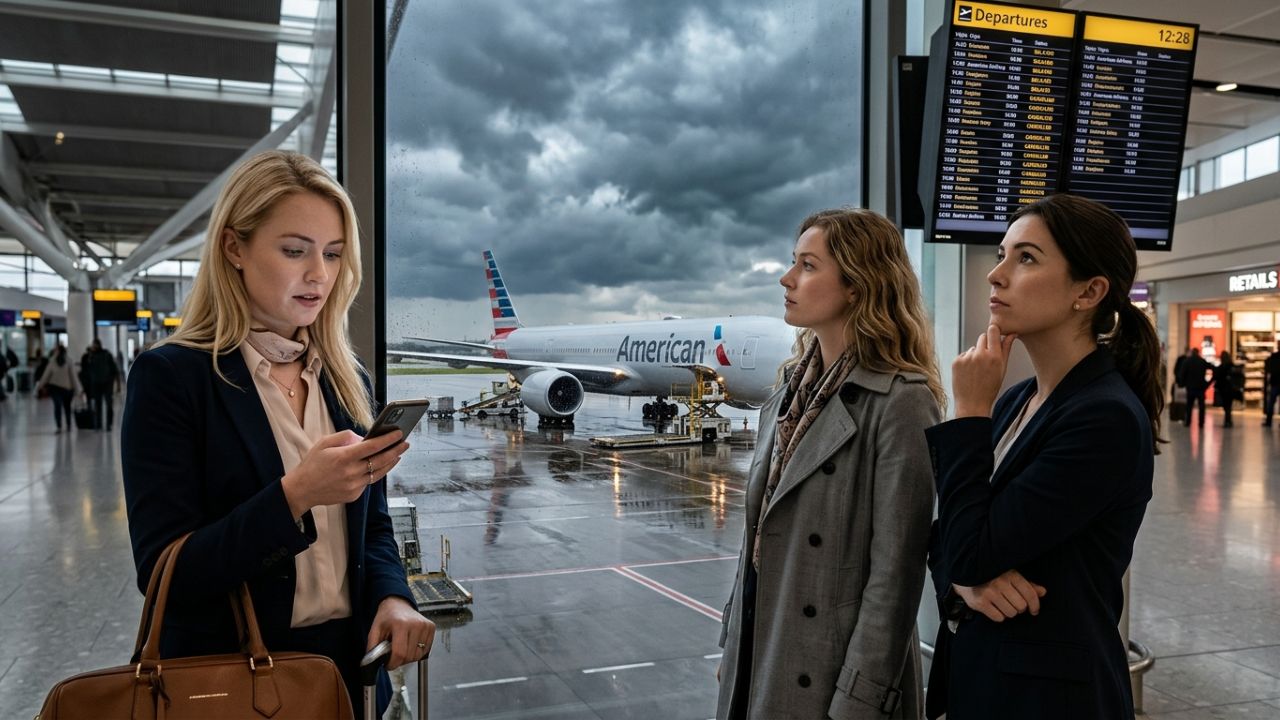
Image representing the highly secure emergency return of American Airlines Flight 735 to London Heathrow, a necessary safety maneuver that inadvertently triggered localized travel chaos.
American Airlines Emergency Landing Sparks Travel Chaos: Flight 735 Hit by Lightning, Triggering LHR Airport Disruptions
A Transatlantic Emergency Return Above the United Kingdom
A routine afternoon departure across the Atlantic instantly transformed into a high-stakes emergency, plunging hundreds of passengers into sudden travel chaos. According to the latest breaking airline news, American Airlines Flight 735 was forced to abruptly abandon its scheduled crossing from London Heathrow Airport (LHR) to Charlotte Douglas International Airport (CLT) after sustaining a suspected lightning strike. Operating in turbulent airspace over the United Kingdom, the flight crew immediately transmitted a general emergency code and initiated a rapid return to London. While the aircraft landed safely without a single reported injury, the intense precautionary measures triggered immediate, localized airport disruptions and cascading flight cancellations.
In the modern commercial aviation sector, safety protocols dictate that any suspected atmospheric electrical strike requires an immediate, total cessation of the flight plan until the aircraft undergoes comprehensive structural and electronic inspections. For the passengers bound for North Carolina, this strict adherence to safety resulted in immense logistical friction, completely derailing their itineraries. This highly monitored event serves as a stark reminder that despite utilizing the most advanced aerospace technology on the planet, extreme weather systems can still sever critical global transport networks, sparking unavoidable travel chaos across major transatlantic corridors.
The Scale of the Emergency Diversion
When a heavily loaded wide-body aircraft departs London Heathrow for the United States, it is fully fueled for an endurance run over the open ocean. Discovering a potential technical anomaly caused by a lightning strike prior to the oceanic crossing leaves the crew with only one viable option: a heavy, emergency return to the departure hub.
According to flight tracking data, Flight 735 proceeded westbound towards the Atlantic before executing a sharp course reversal over the UK. The flight deck transmitted the internationally recognized 7700 emergency squawk code. While this code sounds alarming to the public, for aviation professionals, it operates as a vital organizational tool. It signals to air traffic control that the aircraft requires absolute priority handling, immediately pausing other operations and potentially causing minor airport disruptions at Heathrow to ensure the stricken jet secures an immediate, unobstructed path to the runway. The aircraft touched down safely approximately one hour after its initial departure, surrounded by pre-positioned emergency response teams.
Section-Wise Breakdown: Navigating the Weather Threat
The defense against this mid-air emergency required intense real-time coordination and heavily fortified aerospace engineering:
The Transatlantic LHR-CLT Corridor Interruption The route between London and Charlotte is an incredibly high-value economic pipeline. Serving both intense business and leisure markets, this specific corridor connects Europe directly into one of North America's largest hub-and-spoke systems. Charlotte Douglas International Airport facilitates massive connectivity into the US South, the Caribbean, and Latin America. When Flight 735 was forced back to London, the resulting flight cancellations instantly severed these vital connections, stranding passengers in Britain and severely disrupting American Airlines' downstream domestic network.
Inside the Lightning Strike Defense System While passengers may view a mid-air lightning strike as a terrifying catalyst for travel chaos, aerospace engineers anticipate these exact events. Industry statistics confirm that commercial aircraft are struck by lightning approximately once every one to two years on average. The fact that Flight 735 survived the strike without catastrophic failure proves the aircraft's internal safeguards performed flawlessly. Modern aircraft skins are highly conductive, designed specifically to capture the electrical current and discharge it harmlessly back into the atmosphere while heavily shielding critical internal avionics and fuel systems.
The Rigorous Engineering Overhaul The true cause of the resulting airport disruptions is the mandatory, uncompromising inspection regime that follows the landing. When an aircraft suspects a strike, it is immediately grounded. Maintenance engineers must meticulously examine the fuselage, radar systems, flight control components, and composite materials. This exhaustively detailed process often takes several hours or even days, ensuring that the aircraft is undeniably airworthy before it is ever allowed back into the sky.
Operational Flight Details: The Crisis Management Matrices
To provide exact, factual clarity on the immense scope of this emergency return and the safety protocols deployed, industry analysts track the specific operational parameters of the event. The following factual matrices detail the precise breakdown of American Airlines Flight 735:
Factual Flight Timeline Matrix
| Event | Details |
|---|---|
| Flight Number | American Airlines Flight 735 |
| Route | London Heathrow (LHR) – Charlotte Douglas (CLT) |
| Aircraft Status | Returned to departure airport |
| Cause | Suspected lightning strike |
| Emergency Code | 7700 (General Emergency) |
| Outcome | Safe landing at Heathrow |
| Passenger Injuries | None reported |
| Subsequent Impact | Following scheduled service cancelled |
Factual Key Route Facts Matrix
| Category | Information |
|---|---|
| Origin Airport | London Heathrow Airport |
| Destination Airport | Charlotte Douglas International Airport |
| Approximate Flight Time | 8.5–9 hours |
| Market Type | Transatlantic business and leisure travel |
| Airline | American Airlines |
| Hub Importance | Charlotte serves as a major American Airlines hub |
Factual Aircraft Lightning Protection Features Matrix
| Aircraft Lightning Protection Features | Purpose |
|---|---|
| Conductive outer skin | Directs electrical current safely around the aircraft |
| Static discharge systems | Dissipates electrical energy |
| Shielded avionics | Protects navigation and communication systems |
| Fuel tank protection systems | Prevent ignition risks |
| Mandatory post-strike inspections | Verify structural integrity |
Factual Post-Lightning Inspection Sequence Matrix
| Step | Action |
|---|---|
| 1 | Crew reports suspected strike |
| 2 | Aircraft undergoes engineering review |
| 3 | Visual structural inspection |
| 4 | Electronic systems assessment |
| 5 | Documentation and maintenance sign-off |
| 6 | Return-to-service approval |
Passenger Impact: Navigating the Disruption
For the passengers aboard Flight 735, the sudden turnaround and subsequent emergency landing generated severe anxiety and massive logistical travel chaos. Upon landing back at LHR, passengers were faced with the reality that the subsequent scheduled service for Flight 735 had been officially cancelled. This forced travelers into crowded customer service lines, attempting to rebook on alternative transatlantic carriers or secure emergency hotel accommodations in London.
To help travelers navigate the immense friction of weather-related airport disruptions, aviation experts have compiled a standardized survival guide:
Factual Practical Advice for Transatlantic Travellers Matrix
| Travel Tip | Why It Matters |
|---|---|
| Avoid extremely tight onward connections | Weather disruptions can create lengthy delays |
| Monitor airline notifications | Operational changes are often communicated rapidly |
| Consider travel insurance | May assist with disruption-related expenses |
| Keep essential items in cabin baggage | Useful during unexpected returns or diversions |
| Arrive prepared for schedule changes | Operational safety always takes precedence |
Industry Analysis: Safety Over Schedule
According to the latest aviation updates, the handling of Flight 735 perfectly illustrates the uncompromising nature of modern commercial aviation safety. The decision to squawk 7700, abort the oceanic crossing, and ground the aircraft for exhaustive structural testing represents millions of dollars in lost revenue and passenger compensation. However, airlines universally accept this financial hit to guarantee absolute passenger security. Industry safety data consistently proves that despite the occasional terrifying weather event, advanced radar, robust engineering, and elite crew training keep commercial flying as the safest form of global transportation.
Conclusion: A Successful Defense Against Disaster
The emergency return of American Airlines Flight 735 to London Heathrow highlights the incredible resilience of the aviation sector when faced with sudden atmospheric threats. By aggressively responding to a suspected mid-air lightning strike, the flight crew and LHR air traffic controllers successfully coordinated a safe, priority landing, ensuring zero passenger injuries. While this unwavering commitment to safety inadvertently triggered severe flight cancellations and agonizing travel chaos for the transatlantic passengers, it proves that the system's defensive redundancies work flawlessly. As unpredictable summer weather patterns continue to threaten European and North American airspace, travelers must remain highly flexible, knowing that airlines will always choose to execute a disruptive emergency landing rather than risk a compromised aircraft over the open ocean.
Key Takeaways
- Mid-Air Emergency: American Airlines Flight 735 (LHR to CLT) suffered a suspected lightning strike, triggering a 7700 emergency squawk code and an immediate return to London.
- Zero Casualties: The aircraft landed safely at Heathrow approximately one hour after departure, with emergency response teams on standby and no injuries reported.
- Severe Disruption: The precautionary grounding of the aircraft directly resulted in the absolute cancellation of the subsequent Flight 735 service, sparking massive travel chaos.
- Aerospace Resilience: Commercial jets are struck by lightning every 1-2 years on average; conductive skins and shielded avionics successfully prevented catastrophic failure.
- Uncompromising Inspections: The resulting airport disruptions are caused by the mandatory, highly rigorous engineering inspections required before the aircraft can legally fly again.
🌍 Related Travel Guides & Flight Resources
- Navigate Airport Disruptions Like a Pro Master the art of surviving unexpected travel chaos with our expert strategies.
- Breaking Airline News & Evasion Routes Stay ahead of the delays with our real-time aviation updates and route intelligence.
- Global Flight Cancellation Defense Grid Essential legal rights and compensation tactics when your flight goes down.
⚖️ Disclaimer
The aviation safety intelligence, emergency response timelines, and mechanical diagnostics provided in this report are for informational purposes only. Airline emergency protocols, regional diversion strategies, and airport standby statuses are highly volatile and subject to immediate change based on real-time mechanical assessments and air traffic control directives. All incident data has been officially sourced from flight tracking telemetry and remains fluid pending official aviation authority investigations. NomadLawyer does not guarantee the absolute accuracy or current validity of the information provided and assumes no liability for travel disruptions, flight cancellations, delayed transit, or any financial consequences resulting from the use of this content. Passengers are strongly advised to independently verify all flight statuses directly with their respective airlines.
Disclaimer
This article is for informational and educational purposes only. It does not constitute legal, financial, or professional advice. While we strive to provide accurate and up-to-date information, travel policies, regulations, and conditions change rapidly. Always verify information with official sources before making travel decisions. Nomad Lawyer makes no representations about the accuracy, reliability, completeness, or suitability of the information provided. Readers should consult qualified professionals for advice specific to their circumstances. The views expressed in this article are those of the author and do not necessarily reflect the views of Nomad Lawyer.
Kunal K Choudhary
Co-Founder & Contributor
A passionate traveller and tech enthusiast. Kunal contributes to the vision and growth of Nomad Lawyer, bringing fresh perspectives and driving the community forward.
Learn more about our team →