
American Airlines Flight 618 Diverts to Baltimore Following First-Class Passenger Disturbance
American Airlines Flight 618 from Dallas to Newark made an emergency diversion to Baltimore after crew and passengers restrained an aggressive traveler.

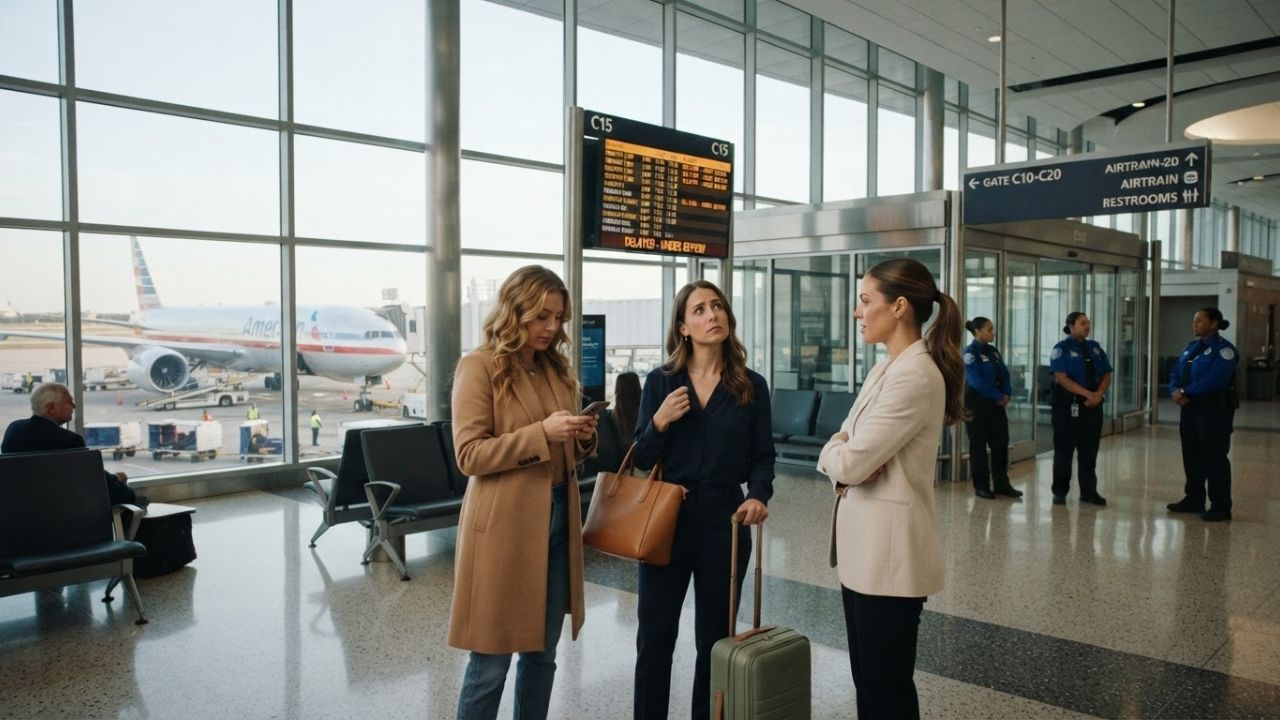
Image generated by AI
American Airlines Flight 618 en route from Dallas-Fort Worth to Newark diverted to Baltimore/Washington International Airport after flight attendants and passengers restrained an aggressive first-class traveler with zip ties and tape.
BALTIMORE — An emergency mid-flight disruption aboard American Airlines Flight 618 prompted a sudden diversion on September 5, 2026, forcing the scheduled cross-country flight to make an unscheduled landing at Baltimore/Washington International Thurgood Marshall Airport (BWI). The flight, operating a high-density trunk route from Dallas Fort Worth International Airport (DFW) in Texas to Newark Liberty International Airport (EWR) in New Jersey, touched down safely in Maryland after cabin crew and seated travelers physically subdued an aggressive individual in the premium cabin.
Local law enforcement officers and federal security personnel met the Boeing jetliner upon arrival at the BWI gate, immediately taking the restrained traveler into federal custody. Following witness statements and an inspection of the passenger cabin, the aircraft refueled and completed its journey to Newark. The mid-air confrontation has revived industry discussions regarding federal enforcement of unruly passenger penalties and the legal protocols governing emergency physical restraint at 35,000 feet.
The Local Trend Revealed: Emergency Restraints at Cruising Altitude
According to cabin accounts and passenger statements, the incident escalated rapidly mid-flight within the first-class forward cabin. An individual allegedly began exhibiting volatile, confrontational behavior, verbally challenging flight attendants and directing threats toward surrounding seated passengers.
As verbal de-escalation tactics failed and the individual’s physical posture threatened the safety of the flight deck and forward galley, cabin crew activated emergency containment measures. With the direct assistance of several passengers, flight attendants applied physical restraints—including industrial-grade zip-tie flex cuffs and duct tape—to secure the individual into a seat for the remainder of the descent.
In commercial aviation, the decision to divert an airliner is never taken lightly. Diverting from a heavily congested New York airspace approach corridor into Baltimore requires coordinating with Federal Aviation Administration (FAA) regional air traffic control, dumping or burning excess fuel to achieve maximum landing weight, and incurring thousands of dollars in ground handling, gate leasing, and schedule delay penalties. However, when an individual’s conduct poses an unmanageable threat in a pressurized, enclosed environment where medical and security personnel are unreachable, diversion to the nearest capable runway represents standard operating protocol.
Cultural & Environmental Value: Legal Penalties and Crew De-Escalation Realities
The incident on Flight 618 highlights the severe legal jeopardy confronting unruly passengers under post-2020 FAA zero-tolerance mandates. Under Title 49 of the United States Code (49 U.S.C. § 46504), assaulting, intimidating, or interfering with a flight crew member or flight attendant carries severe criminal penalties, including federal prison sentences of up to 20 years and civil fines reaching $37,000 per violation. Furthermore, individuals subject to federal removal are routinely placed on internal airline no-fly lists and referred to the Department of Justice (DOJ) for federal felony prosecution.
From an airline operational standpoint, emergency diversions introduce unexpected fuel burn and atmospheric emissions, requiring subsequent repositioning flights that disrupt downstream aircraft rotations. The broader aviation community continues to invest heavily in specialized conflict de-escalation and self-defense training for flight attendants, emphasizing that safe skies depend upon collective civic decorum and absolute compliance with crew directives.
Local Visitor Insider Tips: Diversion Logistics, Rail Contingencies, and Hub Security
For passengers facing unexpected flight diversions between the Texas hub and the Mid-Atlantic corridor, practical knowledge ensures quick recovery:
- BWI Rail Contingency Route: If a flight diversion to Baltimore/Washington International (BWI) results in a prolonged ground hold or outright flight cancellation, travelers bound for New Jersey or Manhattan can bypass the airport entirely. Board the free BWI airport shuttle to the nearby BWI Rail Station, where Amtrak Northeast Regional and Acela trains depart multiple times per hour, delivering passengers directly into Newark Penn Station or New York Penn Station in approximately two hours.
- Passenger Etiquette During In-Flight Disruptions: If a cabin disturbance breaks out during flight, remain firmly seated with your seatbelt fastened. Do not unbuckle to record video footage in aisle ways, as crowding the aisles impedes flight attendants' ability to navigate emergency equipment or execute restraint procedures. Never attempt to intervene physically unless specifically requested by a flight attendant.
- Dining and Rest Stops Across Involved Gateways:
- Dallas-Fort Worth (DFW): If departing DFW, enjoy authentic Texas hickory-smoked brisket and pulled pork at Salt Lick Bar-B-Q (Terminal A) or Cousins Bar-B-Q (Terminal B).
- Baltimore/Washington (BWI): If stranded during a layover at BWI, sample genuine Maryland seafood. Visit Obrycki’s Restaurant & Bar in Concourse B for hot blue crab cakes and spiced Bloody Marys, or Phillips Seafood in Concourse D.
- Newark Liberty (EWR): Terminal A showcases local New Jersey food traditions, including fresh artisanal bagels and classic pork roll/Taylor ham breakfast sandwiches.
Tourism Outlook: Strengthening Passenger Protections on Premier Business Corridors
The DFW-to-EWR corridor represents one of North America’s most vital commercial corridors, connecting Texas energy and technology corporate headquarters with the Wall Street financial center. The swift, professional resolution of the Flight 618 incident illustrates the high standard of training maintained by American Airlines crews and the operational responsiveness of BWI air traffic teams.
As global passenger volumes expand across domestic trunk routes, the commercial aviation sector is actively tightening collaboration between the FAA, Transportation Security Administration (TSA), and local airport police departments. By enforcing rigid legal accountability for airborne misconduct and prioritizing passenger and crew wellbeing above schedule adherence, US carriers ensure that commercial skies remain safe, reliable, and secure for millions of daily travelers.
Related Travel Guides
Disclaimer
This article is for informational and educational purposes only. It does not constitute legal, financial, or professional advice. While we strive to provide accurate and up-to-date information, travel policies, regulations, and conditions change rapidly. Always verify information with official sources before making travel decisions. Nomad Lawyer makes no representations about the accuracy, reliability, completeness, or suitability of the information provided. Readers should consult qualified professionals for advice specific to their circumstances. The views expressed in this article are those of the author and do not necessarily reflect the views of Nomad Lawyer.
Raushan Kumar
Founder & Lead Developer
Full-stack developer with 11+ years of experience and a passionate traveller. Raushan built Nomad Lawyer from the ground up with a vision to create the best travel and law experience on the web.
Learn more about our team →