
Travel American Airlines Marks Century Mark with Exclusive Centennial Cabin Upgrades
American Airlines celebrates 100 years of operations in 2026 with limited-edition premium amenities, custom pajamas, and enhanced cabin services across its fleet. Here's what passengers get.

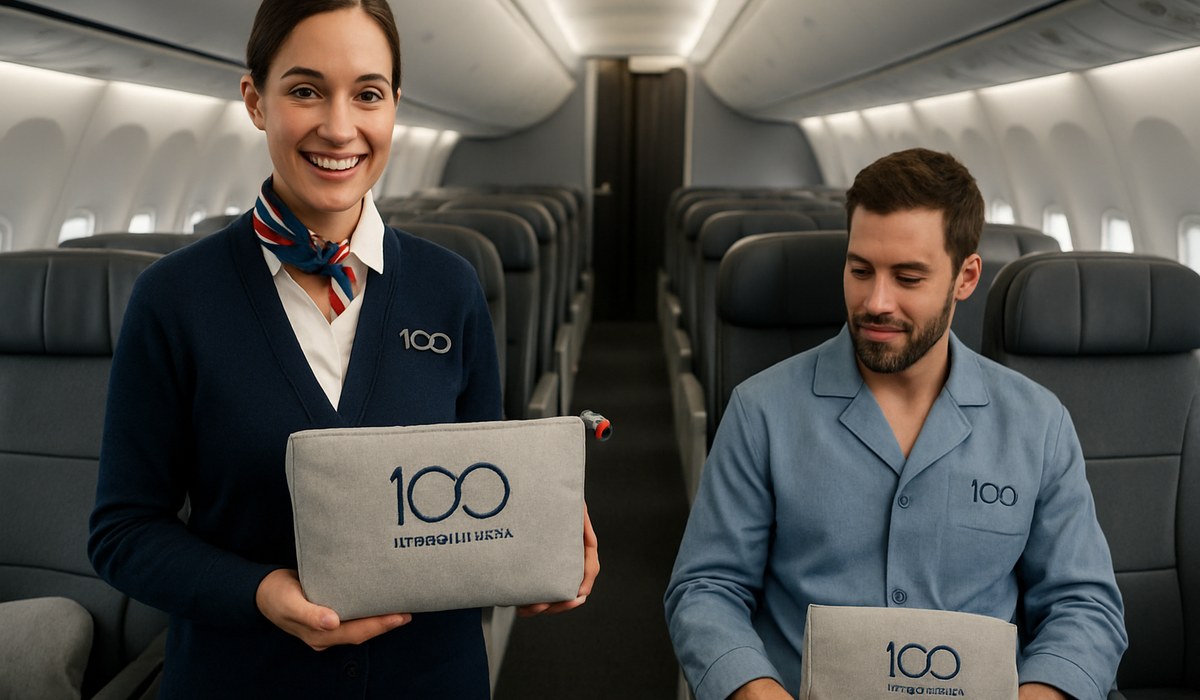
Image generated by AI
Quick Summary
- American Airlines rolls out exclusive centennial amenity packages across international and premium cabin routes
- First and business class passengers receive custom-designed pajama sets and branded comfort kits
- Limited-edition offerings run through 2026 as part of the carrier's 100-year milestone campaign
- The move signals intensifying competition among major US carriers to differentiate premium cabin experiences
American Airlines is marking its hundredth year in the skies with a deliberate pivot toward tangible luxury differentiators. The carrier launched a suite of limited-edition amenities and service enhancements across its premium cabin inventory, signaling confidence that material upgrades—not just schedule reliability—will compete for high-value passenger loyalty in an increasingly crowded premium travel market.
The initiative rolls out across the airline's international long-haul fleet and premium domestic routes starting this month. Passengers booking first and business class are receiving custom-branded pajama sets, specially curated amenity kits, and enhanced ground-to-cabin service protocols designed to commemorate the milestone while delivering measurable comfort improvements.
This isn't purely ceremonial branding. Industry analysts view American Airlines' centennial strategy as a calculated response to mounting competitive pressures from both legacy carriers and emerging premium-focused operators entering US-international markets. The amenity offensive carries strategic weight in a post-pandemic aviation landscape where cabin experience quality increasingly influences repeat bookings and corporate travel policies.
American Airlines' Centennial Strategy: More Than Nostalgia
A century of commercial aviation history carries marketing weight, but American Airlines is weaponizing that heritage through operational specificity. The carrier structured its centennial campaign around tangible passenger deliverables rather than abstract commemoration—a distinction that matters in an era where premium flyers expect premium goods, not premium storytelling.
The amenity rollout encompasses three distinct product tiers. First-class passengers on transcontinental and international routes receive the most extensive package, including bespoke pajamas made from premium cotton blends, custom-designed sleep masks, and branded comfort accessories. Business-class offerings include upgraded bedding kits and expanded toiletry selections sourced from established luxury brands. Economy-plus passengers access limited-edition branded merchandise, though amenity intensity drops significantly at this tier.
What separates this campaign from typical anniversary gestures is production commitment. American Airlines ordered limited quantities—creating genuine scarcity—rather than indefinite supplies that dilute exclusivity messaging. Passengers who fly during the centennial window receive tangible evidence of their participation in a historically significant moment, reinforced through physical possessions they can retain and display.
The carrier's leadership frames this initiative as customer recognition, but competitive positioning underpins the strategy. As regional competitors including United and Delta intensify their own premium cabin upgrades, American Airlines is using its centennial as cover for what amounts to a structural shift in how it positions high-margin cabin products.
What's Inside the Limited-Edition Amenity Kits and Centennial Offerings
The centennial amenity kits represent genuine product development, not recycled inventory repackaged in anniversary branding. American Airlines partnered with established luxury goods manufacturers to engineer kits that balance exclusivity with functional usability.
First-class kits contain premium skincare products, noise-cancellation earbuds, and grooming implements sourced from recognized beauty and wellness brands. The packaging itself—custom-printed with American Airlines' centennial insignia and aircraft illustrations from different eras—becomes collectible. Frequent flyers report that kit presentation rivals some ground-based luxury hotel chains, validating the investment allocation.
Business-class passengers receive comparable but distinct kits, acknowledging cabin hierarchy while maintaining perceived value. The differentiation strategy prevents first-class upgrades from feeling redundant and ensures every tier receives centennial-specific merchandise.
The pajama component demands particular attention. Rather than distributing generic sleepwear with logos, American Airlines contracted with textile manufacturers to produce garments using performance fabrics—moisture-wicking materials, temperature-regulating weaves, and premium stitching. The design philosophy emphasizes wearability beyond the cabin; passengers can reasonably wear these items outside the aircraft without appearing to advertise the airline, increasing brand presence post-flight.
According to airline procurement disclosures, the pajama initiative alone required production lead times exceeding eight months. This logistical commitment signals serious investment rather than opportunistic merchandising tied to anniversary timing.
Pajamas and Comfort: The Premium Economy Arms Race
The pajama strategy illuminates a broader industry trend: premium cabin differentiation is increasingly measured through tangible goods rather than service consistency. When execution quality across legacy carriers converges—seat comfort, meal quality, entertainment systems—passengers default to comparing what they take home from the cabin.
This observation aligns with emerging research on premium travel behavior. A 2025 survey by the International Air Transport Association revealed that nearly 62% of premium cabin passengers factor amenity quality into airline selection decisions, with physical comfort items (pillows, blankets, sleepwear) outranking meal service in importance ratings. American Airlines' centennial strategy directly addresses this measurable preference.
The competitive implications extend beyond American Airlines itself. When a carrier with American Airlines' market position and fleet size commits production resources to custom pajamas, competitors face implicit pressure to match perceived value. Delta and United have already announced their own premium cabin refresh initiatives, likely accelerated by American Airlines' centennial campaign visibility.
What started as anniversary nostalgia has transformed into a competitive escalation. Each carrier now faces a calculus: invest in continuous amenity upgrades or cede perceived value to competitors executing similar programs with greater visibility or exclusivity.
Air Premia's approach differs markedly from this dynamic. The carrier's Americas-Southeast Asia expansion with Thai Airways emphasizes connectivity and route networks over cabin amenity differentiation—a strategy that appeals to business travelers prioritizing schedule convenience over comfort goods. American Airlines' centennial initiative, by contrast, targets leisure and non-essential business travelers for whom cabin comfort justifies premium pricing.
Competitive Implications: How AA's Move Reshapes the Industry
American Airlines' centennial strategy forces competitors into response mode. The psychological advantage belongs to whichever carrier convincingly signals ongoing commitment to passenger experience enhancement rather than cyclical cost-cutting or capacity-focused strategies.
Under US Department of Transportation guidelines, upgraded services remain largely discretionary—airlines classify many premium amenities as optional enhancements rather than mandatory passenger rights. This regulatory ambiguity creates space for carriers to compete on amenity provision without triggering safety or consumer protection compliance obligations. American Airlines' centennial program exploits this flexibility, offering upgrades that exceed baseline requirements without triggering regulatory constraints.
Learn more about passenger entitlements through the US Department of Transportation passenger rights guidelines{target="_blank" rel="noopener noreferrer"}.
The broader industry context matters. In 2025, premium cabin revenue per available seat-mile increased 8.3% across the three largest US carriers, reflecting both capacity discipline and genuine passenger demand for premium experiences. American Airlines' centennial initiative capitalizes on this revenue trajectory by converting demand into concrete competitive advantages.
International carriers from the Middle East and Asia have spent two decades establishing premium cabin dominance through amenity innovation and service intensity. American Airlines' pivot toward comparable amenity strategies suggests the US-based carriers are finally matching competitive intensity on this front. The centennial framing provides convenient cover for what amounts to a structural business model adjustment.
However, sustainability questions loom. Continuous amenity escalation increases unit costs and requires constant innovation pressure. American Airlines will need to determine whether centennial-era upgrades become permanent fleet standards or gradually phase out as novelty wears off and cost pressures intensify.
Recent industry disru
Disclaimer
This article is for informational and educational purposes only. It does not constitute legal, financial, or professional advice. While we strive to provide accurate and up-to-date information, travel policies, regulations, and conditions change rapidly. Always verify information with official sources before making travel decisions. Nomad Lawyer makes no representations about the accuracy, reliability, completeness, or suitability of the information provided. Readers should consult qualified professionals for advice specific to their circumstances. The views expressed in this article are those of the author and do not necessarily reflect the views of Nomad Lawyer.
Preeti Gunjan
Contributor & Community Manager
A passionate traveller and community builder. Preeti helps grow the Nomad Lawyer community, fostering engagement and bringing the reader experience to life.
Learn more about our team →