
American Airlines Overhauls Bumping Policy After Recording 60% of All US Involuntary Denied Boardings
American Airlines introduces strict operational rules effective 30 September 2026 to eliminate involuntary bumping, after logging 14,758 denied boardings in 2025.

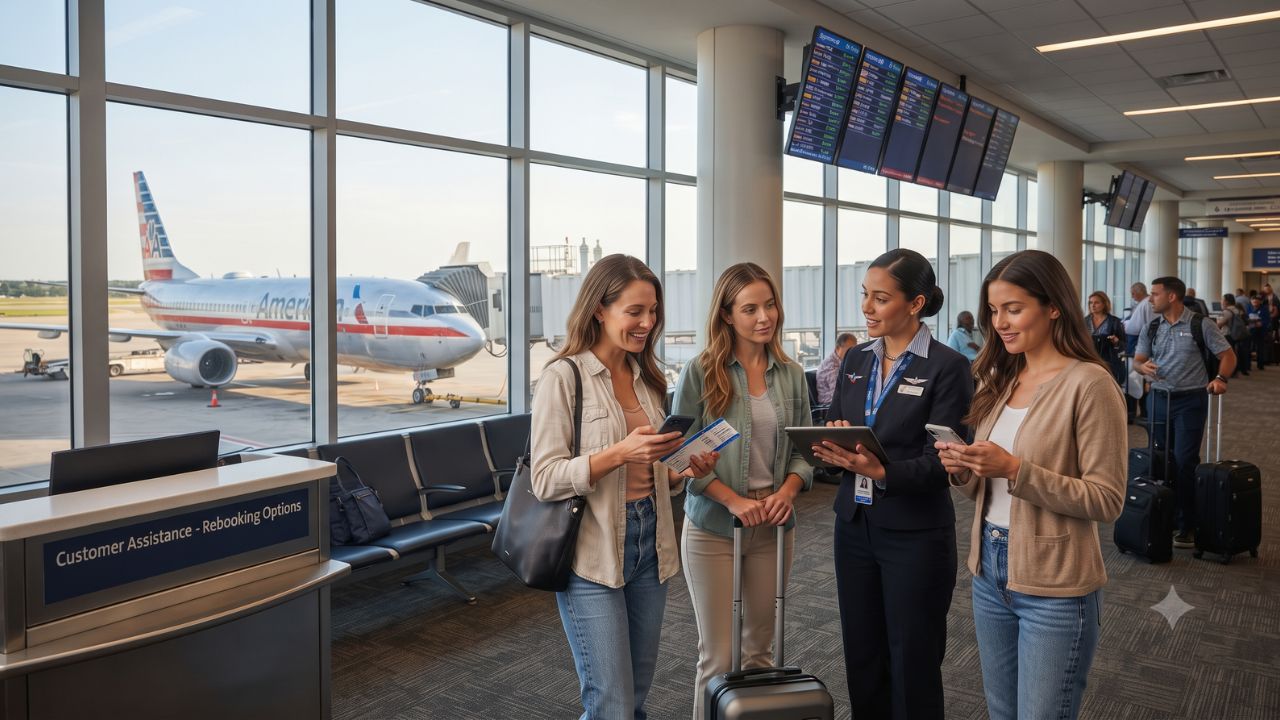
Responsible for an astonishing 14,758 involuntary denied boardings in 2025—representing approximately 60% of all passenger bumping incidents across the entire United States commercial airline industry—American Airlines enacted a comprehensive operational directive on 30 September 2026 designed to halt the forced removal of ticketed travelers from oversold flights. The policy shift follows intense regulatory and public scrutiny spurred by federal data from the Bureau of Transportation Statistics (BTS) and the U.S. Department of Transportation (DOT), which highlighted a stark industry contrast: while American bumped nearly 15,000 passengers, its primary network rival Delta Air Lines recorded exactly zero involuntary denied boardings during the same twelve-month period.
The revised operational protocol covers both mainline flights and regional carrier operations under the American Eagle brand. Rather than selecting passengers for involuntary removal at the jet bridge, gate agents must now exhaust voluntary compensation mechanisms, leverage real-time digital bidding tools, and involve senior station management before any boarding passes are revoked. However, while the initiative promises relief for travelers transiting major connection hubs, the airline is not ending overbooking: commercial algorithms will continue to sell surplus seats, shifting the operational challenge entirely onto airport staff to resolve oversold flights through financial incentives.
The Legacy of Algorithmic Overbooking: Explaining American’s 60% Industry Share
Overbooking is an established commercial mechanism employed by network airlines to counteract passenger no-shows, late cancellations, and missed connections. By utilizing historical statistical models that predict passenger fallout based on weather patterns, day of the week, and fare classes, carriers sell seats exceeding aircraft physical capacity to maximize revenue per available seat mile (RASM).
However, in 2025, American Airlines’ revenue management algorithms failed to align with post-pandemic consumer behavior. Across all reporting US carriers, the DOT logged 24,596 involuntary denied boardings. American's 14,758 incidents accounted for roughly six out of every ten bumped fliers nationwide. While legacy competitor Delta resolved oversales through proactive, app-based reverse auctions that offered volunteers up to several thousand dollars in travel credits before departure, American frequently allowed oversold flights to reach the boarding gate unresolved, resulting in acrimonious involuntary ejections.
Early performance indicators in 2026 demonstrate that operational revisions are altering these metrics. Involuntary bumping fell by 55% during the second quarter of 2026 compared to Q2 2025, followed by a dramatic 85% year-on-year drop in the third quarter. At test stations where revised digital tools were deployed over the summer, the carrier reported that involuntary denied boardings were entirely eliminated.
Ground Mechanics of the 2026 Reform: Pre-Emptive Bidding, Gate Holds, and Station Autonomy
The 30 September 2026 policy directive restructures the operational hierarchy at the boarding gate. Rather than treating oversold aircraft as an isolated gate-agent issue, American has instituted procedural safeguards that decentralize financial authority:
- Digital Volunteer Solicitation: Travelers identified on potentially oversold flights receive push notifications through the American Airlines mobile application and email prior to arrival at the gate, allowing them to view and accept voluntary compensation packages.
- On-Site Station Authority: Local station managers and airport supervisors are granted authority to increase voluntary compensation bids dynamically without obtaining bureaucratic sign-off from corporate headquarters in Fort Worth.
- Supervisory Gate Mandate: A Customer Service Manager or higher-ranking operational supervisor must be physically present at the gate for every oversold departure to oversee volunteer negotiations.
- Discretionary Departure Holds: Gate staff are authorized to hold aircraft departures briefly to finalize confirmed alternate itineraries and transfer baggage for volunteers.
| Operational Dimension | Pre-September 2026 Standard | Post-30 September 2026 Policy | Federal Regulatory Standard (14 CFR Part 250) |
|---|---|---|---|
| Industry Share of Bumping | 60% of all US bumping (14,758 fliers in 2025) | Down 85% YoY in Q3 2026; zero at trial hubs | Industry benchmark: Delta recorded 0 involuntary bumps in 2025 |
| Oversale Resolution Method | Involuntary removal based on check-in time/fare | Pure voluntary solicitation; mandatory volunteer search | Airlines must solicit volunteers before involuntary bumping |
| Compensation Authorization | Rigid corporate payout tiers requiring central approval | Station management authorized to increase compensation | Voluntary offers are unregulated; statutory caps govern involuntary |
| Gate Management Oversight | Handled by individual gate agents under turn pressure | Mandatory physical presence of Customer Service Manager | Carrier customer service plan compliance mandate |
| Alternative Flight Booking | Standby priority or unconfirmed seat routing | Confirmed seat reservation on next available departure | Must provide alternate transportation with minimal delay |
| Domestic Delay Penalty (1–2 hrs) | Applied when forced off oversold flights | Avoided through voluntary passenger agreement | Statutory 200% of one-way fare, capped at US$1,075 |
| Domestic Delay Penalty (>2 hrs) | Applied when forced off oversold flights | Avoided through voluntary passenger agreement | Statutory 400% of one-way fare, capped at US$2,150 |
These operational adjustments significantly lower the risk of confrontation at the gate. However, American’s formal customer service commitments stop short of an unconditional legal guarantee: the carrier’s Contract of Carriage preserves the right to execute involuntary denied boarding under rare operational contingencies, such as aircraft equipment downgauges or critical weight-and-balance limitations.
Federal Statutory Protections: Understanding 14 CFR Part 250 Compensation Mandates
To evaluate voluntary rebooking offers, travelers must understand their baseline legal rights under federal law. The US Department of Transportation enforces strict statutory compensation under Title 14 of the Code of Federal Regulations (14 CFR Part 250) for passengers bumped involuntarily due to oversold conditions.
Under federal rules, compensation is calculated as a multiple of the passenger's one-way ticket fare:
- Domestic Flights (1 to 2 hour delay): If alternative transportation arranged by the airline arrives between one and two hours after the original scheduled arrival time, the carrier must pay 200% of the one-way fare, capped at US$1,075.
- Domestic Flights (Over 2 hour delay): If the delay exceeds two hours, compensation doubles to 400% of the one-way fare, capped at US$2,150.
- International Flights (1 to 4 hour delay): For international departures from the US arriving one to four hours late, compensation is 200% of the fare, capped at US$1,075.
- International Flights (Over 4 hour delay): Delays exceeding four hours trigger 400% compensation, capped at US$2,150.
Statutory compensation must be paid on the day of the incident, typically via check or direct electronic transfer, rather than expiring travel vouchers. Conversely, when a traveler accepts a voluntary bump, federal caps do not apply; the passenger negotiates directly with the airline, trading their seat for travel credits, hotel vouchers, meal stipends, or cash gift cards.
Expert Analysis: The Mathematics of Overbooking, Voluntary Auction Psychology, and Legacy Hub Economics
The commercial tension at American Airlines lies in the economic model of its primary mega-hubs: Dallas/Fort Worth (DFW), Charlotte (CLT), Miami (MIA), Chicago O’Hare (ORD), and Philadelphia (PHL). In bank-and-spoke hub operations, thousands of passengers connect across tight 45-to-60-minute windows. When inbound flights are delayed by weather or air traffic control, connection failure rates surge, leaving dozens of empty seats on departing aircraft. Eliminating overbooking entirely would force the carrier to fly with perishable empty inventory, eroding operating margins.
For travelers booking this route, the direct consequence is that flights on peak business corridors will remain intentionally oversold, but passenger leverage at the departure gate has shifted entirely in favor of the consumer. Travelers who possess schedule flexibility can extract substantial commercial value by volunteering. By allowing station managers to bid up compensation dynamically, a traveler departing DFW or Charlotte can frequently negotiate $1,000 to $1,500 in travel vouchers, confirmed first-class seating on the subsequent flight, and meal vouchers simply by agreeing to depart three hours later.
The pricing pressure this creates means that American Airlines must absorb higher customer-resolution expenses to protect its operating reputation. Paying $1,200 to a willing volunteer costs the airline significantly less than the multi-layered financial penalties of an involuntary removal: statutory cash payouts of up to $2,150, regulatory reporting penalties from the DOT, and severe brand erosion across corporate travel desks. As long as American maintains disciplined voluntary bidding, it preserves the revenue gains of overbooking while neutralizing the public-relations disaster of involuntary seat removals.
Key Takeaways
- Systemwide Policy Effective 30 September 2026: American Airlines directed all mainline and regional personnel to eliminate involuntary passenger bumping by prioritizing voluntary rebooking.
- Response to 2025 Industry Record: American and its regional partners recorded 14,758 involuntary denied boardings in 2025, representing roughly 60% of all bumping across the US airline industry.
- Overbooking Continues: The airline will continue selling more tickets than available seats to protect seat load factors, relying on enhanced digital bidding and higher compensation to attract volunteers.
- Station Managers Empowered: Airport supervisors can now authorize higher compensation bids without corporate approval, and a Customer Service Manager must oversee all oversold flights.
- Federal Compensation Thresholds: Eligible fliers bumped involuntarily remain entitled under DOT rules to cash compensation of up to 400% of their one-way fare, capped at $2,150.
FAQ: American Airlines Overbooking and Denied Boarding Rules 2026
Did American Airlines stop overbooking flights in 2026?
No. American Airlines continues to overbook flights to manage no-shows. The 30 September 2026 policy changes how oversales are resolved, directing staff to secure voluntary seat surrenders rather than forcing passengers off flights.
What happened to American Airlines’ bumping numbers in 2025?
According to US Department of Transportation records, American Airlines and its regional affiliates logged 14,758 involuntary denied boardings in 2025—roughly 60% of the US airline industry total—while rival Delta reported zero.
What compensation is required by law if a passenger is bumped involuntarily?
Under US DOT regulations (14 CFR Part 250), domestic passengers bumped involuntarily who arrive more than two hours late are entitled to 400% of their one-way fare in cash, capped at US$2,150.
What should travelers do if American Airlines asks for volunteers on an oversold flight?
Volunteers should ensure their replacement flight is confirmed before surrendering their seat, confirm whether hotel and meal vouchers are included, and obtain written confirmation of all travel credits or compensation.
A confirmed airline reservation should be a guarantee of transit, not an invitation to an algorithmic auction.
Related Travel Guides
- BermudAir Expands Caribbean Reach with $99 Fort Lauderdale Flights to Belize and Turks and Caicos
- Gulf Airspace Crisis Triggers 1,150 Flight Cancellations and 1,280 Delays Across Doha, Dammam, and Dubai
- Breeze Airways Connects Fort Lauderdale to Burlington, Charleston, and Stewart in May 2027 Expansion
Disclaimer
This article is for informational and educational purposes only. It does not constitute legal, financial, or professional advice. While we strive to provide accurate and up-to-date information, travel policies, regulations, and conditions change rapidly. Always verify information with official sources before making travel decisions. Nomad Lawyer makes no representations about the accuracy, reliability, completeness, or suitability of the information provided. Readers should consult qualified professionals for advice specific to their circumstances. The views expressed in this article are those of the author and do not necessarily reflect the views of Nomad Lawyer.
Preeti Gunjan
Contributor & Community Manager
A passionate traveller and community builder. Preeti helps grow the Nomad Lawyer community, fostering engagement and bringing the reader experience to life.
Learn more about our team →