
American Airlines Boeing 787-8 Breaks Down on Milan Malpensa Taxiway, Blocking Runway 35R and Triggering Chaotic Delays Across the Airport
American Airlines flight AA207 bound for Miami became immobilised due to a technical failure while taxiing at Milan Malpensa Airport on April 22, 2026. The Boeing 787-8 Dreamliner blocked critical access to Runway 35R, forcing slow 'backtrack' maneuvers and causing a severe backlog of delayed outbound and inbound flights.

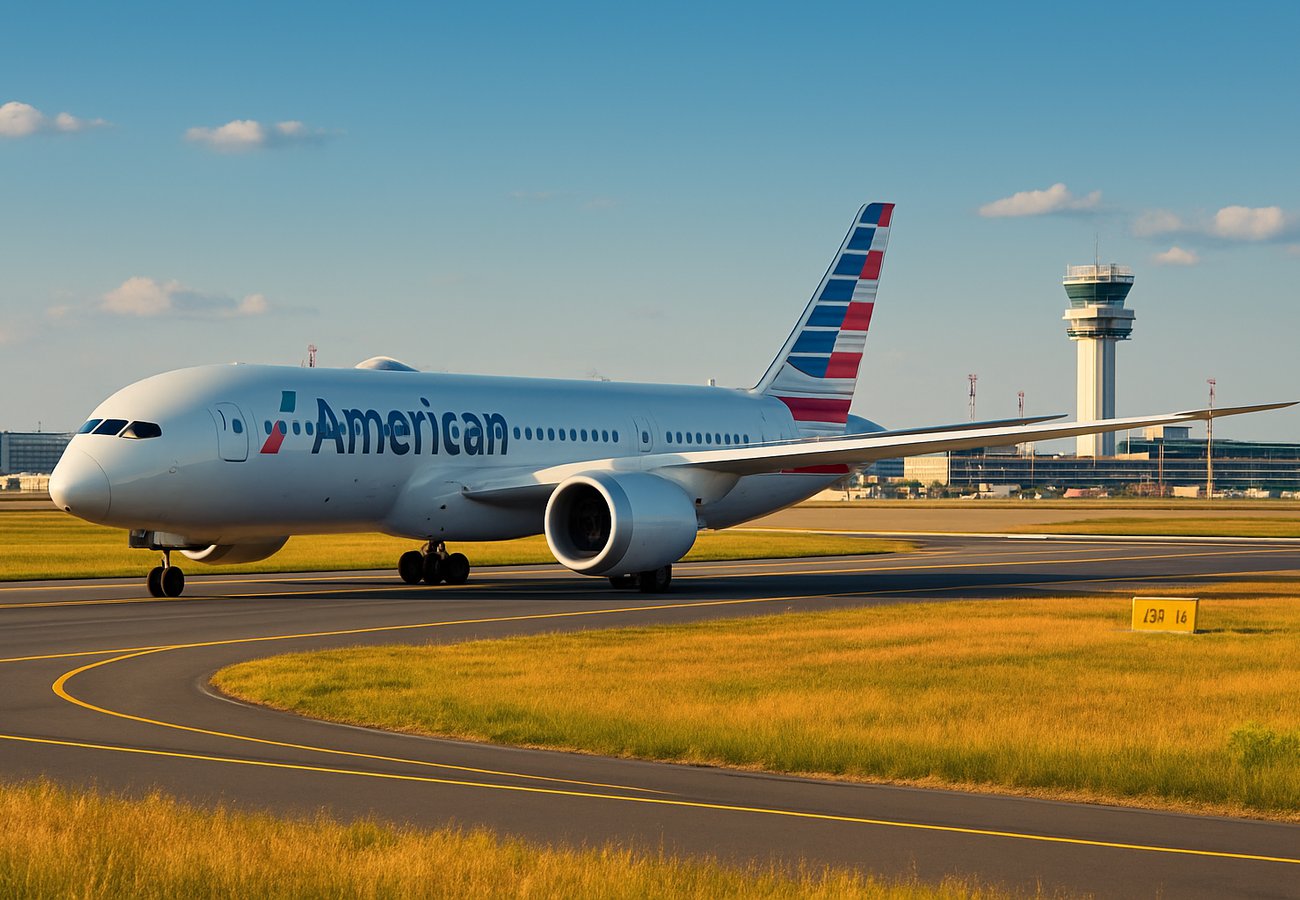
Image generated by AI
American Airlines Boeing 787-8 Breaks Down on Milan Malpensa Taxiway, Blocking Runway 35R and Triggering Chaotic Delays Across the Airport
A Single Technical Failure on a Wide-Body Jet Has Created a Choke Point at One of Italy's Busiest Hubs, Forcing Air Traffic Control into Slow-Moving Contingency Procedures
MILAN, Italy — A major operational crisis is unfolding at Milan Malpensa Airport today, April 22, 2026, after an American Airlines Boeing 787-8 Dreamliner suffered a sudden technical malfunction while taxiing for departure. The aircraft, operating as Flight AA207 bound for Miami, became completely immobilised at a critical intersection, physically blocking the primary access route to Runway 35R. What began as a localized mechanical issue for a single aircraft has rapidly escalated into an airport-wide disruption, exposing the vulnerability of major aviation hubs where a single point of failure can constrain an entire operational chain.
Quick Summary
- Flight AA207 (Milan to Miami) suffered a technical failure while taxiing, immobilizing the American Airlines Boeing 787-8 on the tarmac.
- The aircraft is blocking the primary access point to Runway 35R at Milan Malpensa Airport.
- Air traffic control has been forced to implement "backtrack" maneuvers, where departing planes must taxi down the active runway to line up, severely reducing departure frequency.
- Outbound delays have caused a backlog of aircraft at the gates, resulting in extended holding patterns for arriving flights.
- Passengers aboard AA207 remain grounded as engineering teams assess whether the wide-body jet can be repaired on-site or requires emergency towing.
The Choke Point: How One Plane Blocked an Airport
The incident perfectly illustrates the fragile logistics of high-capacity aviation. According to tracking data from Flightradar24, the American Airlines Dreamliner broke down at a crucial taxiway junction that feeds departing traffic onto Runway 35R.
Because the immobilised aircraft is a wide-body Boeing 787-8 — measuring nearly 186 feet in length with a 197-foot wingspan — it cannot easily be bypassed by other commercial jets. The stationary plane effectively severed the standard operational flow of the airport, forcing authorities to freeze departures on that runway while engineering teams were hastily deployed to assess the fault.
ATC Contingencies: The Slow "Backtrack" Maneuver
To prevent the airport from grinding to a complete halt, Milan Malpensa air traffic control (ATC) implemented emergency contingency procedures. With the primary taxiway blocked, departing aircraft are now being instructed to perform "backtrack" maneuvers.
In standard operations, an aircraft enters the runway at the threshold and immediately accelerates for takeoff. In a backtrack, the aircraft is routed onto the runway further down, forcing it to taxi in the wrong direction along the runway itself, turn 180 degrees at the end, and then begin its takeoff roll.
As outlined by Eurocontrol, while backtracking is a standard safety procedure during access emergencies, it is highly inefficient. It dramatically increases runway occupancy time for each departing flight, slashing the total number of aircraft the airport can process per hour. The result is a rapidly growing queue of delayed outbound flights.
The Ripple Effect on Arriving Passengers
The breakdown of AA207 has not only ruined the plans of passengers heading to Miami; the disruption has cascaded backward through the airport's entire logistics system.
The International Air Transport Association (IATA) notes that airport ecosystems operate on precisely timed turnarounds. Because departing flights are delayed by the backtrack procedure, aircraft cannot leave their gates on time. Consequently, arriving flights that land successfully are finding their assigned gates occupied. This has forced inbound aircraft into extended taxi times or holding patterns circling above Italy, waiting for ground infrastructure to free up.
What Happens Next for Flight AA207?
The immediate challenge for ground crews is deciding how to move the 120-ton Boeing 787-8. Passengers on board AA207 remain grounded in the cabin while American Airlines engineers attempt to diagnose the malfunction.
The recovery operation is highly complex due to the aircraft's size and vulnerable positioning. The engineering teams must determine if a temporary fix can restore the plane's own taxiing capability, or if specialized heavy towing equipment is required. If towing is heavily complicated by a locked landing gear or system failure, the disruption duration could extend for several more hours, heightening the risk of crew timing out and the outright cancellation of the Miami-bound service.
Broader Aviation Implications
The chaos at Milan Malpensa serves as a real-time case study highlighting the lack of redundancy in airport taxiway infrastructure. While immense capital is spent on runway construction and terminal expansion, taxiway bottlenecks remain a critical vulnerability globally. When a single wide-body jet failure can dictate the schedule of dozens of other airlines and thousands of unrelated passengers, it underscores the intense operational risk modern aviation systems carry every day.
Travelers flying into or out of Milan Malpensa are strongly advised to check flight statuses directly with their airlines, as delays are expected to persist until the American Airlines aircraft is successfully moved and the backlog clears.
FAQ: Milan Malpensa Airport American Airlines Disruption
Q: What caused the delays at Milan Malpensa today? A: An American Airlines Boeing 787-8 (Flight AA207 to Miami) suffered a technical failure and broke down on a critical taxiway, blocking outbound access to Runway 35R.
Q: Why does one broken plane delay the whole airport? A: Because the 787-8 is a massive wide-body aircraft, its location created a choke point that other planes cannot pass. This forced Air Traffic Control to switch to much slower emergency taxiing procedures for all other departing flights.
Q: What is a "backtrack" maneuver? A: Because the normal entrance to the runway is blocked, planes must enter the runway further down, drive backward along the landing strip to the start line, turn around, and then take off. This takes significantly more time, drastically reducing the number of flights that can leave per hour.
Q: Why are arriving flights delayed if the runway is for departures? A: Because departing flights are stuck at the airport, they are occupying the gates. Arriving flights have nowhere to park, forcing them to circle in holding patterns or sit on the tarmac waiting for gates to clear.
Q: Has the American Airlines flight to Miami been cancelled? A: As of the latest update, passengers and crew remain grounded while engineers assess whether the aircraft can be repaired on the taxiway or if emergency heavy towing is required. No official cancellation has been confirmed yet, but massive delays are certain.
Disclaimer
This article is for informational and educational purposes only. It does not constitute legal, financial, or professional advice. While we strive to provide accurate and up-to-date information, travel policies, regulations, and conditions change rapidly. Always verify information with official sources before making travel decisions. Nomad Lawyer makes no representations about the accuracy, reliability, completeness, or suitability of the information provided. Readers should consult qualified professionals for advice specific to their circumstances. The views expressed in this article are those of the author and do not necessarily reflect the views of Nomad Lawyer.
Raushan Kumar
Founder & Lead Developer
Full-stack developer with 11+ years of experience and a passionate traveller. Raushan built Nomad Lawyer from the ground up with a vision to create the best travel and law experience on the web.
Learn more about our team →