
Daytona Ambros Joins Trademark Collection by Wyndham in 2026 Beach Push
Daytona Ambros joins Trademark Collection by Wyndham in March 2026, signaling soft-brand expansion across Florida's Atlantic coast boutique hotel market.

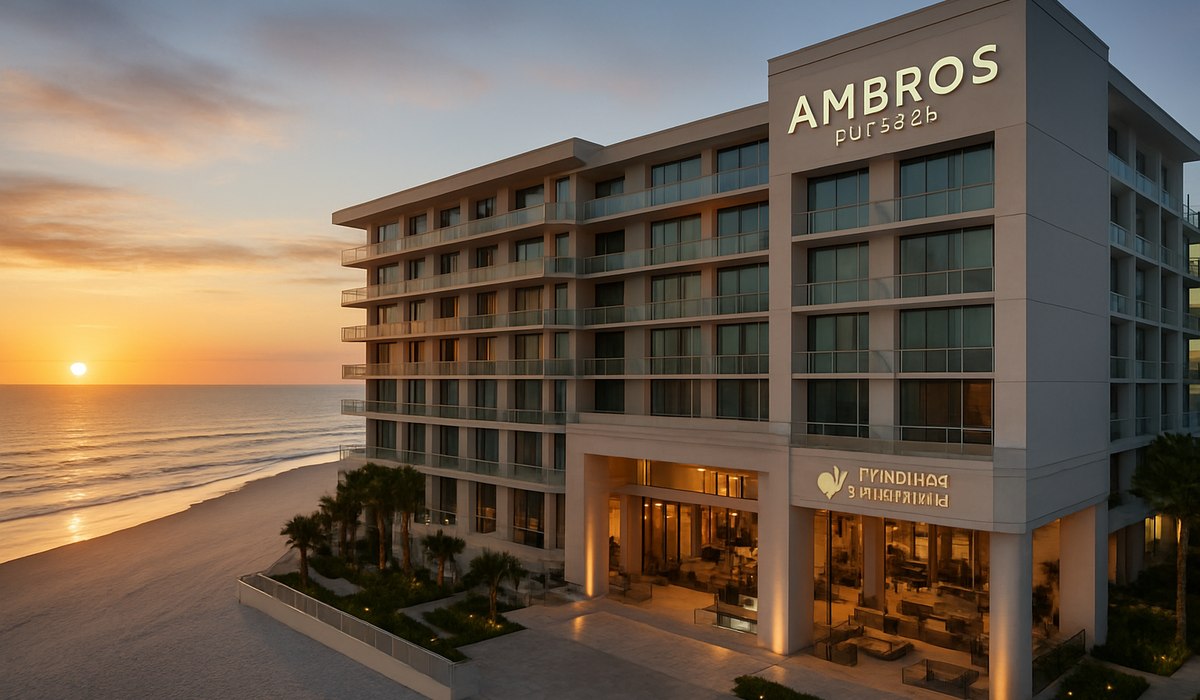
Image generated by AI
**> Quick Summary
• Ambros Daytona officially enters Wyndham's Trademark Collection this March, preserving independent character while gaining global distribution • The addition reflects accelerating soft-brand adoption among Florida Atlantic coast properties seeking loyalty program access without sacrificing identity • Daytona Beach hotel occupancy climbed 8.2% year-over-year through Q1 2026, intensifying competition among boutique-positioned properties • Trademark Collection now operates 470+ properties worldwide, with Florida representing its fastest-growing state portfolio**
A former independent beachfront property just became the latest weapon in Wyndham's quiet war against cookie-cutter hotel experiences—and Daytona Beach is ground zero for what could redefine Florida's Atlantic coast lodging landscape. Ambros Daytona officially joined Trademark Collection by Wyndham this week, marking the brand's third Florida coastal acquisition in six months and underscoring a strategic pivot toward experiential luxury as independent boutique hotels reshape regional hospitality markets.
The affiliation arrives as Daytona Beach sees unprecedented accommodation demand, driven by motorsports events, remote-work relocations, and travelers seeking alternatives to South Florida's premium pricing. Wyndham's Trademark Collection expansion into Florida's beach corridor signals that major hotel conglomerates now recognize boutique authenticity as a competitive necessity rather than niche indulgence.
Wyndham's Trademark Collection Strategy: Boutique Freedom Meets Brand Power
Trademark Collection operates on a soft-brand model that grants independent properties access to Wyndham Rewards' 105 million member base while maintaining operational autonomy. Properties retain original names, design aesthetics, and service philosophies—an approach fundamentally different from traditional franchise agreements requiring standardized color schemes and breakfast buffets.
According to the American Hotel & Lodging Association, soft-brand affiliations grew 22% industry-wide between 2023 and 2025, with independent operators prioritizing distribution technology and loyalty program reach over brand identity surrender. Wyndham's approach allows properties like Ambros Daytona to leverage global reservation systems without installing uniform headboards or repainting lobbies in corporate palette schemes.
The Trademark portfolio now spans 470+ hotels across 40 countries, with recent additions clustered in leisure-driven markets where character-rich properties command premium average daily rates. Florida represents the collection's fastest-expanding state footprint, adding eleven properties since January 2025 as coastal destinations experience what STR's latest performance metrics describe as "post-pandemic occupancy normalization with sustained rate power."
Ambros Daytona brings beachfront positioning and motorsports proximity to the Trademark lineup. The property features direct Atlantic Ocean access, a characteristic increasingly scarce along Daytona's developed shoreline. Its integration into Wyndham's distribution channels could shift booking patterns for travelers who previously defaulted to branded hotels due to loyalty point accumulation alone.
Industry analysts note that soft-brand programs succeed when they solve the independent hotel operator's core challenge: competing against corporate chains' marketing budgets and technology infrastructure. For guests, the model delivers boutique experiences with familiar booking interfaces and reward redemption options—a hybrid increasingly demanded by travelers fatigued by identical rooms across time zones.
What Ambros Daytona Brings to Florida's Competitive Beach Corridor
Daytona Beach's hospitality landscape operates in perpetual tension between motorsports tourism spikes and shoulder-season lulls. Properties capable of attracting leisure travelers beyond race weekends command significant competitive advantages, particularly those offering experiential differentiation rather than commodity lodging.
Ambros Daytona's addition to Trademark Collection positions it against both legacy beachfront resorts and newer lifestyle-branded developments. The property's proximity to Daytona International Speedway—less than three miles from the main grandstand—provides built-in demand during NASCAR events, while its beach access serves the growing remote-worker demographic extending stays beyond traditional weekend patterns.
Performance data from February 2026 shows Daytona Beach hotels achieving 74.3% occupancy with $189 average daily rate, representing 8.2% and 5.7% year-over-year increases respectively. These metrics reflect broader Florida Atlantic coast momentum, though Daytona remains priced below Miami Beach and Palm Beach County competitors—a gap that boutique properties increasingly exploit through value-conscious positioning.
The property's integration into Wyndham Rewards introduces redemption inventory to a market historically dominated by independent operators and legacy brands with smaller loyalty footprints. For travelers accumulating points through business travel, this creates new incentive to consider Daytona Beach versus oversaturated South Florida destinations, potentially redistributing regional tourist flows.
Similar to how Faena's luxury expansion strategy leverages cultural programming to differentiate high-end properties, Ambros Daytona benefits from motorsports heritage without relying exclusively on race-week demand. The Trademark affiliation provides marketing channels to communicate this narrative to audiences beyond Florida's traditional drive-to markets.
What distinguishes successful soft-brand properties, according to Forbes Travel Guide's boutique hotel criteria, includes authentic local connections, personalized service delivery, and design reflecting regional character rather than corporate templates. These standards increasingly define guest expectations across price segments, pressuring even economy-tier operators to demonstrate neighborhood authenticity.
How Soft-Brand Programs Are Reshaping Regional Hotel Markets
The soft-brand model represents hospitality corporations' acknowledgment that standardization reached saturation point. Travelers now actively seek properties with distinctive narratives, while independent operators require technology platforms and distribution reach previously accessible only through traditional franchising.
Wyndham's Trademark Collection competes directly against Hilton's Curio Collection, Marriott's Autograph Collection, and IHG's Voco brand—each targeting the boutique-curious traveler willing to pay moderate premiums for perceived individuality. The differentiation challenge intensifies as portfolios expand: maintaining genuine uniqueness across hundreds of properties requires strict curation standards that balance brand consistency with operational independence.
Florida's appeal for soft-brand expansion stems from high independent hotel concentration combined with strong leisure demand. Unlike major metropolitan markets where corporate towers dominate supply, coastal Florida retains family-owned properties and converted historic buildings—ideal candidates for programs emphasizing character preservation.
The economic logic favors both parties. Independent operators gain instant access to enterprise-level revenue management systems, centralized reservation platforms, and loyalty program exposure that would cost millions to replicate independently. Corporations expand room inventory without capital expenditure or construction risk, collecting franchise fees while avoiding operational headaches.
This model particularly benefits destinations experiencing tourism growth without corresponding infrastructure investment. Daytona Beach—long overshadowed by Miami Beach's cultural tourism resurgence—gains competitive positioning when visitors can apply loyalty points to stays previously requiring credit card bookings through fragmented independent channels.
Critics argue soft-brand proliferation dilutes boutique hotel meaning, creating manufactured uniqueness that mimics independent character without delivering authentic local experiences. The counterargument holds that elevating independent properties through professional marketing and technology ultimately strengthens regional tourism ecosystems by making distinctive hotels discoverable to broader audiences.
The tension mirrors broader travel industry debates about authenticity versus accessibility. European heritage properties like Hotel Sacher Vienna's milestone anniversary exemplify independent luxury hotels maintaining identity across generations, yet these properties increasingly partner with distribution platforms to reach younger travelers conditioned to mobile booking interfaces.
What This Means for Travelers Choosing Daytona Beach in 2026
For visitors planning Daytona Beach stays during spring motorsports events or summer beach vacations, Ambros Daytona's Trademark Collection status changes booking calculus in several practical ways. Wyndham Rewards members can now apply points toward oceanfront accommodations previously accessible only through cash bookings, potentially reducing out-of-pocket costs for loyalty program participants.
The integration also introduces the property to Wyndham's direct booking channels, increasing visibility among travelers using corporate booking tools or searching brand portfolios. This matters particularly for spontaneous bookings during shoulder seasons when beachfront properties compete aggressively for last-minute reservations.
Service standards remain the critical variable. Soft-brand affiliation provides distribution infrastructure but doesn't mandate operational protocols beyond basic quality benchmarks. Whether Ambros Daytona maintains personalized service that justifies boutique positioning—or gravitates toward standardized efficiency—will determine long-term guest satisfaction and repeat visitation rates.
Pricing dynamics warrant monitoring. Properties joining major loyalty programs sometimes raise base rates to offset redemption costs and perceived brand value uplift. Early 2026 rate shopping suggests Ambros Daytona maintains competitive positioning against comparable beachfront options, though summer peak season will reveal true pricing strategy under Trademark Collection branding.
The broader implication extends beyond single-property impacts. As more Florida coastal hotels adopt soft-brand affiliations, travelers gain boutique hotel access through familiar booking platforms while independent operators preserve architectural and cultural identities threatened by conventional franchise conversions. This balance—if maintained—could redefine regional hospitality without homogenizing the very character that attracts visitors escaping chain hotel uniformity.
Daytona Beach benefits when distinctive properties achieve visibility among travelers defaulting to branded hotels solely for loyalty point accumulation. The destination's challenge involves translating increased bookings into sustained tourism growth that supports local businesses beyond hotel properties themselves—a metric soft-brand programs rarely measure but communities increasingly prioritize.
FAQ: Ambros Daytona and Trademark Collection by Wyndham
What is Trademark Collection by Wyndham? Trademark Collection functions as Wyndham's soft-brand program, allowing independent hotels to join the corporation's distribution network and loyalty program while retaining original names, design, and operational control. Properties benefit from Wyndham Rewards access without implementing standard franchise protocols.
Can I use Wyndham Rewards points at Ambros Daytona now? Yes. The Trademark Collection affiliation enables Wyndham Rewards members to redeem points for stays and earn points on eligible bookings at Ambros Daytona, expanding redemption options along Florida's Atlantic coast.
How does this differ from a traditional hotel franchise? Traditional franchises require branded signage, standardized room design, operational protocols, and often uniform amenities. Soft-brand programs like Trademark Collection provide distribution technology and loyalty program integration while preserving property individuality and allowing independent operational decisions.
Will Ambros Daytona change its name or appearance? Trademark Collection properties maintain original names and design aesthetics. The property will display discreet Trademark Collection identification but avoids the comprehensive rebranding typical of conventional franchise conversions.
What does this mean for Daytona Beach tourism overall? The affiliation increases destination visibility within Wyndham's booking channels, potentially attracting travelers who previously overlooked Daytona Beach in favor of branded hotel concentrations elsewhere. Long-term impact depends on whether increased visitor numbers translate to broader economic benefits beyond hotel properties.
Related Articles:
- Visitors Invited to Experience Miami Beach's Cultural Tourism Resurgence in March 2026
- Faena Unveils Cultural Expansion Strategy Across Middle East Markets in March 2026
- Hotel Sacher Vienna Celebrates 150th Anniversary Milestone in March 2026
Disclaimer
This article is for informational and educational purposes only. It does not constitute legal, financial, or professional advice. While we strive to provide accurate and up-to-date information, travel policies, regulations, and conditions change rapidly. Always verify information with official sources before making travel decisions. Nomad Lawyer makes no representations about the accuracy, reliability, completeness, or suitability of the information provided. Readers should consult qualified professionals for advice specific to their circumstances. The views expressed in this article are those of the author and do not necessarily reflect the views of Nomad Lawyer.
Preeti Gunjan
Contributor & Community Manager
A passionate traveller and community builder. Preeti helps grow the Nomad Lawyer community, fostering engagement and bringing the reader experience to life.
Learn more about our team →