
Allegiant Air Slashes 34 Florida Routes in Major Capacity Pullback: What Travelers Need to Know
Breaking airline news and aviation industry updates for 2026.

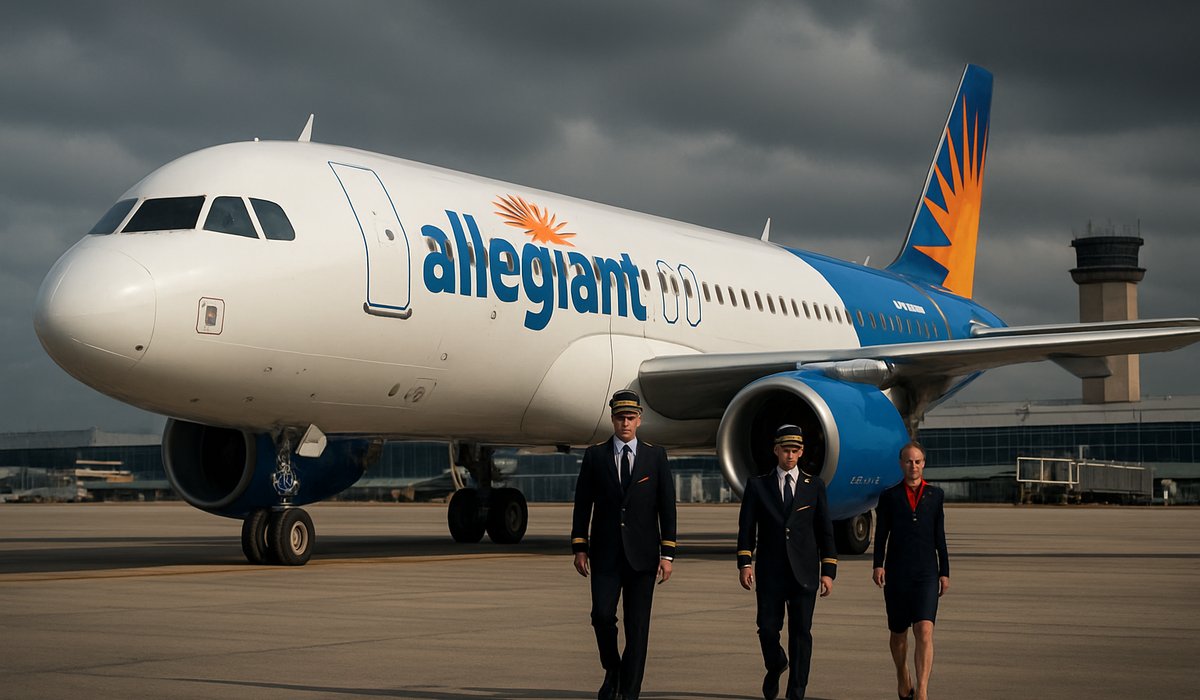
Image generated by AI
Allegiant Air Slashes 34 Florida Routes in Major Capacity Pullback: What Travelers Need to Know
Ultra-low-cost carrier retreats from leisure destinations amid shifting demand patterns and economic pressures
Strategic Retrenchment Signals Market Headwinds for Budget Aviation
Budget airline Allegiant Air has announced the elimination of 34 flight routes serving Florida destinations, marking a significant contraction in the carrier's network footprint. The move underscores intensifying challenges within the ultra-low-cost carrier (ULCC) sector, where razor-thin profit margins on point-to-point leisure routes are increasingly difficult to sustain amid volatile jet fuel prices and shifting travel patterns.
The Las Vegas-based carrier, which has built its reputation on serving price-sensitive vacation travelers with twice or thrice-weekly service to secondary markets, confirmed the route cuts as part of broader network optimization efforts. The decision reflects a recalibration of Allegiant's business model as the carrier navigates post-pandemic demand fluctuations and elevated operating costs.
Understanding Allegiant's Market Position
Allegiant Air has long differentiated itself through an intentionally narrow operational strategy, targeting leisure passengers rather than competing directly with legacy carriers for business travel. The airline's model relies on ultra-low base fares supplemented by aggressive ancillary revenue collection—baggage charges, seat selection fees, and onboard purchases—to generate profitability on low-density routes that larger competitors typically avoid.
Florida, traditionally a cornerstone leisure destination for Allegiant's network, has become increasingly competitive. The state's oversaturated air travel market, served by major carriers including Southwest Airlines, Spirit Airlines, and legacy operators, has compressed yields and heightened pressure on already-thin operating margins for regional and ultra-low-cost carriers.
Broader Industry Implications
The route reductions highlight structural challenges facing the ULCC segment. With jet fuel prices remaining volatile and labor cost pressures mounting across the aviation industry, even carriers engineered for low-cost operations face margin compression. Allegiant's pullback from Florida comes as other budget carriers reassess their capacity deployment strategies.
Industry analysts note that ULCC carriers are increasingly selective about which leisure routes justify the operational overhead. Routes requiring higher frequency service or connecting service patterns—traditionally unprofitable for ultra-low-cost operators—are being systematically eliminated in favor of core leisure corridors with consistent demand.
What's Next for Travelers?
Passengers with existing bookings on affected routes will be rebooked or offered refunds. Allegiant stated the strategic repositioning allows the carrier to concentrate resources on higher-performing leisure markets where demand remains robust and yields support profitable operations.
FAQ: Allegiant Air Route Cuts and Travel Impact
Q: Will Allegiant Air continue serving Florida at all? A: Yes. While 34 routes are being eliminated, Allegiant maintains service to major Florida leisure markets where demand justifies frequent operations.
Q: How do airline baggage fees and ancillary revenue relate to route profitability? A: Ultra-low-cost carriers depend heavily on ancillary fees (baggage, seat selection, etc.) to offset wafer-thin base fares. When route yields decline, even aggressive fee strategies cannot sustain unprofitable service.
Q: What impact do jet fuel prices have on airline route decisions? A: Rising fuel costs directly compress profit margins. Budget carriers are particularly vulnerable because they compete primarily on price, limiting their ability to pass increased fuel costs to passengers through higher base fares.
Q: Which airlines are most affected by leisure travel route cuts? A: Ultra-low-cost carriers like Allegiant Air, Spirit Airlines, and Frontier Airlines are most sensitive to demand fluctuations on point-to-point leisure routes, making them susceptible to capacity adjustments.
Q: Should I expect flight cancellations or rate increases on remaining Allegiant routes? A: While rate increases are possible, Allegiant's business model depends on competitive pricing. The carrier is more likely to focus ancillary revenue optimization on remaining routes rather than base fare increases.
Related Travel Guides
Flight Delay Compensation Guide 2026
Understanding Airline Route Changes
Airport Security Process Updated (2026)
External Resources
Disclaimer
This article is for informational and educational purposes only. It does not constitute legal, financial, or professional advice. While we strive to provide accurate and up-to-date information, travel policies, regulations, and conditions change rapidly. Always verify information with official sources before making travel decisions. Nomad Lawyer makes no representations about the accuracy, reliability, completeness, or suitability of the information provided. Readers should consult qualified professionals for advice specific to their circumstances. The views expressed in this article are those of the author and do not necessarily reflect the views of Nomad Lawyer.
Kunal K Choudhary
Co-Founder & Contributor
A passionate traveller and tech enthusiast. Kunal contributes to the vision and growth of Nomad Lawyer, bringing fresh perspectives and driving the community forward.
Learn more about our team →