
Alaska Air Group Unveils New Alaska Airlines Interisland Boeing 737 Transition Plan for Hawaiian Airlines to Retire Aging Boeing 717 Fleet, Impacting Pacific Air Commuters: New Travel Alert
Alaska Air Group confirms interisland fleet transition, replacing Hawaiian Airlines' aging Boeing 717s with larger Boeing 737 aircraft.

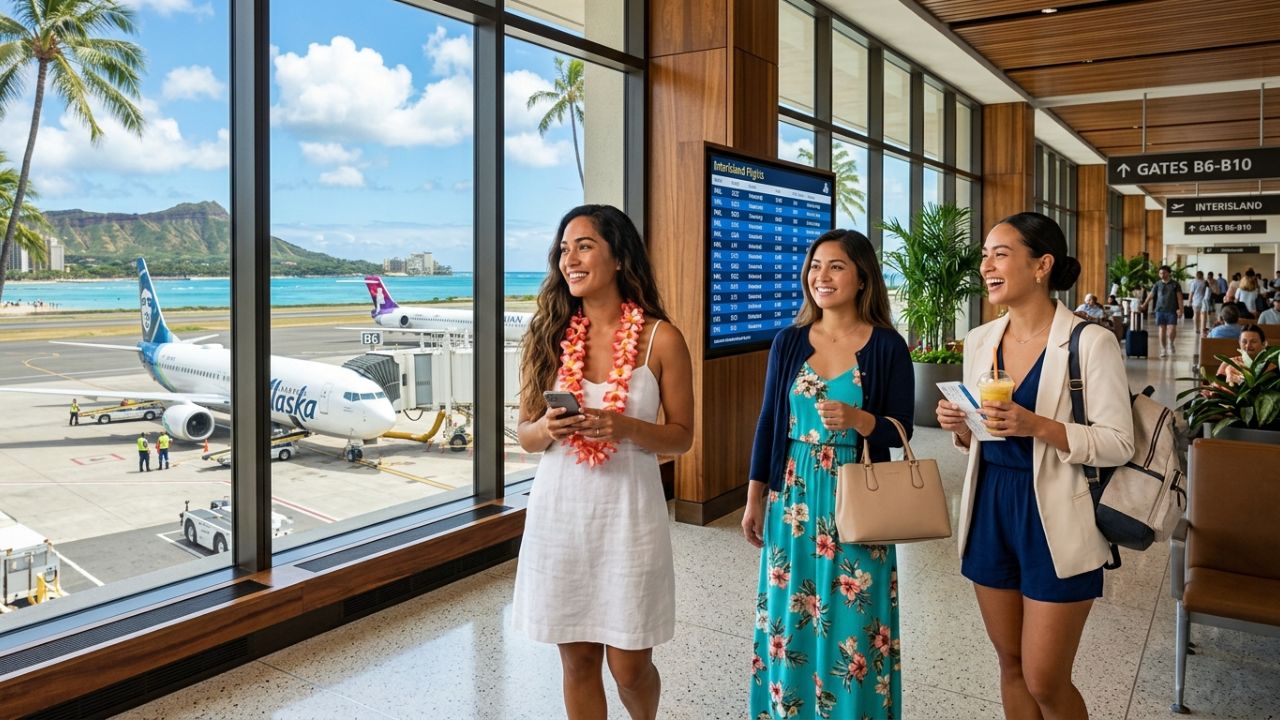
Image generated by AI
Published on June 20, 2026
On June 20, 2026, Alaska Air Group officially confirmed its narrowbody roadmap, establishing a new Alaska Airlines interisland Boeing 737 transition strategy to replace Hawaiian Airlines' aging Boeing 717-200 fleet. The phased retirement of the iconic neighbor-island workhorse will reshape the operational logistics and passenger capacity for high-frequency flights linking Honolulu, Kahului, Lihue, and Hilo. Travelers navigating the Pacific corridor should prepare for potential schedule changes and structural shifts in neighbor-island commuting over the coming years.
Quick Summary
- New Fleet Strategy: Alaska Air Group confirmed a phased transition plan to retire Hawaiian Airlines' aging Boeing 717 fleet and introduce the larger Boeing 737.
- Key Leadership Confirmation: The fleet standardization roadmap was announced by Alaska Air Group President Shane Tackett in June 2026.
- Neighbor-Island Core Routes: The aircraft replacement affects high-frequency routes connecting Honolulu (HNL), Kahului (OGG), Lihue (LIH), and Hilo (ITO).
- Maintenance Bottleneck: Scarce replacement parts for the 717's Rolls-Royce BR715 engines and the wear of 160 daily cycles forced the operational shift.
- Capacity Expansion: Transitioning from the 128-seat Boeing 717 to the 159-to-161-seat Boeing 737 will increase seat availability but could affect flight frequencies.
Following Alaska Air Group's high-profile acquisition of Hawaiian Airlines, corporate executives began addressing operational redundancies and fleet simplification challenges. Prior to the merger, Alaska Airlines maintained a highly standardized mainline operation. Pushing for a unified narrowbody standard across neighbor-island routes allows the parent group to streamline maintenance overhead and pilot training requirements.
Context and Background: Understanding Fleet Simplification Decisions
The Pacific aviation sector is facing a monumental operational pivot in June 2026 as the United States, Brazil, and Japan adjust to a massive regional infrastructure update. Pushing for a single aircraft type to form the backbone of a carrier's network drops operational costs significantly. Standardizing cabin crews, technicians, and spare parts inventories under one operational standard eliminates the overhead of managing niche regional aircraft.
Rather than introducing an entirely separate, foreign narrowbody type to handle the unique demands of the Pacific market, the carrier is relying on its deep, pre-existing structural familiarity with the Boeing 737. This shift ensures that even on brief, sub-hourly segments, the long-term cost benefits of a unified fleet outweigh the performance advantages of maintaining a niche regional jet family.
Event and Incident Details: The Phased Transition to the Boeing 737 Fleet
In June 2026, Alaska Airlines parent company leadership confirmed that replacing the 19 remaining Boeing 717-200 units is "the default plan." These aircraft have served as the backbone of neighbor-island travel, linking Honolulu (HNL) to Kahului (OGG), Lihue (LIH), and Hilo (ITO) with approximately 160 daily group-wide takeoffs and landings.
The remaining 717 airframes carry an average age of 23.7 years, placing them among the oldest active assets in the combined carrier's organization. Sourcing replacement parts for the specialized Rolls-Royce BR715 engines has become difficult and expensive, making retirement an operational necessity.
| Aircraft Model Type | Seating Capacity (Typical) | Average Fleet Age (2026) | Optimal Mission Range | Regional Fleet Status |
|---|---|---|---|---|
| Boeing 717-200 | 128 Passengers | 23.7 Years | 2,060 Nautical Miles | Phased Retirement Confirmed |
| Boeing 737-800 | 159 to 161 Passengers | 10.5 Years | 3,115 Nautical Miles | Primary Replacement Candidate |
| Boeing 737 MAX 8 | 159 Passengers | New Delivery Base | 3,550 Nautical Miles | Long-Term Network Core |
| Embraer E195-E2 | 120 to 146 Passengers | N/A (Evaluated) | 2,600 Nautical Miles | Excluded Due to Engine Profile |
The strategic fleet consolidation blueprint confirms the phased introduction of Boeing 737 mainline aircraft, including the Boeing 737-800 and the newer Boeing 737 MAX 8. The Embraer E195-E2 was evaluated but ultimately excluded due to its specific engine profile.
Risk and Impact: Challenges Facing High-Frequency Hawaii Neighbor-Island Flights
Transitioning neighbor-island loops from the Boeing 717 to the Alaska Airlines interisland Boeing 737 narrowbody introduces several logistical risks:
- Slowing Gate Turnaround Times: The Boeing 717 was celebrated for its low step-height and rapid-turn capabilities. Larger mainline narrowbodies require more time to load, deplane, and groom at the gate.
- Potential Reduction in Flight Frequencies: Local transportation authorities are concerned that the capacity shift (moving from 128 seats to over 159 seats) could lead to fewer daily flights, forcing local commuters to adapt to fewer departure choices.
- Severe Structural Engine Stress: Flying short 25-to-45-minute overwater sectors subjects engines to frequent thermal cycles, preventing engines from cold soaking.
- Global Supply Chain Constraints: Finding replacement parts for Rolls-Royce engines is increasingly difficult due to the lack of global supply chain support for retired aircraft types.
Business travelers and connecting international tourists must adapt to a system built around fewer, much larger departures per day.
What Authorities and Airline Executives Are Saying
Alaska Air Group President Shane Tackett and parent group executives have emphasized that fleet commonality is key to controlling overhead expenses. By standardizing the interisland network on the Boeing 737, the carrier avoids introducing another narrowbody type.
Local transportation bodies are closely monitoring how the capacity expansion affects neighbor-island connectivity. Authorities recognize that while the classic neighboring-island jet will be missed for its quick-turn efficiency, the economic realities of modern airline management leave no room for niche aircraft types.
Practical Traveler Advice: How Neighbor-Island Commuters Can Prepare
If you rely on Hawaiian Airlines for travel between the islands, follow these actionable tips:
- Prepare for Longer Boarding Times: Expect gate activities and boarding processes to take longer as airlines transition to larger mainline narrowbodies.
- Monitor Schedule Frequency Changes: Keep a close eye on daily flight listings between HNL, OGG, LIH, and ITO, as frequencies may shift to accommodate larger airframes.
- Familiarize Yourself with Mainline Cabins: Passengers can look forward to updated cabin configurations and uniform passenger amenities as the Boeing 737 enters regional service.
- Plan Around Connections: If you are connecting from an international flight in Honolulu, allow extra time for interisland transfers due to potential gate and frequency adjustments.
- Review Baggage Guidelines: Mainline flights may apply standardized baggage check-in procedures, which differ from local regional jet policies.
Relying on direct routes helps minimize transit fatigue, but remaining informed about flight details is essential for a smooth journey.
Broader Context: Standardizing Pacific Aviation Hub Networks
The transition away from specialized regional aircraft formats highlights a broader, permanent trend toward total fleet standardization across the global airline industry. By substituting the Hawaiian Airlines aging 717 fleet with standardized mainline assets, the combined carrier successfully builds an adaptable, highly resilient network.
This strategy allows the company to seamlessly flex its capacity based on seasonal tourist rushes, streamline its engineering dependencies, and protect its corporate margins. As the first wave of refreshed cabins makes its way into local service, the Pacific corridor steps into a highly optimized era of standardized, data-driven air travel.
What to Expect Next / Looking Ahead
To minimize the harsh wear and tear that frequent takeoffs and landings inflict on modern engines, the airline is planning a highly dynamic aircraft rotation strategy. Rather than keeping specific Alaska Airlines interisland Boeing 737 units isolated on local island hops all day, the carrier intends to rotate airframes seamlessly between the U.S. mainland and the Hawaiian hubs.
A typical daily flight path might involve an aircraft flying from Seattle to Honolulu, operating two quick interisland hops to Maui and Kona, and then returning to the West Coast that same evening. This clever routing structure allows the aircraft’s engines to experience extended cruise periods at high altitudes, balancing out the intense thermal and physical stress of quick, short-hop flying.
Conclusion
While the retirement of the iconic neighbor-island twin-jet marks the end of an era for custom-built regional short-hop planes, standardizing on the Boeing 737 is a necessary step to build a resilient Pacific network. Commuters and travelers should remain prepared for phased schedule adjustments as the transition proceeds over the coming years. By remaining flexible and tracking real-time notifications, passengers can easily adapt to this optimized travel corridor.
Related Travel Guides
- Minneapolis-St. Paul Airport Flight Delays and Cancellations Ground Passengers as Delta, American, and Southwest Face Major Schedule Cuts across U.S. Routes: New Travel Alert
- Orlando International Airport Flight Delays and Cancellations Cripple Florida Travel as FAA Monitors National Airspace Disruptions Affecting Major Carriers: New Travel Alert
- The Best Places to Stay in Hawaii, According To Reddit
FAQ
Why is Alaska Airlines replacing Hawaiian Airlines' Boeing 717 fleet?
The Boeing 717-200 fleet is aging (averaging over 23 years), and parts for its Rolls-Royce BR715 engines have become scarce and expensive. Standardizing on the Boeing 737 simplifies fleet maintenance and reduces overhead costs.
Which routes in Hawaii will be affected by the Boeing 737 fleet transition?
The transition directly affects high-frequency overwater trunk routes connecting Honolulu (HNL), Kahului (OGG), Lihue (LIH), and Hilo (ITO).
Will the Boeing 737 replacement increase passenger seating capacity?
Yes, typical Boeing 737-800 and 737 MAX 8 aircraft seat 159 to 161 passengers, compared to the outgoing Boeing 717 which seats 128 passengers.
When will the Hawaiian Airlines Boeing 717 fleet be fully retired?
Confirmed in June 2026 as the default plan, the transition will occur through a phased implementation over the next several years as existing maintenance cycles mature.
Disclaimer
This article is for informational and educational purposes only. It does not constitute legal, financial, or professional advice. While we strive to provide accurate and up-to-date information, travel policies, regulations, and conditions change rapidly. Always verify information with official sources before making travel decisions. Nomad Lawyer makes no representations about the accuracy, reliability, completeness, or suitability of the information provided. Readers should consult qualified professionals for advice specific to their circumstances. The views expressed in this article are those of the author and do not necessarily reflect the views of Nomad Lawyer.
Raushan Kumar
Founder & Lead Developer
Full-stack developer with 11+ years of experience and a passionate traveller. Raushan built Nomad Lawyer from the ground up with a vision to create the best travel and law experience on the web.
Learn more about our team →