
Alaska Airlines Boeing 737 Near Miss: Newark Airport Safety Alert March 2026
An Alaska Airlines Boeing 737 inbound from Portland and a FedEx cargo Boeing 777 from Memphis nearly collided near Newark Liberty International Airport on March 19, 2026. Air traffic control intervention prevented disaster.

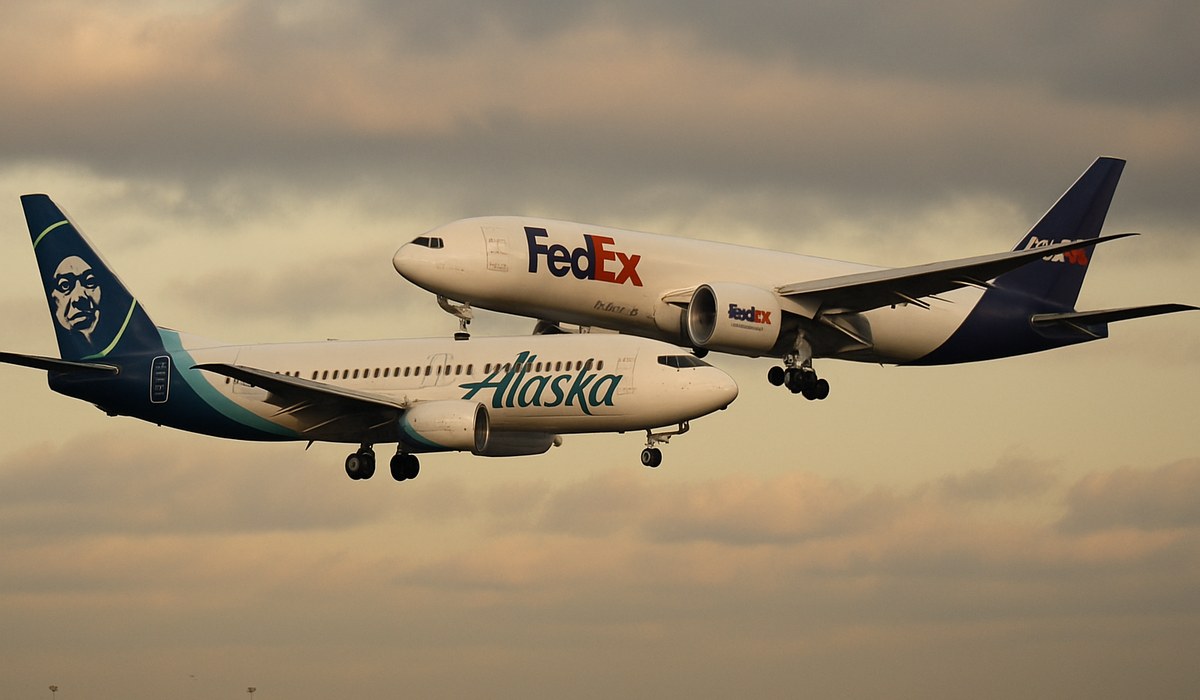
Image generated by AI
Breaking: Separation Loss Narrowly Averted at Newark Liberty International Airport
Alaska Airlines Flight 737 and FedEx cargo operations experienced a critical separation loss event near Newark Liberty International Airport (EWR) on March 19, 2026. The inbound Alaska Airlines Boeing 737 from Portland International Airport (PDX) converged dangerously with an outbound FedEx Boeing 777 freighter from Memphis International Airport (MEM). Air traffic control intervention at Newark separated the aircraft within seconds, preventing what aviation authorities describe as a potential catastrophic collision. Neither aircraft sustained damage, and no injuries were reported among crew members or the estimated 147 passengers aboard the Alaska Airlines flight.
What Triggered the Separation Loss Near Newark
The incident originated from a vectoring error within Newark Liberty International Airport's terminal radar approach control (TRACON) facility. Controllers initially cleared both aircraft on intersecting descent paths without adequate vertical separation margins. The Alaska Airlines Boeing 737 descended from flight level 4,000 feet toward the runway while the FedEx Boeing 777 cargo plane climbed after departure, creating a head-on convergence scenario. Human error combined with communication gaps between radar positions allowed the aircraft to close to minimum separation distances in under 60 seconds. The Federal Aviation Administration (FAA) immediately launched a formal investigation into Newark's air traffic control procedures.
Alaska Airlines Flight Operations and Passenger Impact
The Alaska Airlines Boeing 737 carried 147 passengers bound for Seattle-Tacoma International Airport (SEA) after the Portland connection. Crew members aboard the inbound flight recognized the airborne conflict before notification and initiated an immediate climb maneuver. Alaska Airlines issued a brief statement confirming the flight diverted to Newark for a precautionary landing and inspection. Passengers remained aboard for approximately two hours during ground investigation protocols. The airline rebooked all affected travelers on subsequent flights to Seattle and provided meal vouchers during the delay. Alaska Airlines' safety record remains among the strongest in North American aviation, with this incident classified as a near-miss rather than an accident.
FedEx Cargo Network Disruption and Freight Impact
The FedEx Boeing 777 cargo operation from Memphis experienced ground hold restrictions following the near-miss event. FedEx logistics teams at Newark Liberty International Airport suspended all cargo aircraft departures for 90 minutes pending FAA clearance. This disruption affected FedEx's transcontinental express delivery network, with packages destined for West Coast distribution centers facing delayed routing. FedEx rerouted approximately 2,400 overnight shipments through alternative gateways at Philadelphia International Airport (PHL) and Boston Logan International Airport (BOS). The Memphis-to-Newark freighter corridor remains critical for FedEx's daily cargo operations, connecting the carrier's primary sorting hub with Northeast distribution points.
Air Traffic Control Investigation and Safety Protocols
The FAA announced a comprehensive audit of Newark Liberty International Airport's radar vectoring procedures and controller training standards. The incident exposes potential gaps in separation assurance systems at one of America's busiest aviation hubs. Newark handles approximately 1,200 daily aircraft operations across three runways, creating complex traffic management challenges. The TRACON facility employs standard separation minimums of 3 nautical miles horizontally or 1,000 feet vertically for aircraft on converging paths. Controllers are required to maintain traffic separation at all times, with backup monitoring systems designed to alert supervisors of conflicts. This near-miss event suggests those safeguards experienced simultaneous failures during peak afternoon operations.
Timeline and Real-Time Flight Tracking Data
The separation loss occurred at 2:47 PM Eastern Daylight Time on March 19, 2026, during peak afternoon arrival banks at Newark. Alaska Airlines flight AS-847 appeared on radar simultaneously with FedEx flight FX-1204 on converging courses. Controllers issued immediate vectoring commands separating the aircraft vertically, increasing the Alaska Airlines climb rate and requesting the FedEx crew maintain current altitude. Flight tracking data from FlightAware shows both aircraft completed maneuvers within 45 seconds of initial conflict alert. The Alaska Airlines Boeing 737 climbed to 6,000 feet while the FedEx 777 leveled at 2,500 feet, establishing safe 3,500-foot vertical separation. Both crews reported visual acquisition of conflicting traffic and coordinated with Newark controllers to establish safe distances.
Traveler Action Checklist
If you have upcoming flights through Newark Liberty International Airport or operate with Alaska Airlines and FedEx, follow these essential steps:
-
Check your flight status on FlightAware or your airline's mobile app before heading to the airport.
-
Contact your airline directly using the phone number on your booking confirmation to verify current schedule status.
-
Review your ticket for flexible rebooking options or standby policies if delays develop.
-
Monitor FAA airport status updates for Newark (EWR) throughout the day.
-
Document any travel disruptions with boarding passes and itineraries for potential compensation claims.
-
File complaints regarding delays exceeding three hours through the [US Department of Transportation consumer portal](https://www.transportation.gov/airconsumer).
-
Request written delay documentation from your airline for insurance or business reimbursement purposes.
-
Verify alternative routes through Philadelphia (PHL) or Boston (BOS) if Newark operations remain restricted.
Impact Summary Table
| Metric | Data Point |
|---|---|
| Affected Aircraft Types | Boeing 737 (Alaska Airlines), Boeing 777 (FedEx) |
| Origin Airports | Portland International (PDX), Memphis International (MEM) |
| Incident Location | Newark Liberty International Airport (EWR) Airspace |
| Passengers Impacted | 147 (Alaska Airlines Flight AS-847) |
| Minimum Separation Achieved | Under 1 nautical mile horizontal distance |
| Time to Resolution | 45 seconds from conflict alert |
| Crew Response | Immediate climb and altitude compliance |
| Cargo Delay Impact | 2,400 overnight packages rerouted |
| Investigation Status | Active FAA formal inquiry (NTSB monitoring) |
| Injuries Reported | None |
What This Means for Travelers
This near-miss event underscores the critical importance of robust air traffic control safeguards at high-density airports. Travelers should anticipate potential delays or diversions at Newark Liberty International Airport as the FAA implements enhanced separation protocols. Alaska Airlines passengers may experience schedule adjustments on cross-country routes, particularly those connecting through Portland or Seattle-Tacoma hubs. FedEx cargo disruptions could affect overnight delivery guarantees to Northeast regions, with possible rate increases for expedited services.
Immediate actions include verifying flight status 24 hours before departure and maintaining flexible itineraries. Passengers entitled to compensation for delays exceeding three hours should document flight records and contact their airline within 60 days. Monitor your airline's website for operational updates, as Newark will likely implement temporary ground holds during peak hours. FedEx customers should anticipate potential delivery delays on packages routed through the Memphis-Newark corridor through at least March 26, 2026.
Frequently Asked Questions
What caused the Alaska Airlines Boeing near miss at Newark on March 19, 2026? Air traffic control vectoring error assigned converging descent paths to the Alaska Airlines Boeing 737 from Portland and the FedEx 777 cargo plane from Memphis. Controllers failed to maintain adequate vertical separation at Newark's TRACON facility, triggering an immediate conflict resolution requiring both crews to execute emergency maneuvers within 45 seconds.
Will Alaska Airlines Boeing flights face additional delays following this incident? Yes, Alaska Airlines passengers should expect moderate schedule delays on routes arriving at or departing from Newark Liberty International Airport. The FAA implemented enhanced separation buffers on converging arrival corridors affecting Alaska's Portland-to-New York operations. Flight durations may increase 15-20 minutes as controllers establish larger safety margins, with delays potentially persisting through March 26, 2026.
How does this incident affect FedEx cargo operations and delivery timelines? The FedEx cargo network experienced immediate disruption with 90-minute ground holds at Newark and rerouting of 2,400 overnight packages through Philadelphia and Boston hubs. FedEx customers in the Northeast should anticipate one-day delivery delays on packages originally scheduled for March 19-20 arrival. Normal operations are expected to resume after March 21 pending FAA operational approval.
Can passengers claim compensation for flights delayed by the Newark air traffic control incident? Passengers on delayed Alaska Airlines or connecting flights can file Department of Transportation complaints if delays exceeded three hours from scheduled arrival time. File claims through the US DOT consumer portal within 60 days with flight documentation. Airlines may offer vouchers or rebooking without legal compensation unless passenger contracts provide additional remedies.
Related Travel Guides
FAA Flight Delay Compensation Rights 2026: What Travelers Must Know
Newark Liberty International Airport Operations: Avoiding Peak Hour Delays
Alaska Airlines Route Disruptions: Portland to Seattle Connections March 2026
Disclaimer
Disclaimer
This article is for informational and educational purposes only. It does not constitute legal, financial, or professional advice. While we strive to provide accurate and up-to-date information, travel policies, regulations, and conditions change rapidly. Always verify information with official sources before making travel decisions. Nomad Lawyer makes no representations about the accuracy, reliability, completeness, or suitability of the information provided. Readers should consult qualified professionals for advice specific to their circumstances. The views expressed in this article are those of the author and do not necessarily reflect the views of Nomad Lawyer.
Kunal K Choudhary
Co-Founder & Contributor
A passionate traveller and tech enthusiast. Kunal contributes to the vision and growth of Nomad Lawyer, bringing fresh perspectives and driving the community forward.
Learn more about our team →