
Airlines Business Class Suites: The Private Cabin Revolution of 2026
Privacy dominates airlines business class offerings in 2026 as carriers race to launch fully-enclosed suites with doors and walls. Discover which five global airlines lead this luxury transformation.

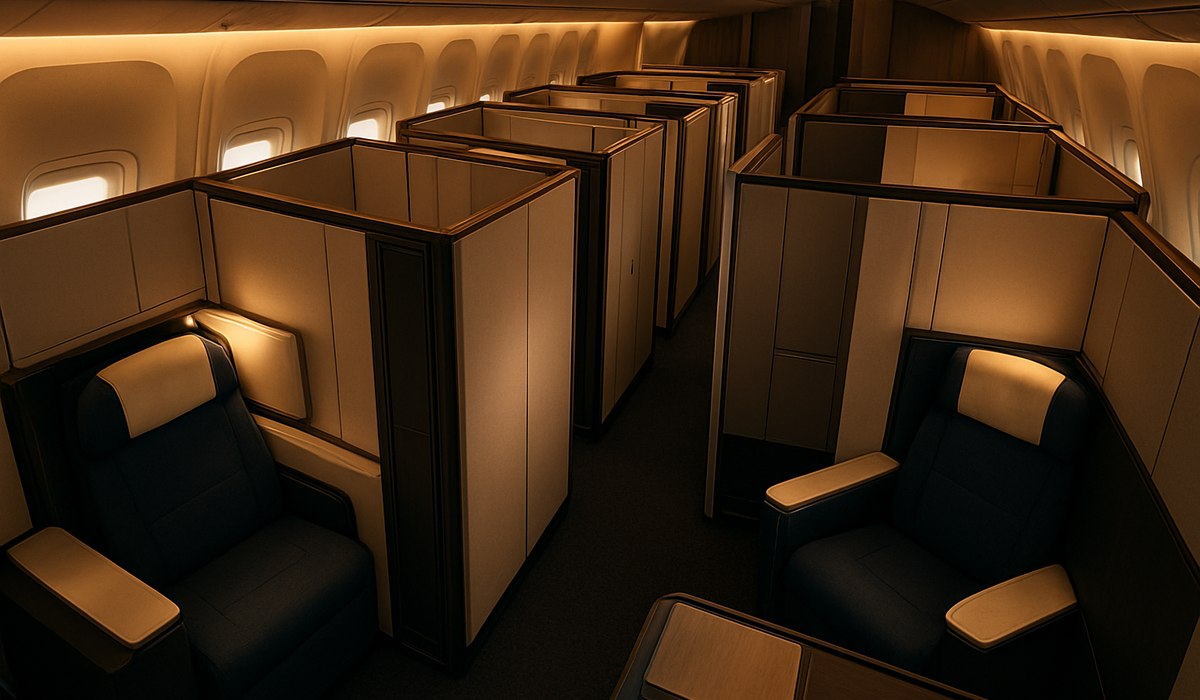
Image generated by AI
Privacy Becomes the Ultimate Luxury in Airlines Business Class
Privacy has emerged as the defining currency of premium long-haul travel in 2026, fundamentally reshaping how global airlines design their business class cabins. After decades of incremental improvements to airline seating, carriers worldwide are now competing fiercely to deliver fully-enclosed suites featuring doors, walls, and genuine seclusion. This marks a decisive shift away from the open-plan business class configurations that dominated early 2000s aircraft, where angled seats and shoulder-high dividers represented the pinnacle of premium comfort.
Today's business travelers demand more than flat-bed seats. They expect complete isolation from fellow passengers, private workspaces, and the ability to disconnect entirely from the cabin environment. This transformation reflects broader changes in how luxury is perceived across the premium travel industry, where exclusivity and personal space command premium pricing.
The Evolution of Airlines Business Class: From Open Plan to Private Suites
The journey toward private suites in airlines business class spans nearly two decades of continuous innovation. The 2000s introduced herringbone seating layouts and adjustable privacy dividers, followed by the 2010s emphasis on seat width, bed length, and entertainment quality. By the 2020s, however, passengers and airlines alike recognized that true luxury meant architectural separation from neighboring passengers.
Modern suite designs now feature floor-to-ceiling doors, individual climate control, and enclosed lavatories accessible only to suite occupants. Some airlines have gone further, installing sliding doors that transition from frosted glass to complete opacity, giving passengers granular control over their privacy levels throughout the flight. This evolution represents not merely a seat upgrade but a fundamental reimagining of what business class means in the age of wellness-focused travel.
Airlines investing in these suites report higher booking yields and increased premium ticket sales, validating the market's appetite for privacy-first cabin design. The infrastructure requirements are substantial, involving aircraft retrofits, certification processes with aviation authorities, and crew training protocols. Yet the competitive advantage has proven worth the investment for carriers targeting ultra-high-net-worth passengers and corporate travel programs.
The 5 Airlines Leading the Private Suite Revolution
Singapore Airlines pioneered the luxury suite concept with its A380 Business Class product, featuring enclosed suites on double-deck aircraft. The carrier has since expanded this offering across its 787 Dreamliner fleet, establishing the benchmark against which competitors measure themselves.
Emirates offers dual-aisle configurations on the A380 with fully-enclosed cabins and direct-aisle access for select suite passengers. The airline's suite design emphasizes shower spas and premium amenities, appealing to passengers willing to pay top-tier fares for comprehensive privacy solutions.
Swiss International Air Lines introduced private suite cabins on its long-range aircraft, combining minimalist Swiss design principles with sophisticated privacy technologies. The airline markets these suites specifically to business travelers seeking understated luxury and complete work isolation.
Cathay Pacific deployed enclosed suite products on its 777 and 787 fleets, featuring designer interiors and bespoke amenity kits. The airline's approach balances privacy with social flexibility, offering passengers the option to open or close their suite configurations.
Lufthansa Group carriers, including the flagship airline, have committed to suite-equipped aircraft across their long-haul networks. These suites include wireless streaming technology, premium dining service, and extensive personalization options that appeal to frequent premium travelers.
What Defines a True Airlines Business Class Suite
Authentic business class suites transcend conventional premium seat configurations in several critical dimensions. A true suite must feature a full door mechanism—either sliding or hinged—that closes completely and locks from inside. The enclosure requires four defined walls that separate occupants from adjacent passengers and the broader cabin environment.
Suite amenities typically include personal storage compartments, individual workstations with responsive surfaces, premium bedding materials exceeding 400 thread count, and amenity collections from luxury brands. Some airlines offer direct-aisle access, eliminating the need to traverse another passenger's space when boarding or deplaning.
Climate control independence distinguishes suites from upgraded business seats. Passengers control their own temperature, lighting intensity, and air circulation without affecting adjacent cabins. These technical specifications, while seemingly incremental, collectively transform the passenger experience from comfortable to genuinely luxurious.
For airlines business class offerings, the suite designation also implies service differentiation. Dedicated cabin crew focus on suite passengers, customized meal service accommodates specific dietary preferences, and personalized wake-up protocols respect individual flight schedules rather than standardized service timing.
The Future of Luxury Travel Privacy
Industry analysts predict that fully-enclosed suites will become standard across all long-haul business class cabins within five years. The competitive pressure among airlines is intensifying, with emerging carriers from Asia-Pacific and Middle Eastern regions launching aggressive suite upgrade programs to capture premium market share.
Next-generation designs under development include modular suite systems that adapt to aircraft configurations, increasing the cabin density of premium products without sacrificing privacy. Airlines are also exploring biometric access technologies, personalized lighting that mimics circadian rhythms, and augmented reality window displays that provide dynamic views or information overlays.
The sustainability conversation is beginning to intersect with suite development, as airlines seek privacy solutions that optimize fuel efficiency and reduce overall cabin weight. Carbon-composite materials and smarter design geometries promise privacy enhancements without the penalty of increased aircraft mass.
Corporate travel programs are increasingly mandating suite-equipped aircraft for executive teams, which accelerates airlines' investment timelines. Airlines business class pricing has responded accordingly, with premium suite fares now commanding markups of 40-60% above conventional business seats on comparable routes.
Key Data: Airlines Business Class Suite Specifications Comparison
| Airline | Aircraft | Suite Door Type | Aisle Access | Climate Control | Amenity Kit Brand |
|---|---|---|---|---|---|
| Singapore Airlines | A380 | Sliding glass | Direct | Individual | Givenchy |
| Emirates | A380 | Hinged solid | Direct (selected) | Individual | Bulgari |
| Swiss International | 777/787 | Sliding hybrid | Standard row | Individual | Bally |
| Cathay Pacific | 777/787 | Modular folding | Standard row | Individual | Dunhill |
| Lufthansa | 787/A350 | Sliding composite | Standard row | Shared zone | Swarovski |
What This Means for Travelers
The proliferation of airlines business class suites fundamentally changes how premium passengers evaluate route selection and airline choice. Travelers should now consider suite availability as a primary decision factor, not merely seat pitch or entertainment systems.
Here's how to navigate the suite revolution:
-
Verify suite availability on your specific flight before booking, as not all aircraft within an airline's fleet have been retrofitted with private cabin configurations.
-
Compare suite dimensions across airlines, which vary significantly—some offer 8-square-meter suites while others provide 6-square-meter configurations.
-
Request suite-equipped aircraft explicitly during booking, providing booking agents with aircraft registration numbers when possible.
-
Budget for premium pricing, recognizing that genuine suites command 40-60% premiums over conventional business fares on identical routes.
-
Evaluate amenity inclusions—some suites include spa services, premium dining, and groundside transfers while others offer baseline privacy without extensive add-ons.
-
Check corporate contracts if your employer manages business travel, as many now mandate suite-equipped aircraft for senior executives.
FAQ
What exactly qualifies as a business class suite versus a premium business seat?
A true suite features a full door (sliding or hinged) that closes and locks completely, separating the space from adjacent passengers. Premium business seats typically offer high dividers or angled privacy screens but no closing door mechanism. The distinction is architectural and meaningful—suites provide genuine isolation.
Are airlines business class suites worth the premium pricing?
For executives on long-haul flights exceeding 12 hours
Disclaimer
This article is for informational and educational purposes only. It does not constitute legal, financial, or professional advice. While we strive to provide accurate and up-to-date information, travel policies, regulations, and conditions change rapidly. Always verify information with official sources before making travel decisions. Nomad Lawyer makes no representations about the accuracy, reliability, completeness, or suitability of the information provided. Readers should consult qualified professionals for advice specific to their circumstances. The views expressed in this article are those of the author and do not necessarily reflect the views of Nomad Lawyer.
Kunal K Choudhary
Co-Founder & Contributor
A passionate traveller and tech enthusiast. Kunal contributes to the vision and growth of Nomad Lawyer, bringing fresh perspectives and driving the community forward.
Learn more about our team →