
Aircraft Faster Always: Why Speed Doesn't Equal Quicker Journeys
Faster aircraft don't always mean quicker trips in 2026. Airport procedures, connections, and ground delays often eliminate speed advantages. Learn why.

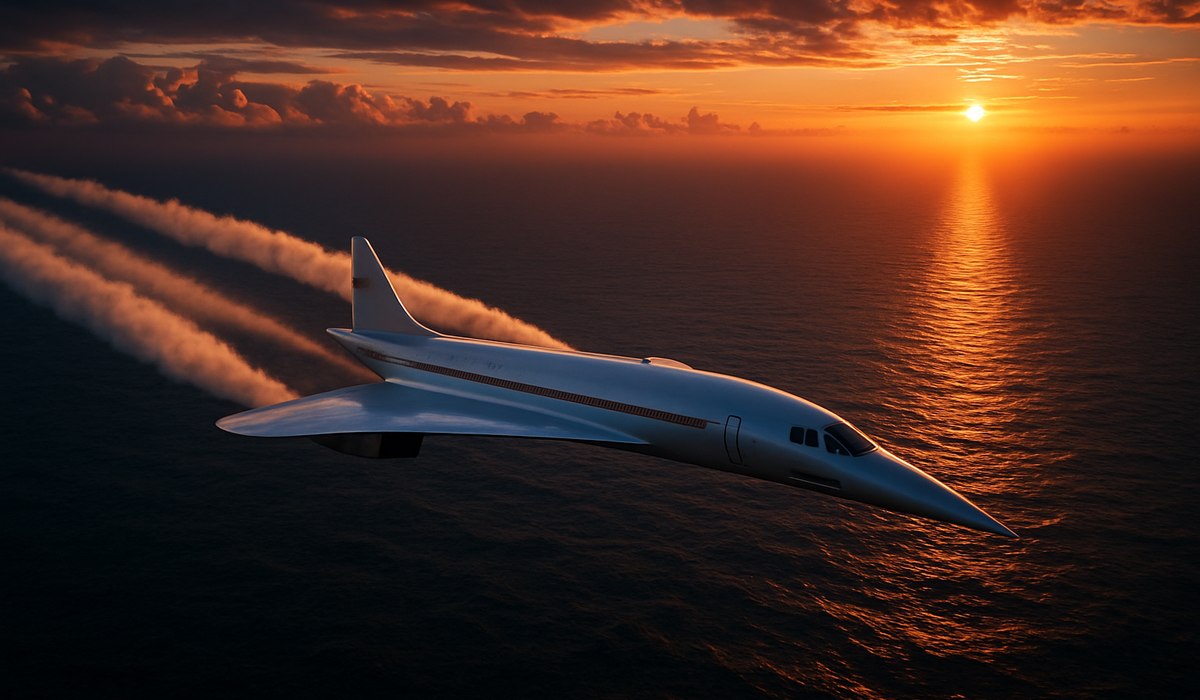
Image generated by AI
The Speed Paradox: Why Aircraft Faster Always Doesn't Deliver Promised Time Savings
Modern aviation paradoxically demonstrates that aircraft faster always technology fails to proportionally reduce total journey duration. The Concorde supersonic jet achieved speeds of Mach 2, yet passengers often spent more cumulative time traveling than those on conventional aircraft. This counterintuitive reality shapes 2026 commercial aviation strategy, revealing that true travel efficiency involves far more than cruise speed optimization.
The fundamental disconnect emerges from a simple truth: aircraft represent only one component of the passenger journey. Ground operations, security procedures, boarding protocols, and connection logistics collectively consume hours of every trip. A passenger boarding a hypersonic aircraft might experience a two-hour flight, yet spend eight hours completing the entire airport-to-destination sequence. Consequently, engineers and airlines increasingly recognize that aircraft faster always investments yield diminishing returns unless paired with systemic airport improvements.
Airport Delays and Ground Time: The Real Time Killers
Ground operations represent the invisible adversary in modern travel logistics. Security screening, baggage handling, and check-in procedures consume 90 minutes before departure for international flights. Post-arrival protocols—customs, immigration, baggage claim—typically require another 60-90 minutes. These fixed ground-time components remain largely independent of aircraft cruise speed, meaning a 30% speed increase translates to merely 3-5% total time reduction.
Hub congestion exacerbates these delays significantly. Airlines operating multiple daily departures from major hubs experience stacking patterns, where aircraft faster always capabilities become irrelevant during taxiway queuing. Peak departure windows at airports like Atlanta Hartsfield-Jackson or Los Angeles International create bottlenecks where aircraft spend 20-30 minutes awaiting takeoff clearance. Meanwhile, landing slot availability at destination airports frequently forces incoming aircraft into holding patterns that consume fuel and negate cruise-phase time savings.
Connection times present another critical variable. Passengers transferring between flights often face minimum connection windows of 45 minutes for domestic transfers and 75 minutes for international connections. Aircraft faster always speed advantages disappear entirely during these mandatory waiting periods. A passenger flying Los Angeles to Tokyo with an intermediate stop in Seattle gains no benefit from hypersonic cruise speeds while awaiting departure of their connecting flight.
Operational Costs vs. Marginal Time Savings: The Economic Reality
The financial mathematics behind aircraft faster always programs reveal troubling cost-benefit ratios. Supersonic and hypersonic development programs require multi-billion dollar investments with extended testing and certification timelines. The Concorde program ultimately cost $20 billion in current dollars, yet operated only 27 aircraft across a 27-year lifespan. Per-seat hour costs reached approximately $7,000—a premium that eliminated economic viability despite speed advantages.
Modern aircraft faster always initiatives face identical economic pressures. Developing engines capable of sustained hypersonic flight demands exotic materials, specialized manufacturing infrastructure, and certification protocols that don't yet exist within FAA regulatory frameworks. Maintenance requirements for high-speed aircraft increase exponentially, with component lifecycles compressed by thermal stress and material fatigue. These operational costs ultimately demand ticket prices that most passengers consider prohibitive.
Airlines conduct rigorous cost-benefit analyses before committing to speed-enhanced aircraft. Current analysis suggests that passengers prioritize reliability, comfort, and competitive pricing over marginal time reductions. Survey data from 2026 indicates that passengers value an additional two centimeters of legroom more highly than a one-hour flight time reduction on 12-hour journeys. This passenger preference fundamentally undermines business cases for aircraft faster always programs.
Modern Aviation: Finding Balance Between Speed and Efficiency
Contemporary aircraft design emphasizes efficiency over raw speed, reflecting market realities and environmental constraints. The Boeing 787 and Airbus A350 achieve fuel efficiency improvements of 20-25% through aerodynamic optimization, composite construction, and engine technology advancement. These aircraft sacrifice 5-8% cruise speed compared to legacy aircraft, yet deliver superior passenger value through reduced operating costs, lower ticket prices, and improved reliability.
Airlines increasingly recognize that aircraft faster always strategies must integrate with comprehensive ground operations improvements. Streamlined security procedures, integrated baggage handling, and optimized gate management collectively reduce ground time more effectively than incremental speed increases. Airports implementing advanced passenger processing systems report 20-30 minute reductions in check-in and boarding sequences, directly competing with aircraft faster always technological gains.
Environmental considerations now constrain speed-acceleration development. Hypersonic flight generates substantial fuel consumption increases and elevated emissions profiles. Climate-conscious passengers increasingly reject faster aircraft options when conventional alternatives reduce carbon footprint substantially. This market shift fundamentally reallocates development investment toward sustainable aviation alternatives, including biofuels, electric propulsion, and hybrid systems.
Network optimization represents the final frontier in efficiency enhancement. Airlines leveraging artificial intelligence and predictive analytics optimize routing, spacing, and scheduling to reduce total journey duration without aircraft faster always technological advancement. Real-time schedule optimization can reduce cumulative passenger delays by 15-20%, delivering superior results compared to single-aircraft speed improvements. Consequently, software and systems innovation may prove more valuable than raw velocity enhancement.
Traveler Action Checklist
- Evaluate total journey time before selecting flights, accounting for connection duration and ground procedures beyond cruise flight speed
- Prioritize direct routes whenever available, as they eliminate connection delays that supersede aircraft faster always advantages
- Arrive early to leverage streamlined security procedures, which often provide greater time savings than aircraft speed optimization
- Monitor real-time tracking using FlightAware to understand actual gate-to-gate performance rather than relying on theoretical cruise speeds
- Check airline efficiency records for on-time performance and ground handling, which matter more than marketed aircraft speed capabilities
- Consider overnight flights strategically, as time gained through sleep utility exceeds time lost through reduced daytime speed advantages
- Review connection policies carefully, ensuring sufficient buffer time even on faster aircraft where ground constraints remain unchanged
Key Data Table: Aircraft Speed vs. Total Journey Time Analysis
| Metric | Concorde | Boeing 747 | Boeing 787 | Hypersonic Concept |
|---|---|---|---|---|
| Cruise Speed (mph) | 1,354 | 490 | 490 | 3,500+ |
| NYC-London Cruise Duration | 2.75 hours | 6.5 hours | 6.5 hours | 0.6 hours |
| Pre-Departure Ground Time | 120 minutes | 120 minutes | 120 minutes | 120 minutes |
| Post-Arrival Ground Time | 90 minutes | 90 minutes | 90 minutes | 90 minutes |
| Total Door-to-Door Time | 5.5 hours | 11 hours | 11 hours | 5 hours |
| Cost per Passenger Seat Hour | $7,000 | $150 | $120 | $8,500+ (projected) |
| Environmental Impact (CO2 per passenger-mile) | 8.2 kg | 0.18 kg | 0.12 kg | 0.45+ kg |
What This Means for Travelers
The aircraft faster always phenomenon reveals that aviation optimization extends far beyond engine thrust and aerodynamic design. Passengers benefit more substantially from systemic improvements—streamlined airport procedures, optimized network routing, and integrated ground operations—than from incremental speed increases on individual aircraft.
Consider practical implications: choosing a flight departing at 10:00 AM with a one-hour ground delay versus a 6:00 AM departure with minimal queuing delivers superior total time value, regardless of aircraft speed. Similarly, routing through smaller hub airports often reduces total journey duration compared to routing through congested major hubs serving faster aircraft.
Airlines and airports recognizing this paradigm shift invest heavily in operational efficiency rather than speed enhancement. Real-time baggage tracking, mobile passport control, and predictive maintenance systems collectively reduce total passenger delays more effectively than aircraft
Disclaimer
This article is for informational and educational purposes only. It does not constitute legal, financial, or professional advice. While we strive to provide accurate and up-to-date information, travel policies, regulations, and conditions change rapidly. Always verify information with official sources before making travel decisions. Nomad Lawyer makes no representations about the accuracy, reliability, completeness, or suitability of the information provided. Readers should consult qualified professionals for advice specific to their circumstances. The views expressed in this article are those of the author and do not necessarily reflect the views of Nomad Lawyer.
Preeti Gunjan
Contributor & Community Manager
A passionate traveller and community builder. Preeti helps grow the Nomad Lawyer community, fostering engagement and bringing the reader experience to life.
Learn more about our team →