
Airbus U740 Valkyrie Advances European Aviation: Germany and US Test 5,000-Km Autonomous Jet
Airbus and Kratos complete the first European test flight of the U740 Valkyrie, reaching Mach 0.8 at 45,000 feet as Germany and the US target operational combat readiness by 2029.

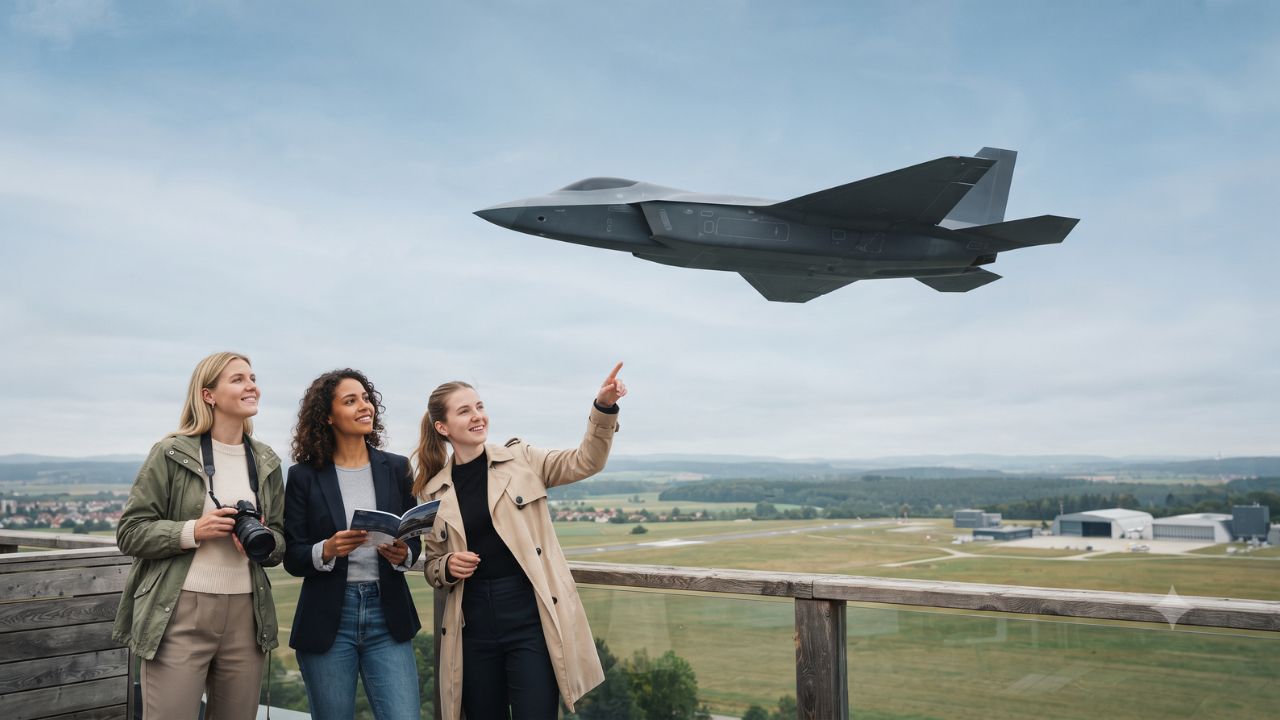
Boasting a transcontinental operational range exceeding 5,000 kilometers and operating at altitudes up to 45,000 feet, the Airbus U740 Valkyrie has completed its inaugural European flight demonstration, reaching Mach 0.8 following a rocket-assisted launch in Northern Europe. The successful flight represents a critical milestone in German-American aerospace cooperation, pairing an airframe developed by American defense contractor Kratos Defense & Security Solutions with European mission software developed by Airbus. Executed at an undisclosed test range, the demonstration met all operational benchmarks, validating runway-independent launch capabilities and high-subsonic maneuverability as the industrial partnership targets full operational readiness before 2029.
While the U740 Valkyrie is engineered strictly for uncrewed defense applications rather than commercial passenger transport, the program carries profound implications for global aviation. The deployment of high-altitude autonomous systems accelerates technological spillovers into civil air traffic management, while providing aviation enthusiasts and defense travelers a timely incentive to explore Germany’s aerospace exhibition corridors. As autonomous flight systems move from theoretical design into active flight testing, understanding the boundary between restricted military proving grounds and public aviation heritage sites is essential for travelers navigating Europe's aerospace hubs.
Transatlantic Industrial Architecture: Kratos Hardware Meets Airbus Autonomous Systems
The development of the U740 Valkyrie illustrates how international aerospace alliances compress research timelines by integrating proven components. The core airframe originates from Kratos Defense & Security Solutions in the United States, where the platform completed its maiden flight in 2019. Rather than designing an uncrewed airframe from the ground up, Airbus adapted the American airframe to meet European operational requirements, preparing flight articles at its major military aircraft facility in Manching, near Munich.
The European variant integrates Airbus's proprietary Multiplatform Autonomous Reconfigurable and Secure (MARS) mission system. Driven by advanced artificial intelligence algorithms, MARS coordinates autonomous flight navigation, sensor processing, and multi-vehicle swarm maneuvers while maintaining strict human-in-the-loop oversight for critical mission choices. Designed to operate as a "collaborative combat aircraft" alongside crewed fighter platforms such as the Eurofighter Typhoon, the Valkyrie serves as an uncrewed force multiplier.
Airbus's strategic roadmap outlines further uncrewed platforms, including the U760 Ravenstorm targeted for introduction in the early 2030s. The industrial consortium previously displayed both platforms to industry specialists and international visitors during the 2026 ILA Berlin aerospace exhibition, establishing Germany as a primary showcase for next-generation flight architectures.
                    TRANSATLANTIC AEROSPACE COOPERATION TIMELINE

  [ 2019: US Inception ]             [ 2026: European Demonstration ]       [ 2029–2030s: Operational Era ]
  Kratos Valkyrie first flight ====> Northern Europe flight test    =====> Combat-ready U740 deployment
  Initial airframe validation        - Mach 0.8 / 45,000 ft altitude        - Eurofighter teaming
                                     - Airbus MARS AI integration           - U760 Ravenstorm (early 2030s)
The physical specifications of the aircraft reflect its high-performance mission profile. Measuring 9.1 meters in length with an 8.2-meter wingspan, the U740 has a maximum take-off weight (MTOW) of approximately three tonnes. Its rocket-assisted launch system allows the vehicle to achieve flight without relying on vulnerable conventional runways, maneuvering across variable altitudes and airspeeds before executing simulated mission updates aloft.
Technical Specifications and Aerospace Exhibition Matrix: The Valkyrie Profile
Understanding the contrast between military flight test operations and accessible public aerospace heritage helps travelers navigate Germany and the United States effectively.
| Aircraft / Exhibition Dimension | Technical Specification / Official Parameter | Strategic Function & Access Category |
|---|---|---|
| Overall Aircraft Dimensions | Length: 9.1 Meters; Wingspan: 8.2 Meters | Compact low-observable uncrewed airframe architecture |
| Maximum Take-Off Weight (MTOW) | Approximately 3 Tonnes (3,000 Kilograms) | Medium-weight category; rocket-assisted launch capable |
| Operational Service Ceiling | Up to 45,000 Feet (FL450) | High-altitude flight profile operating above standard airliner routes |
| Maximum Flight Speed | Mach 0.8 (High Subsonic) | Compatible with operational cruise speeds of crewed fighters |
| Maximum Operational Range | Stated range exceeds 5,000 Kilometers | Intercontinental transit capability across European airspace |
| European Mission Architecture | Airbus MARS (AI-driven mission software) | Autonomous flight control with human-in-the-loop oversight |
| Lead Industrial Partners | Airbus (Europe) & Kratos Defense (USA) | Transatlantic collaborative combat aircraft development |
| Program Deployment Target | Fully operational delivery before 2029 | Integration with German and European defense frameworks |
| German Flight Preparation Center | Manching (Near Munich, Bavaria) | Restricted military engineering facility; closed to public access |
| Public Aviation Exhibition | ILA Berlin Aerospace Exhibition | Biennial public and trade airshow showcasing uncrewed tech |
| Aviation Heritage Alternative | Deutsches Museum Flugwerft Schleissheim | Public aerospace museum displaying historic and modern flight |
Expert Analysis: European Airspace Segregation, Loyal Wingman Economics, and Civilian ATM Spillover
For travelers booking commercial flights across European corridors, the direct consequence of expanding high-altitude uncrewed flight testing is increased airspace segregation. Europe’s upper airspace—managed by Eurocontrol and the European Union Aviation Safety Agency (EASA)—is among the most congested civil air traffic environments in the world. Operating an autonomous aircraft with a 5,000-kilometer range at 45,000 feet requires strict coordination with civilian air traffic controllers to ensure complete separation from commercial passenger airliners cruising between FL330 and FL410.
The pricing pressure this creates on defense budgets explains the commercial momentum behind collaborative combat aircraft. Modern crewed stealth fighters routinely cost between €90 million and €120 million per airframe, with operating costs exceeding €30,000 per flight hour. The U740 Valkyrie is engineered to cost a fraction of that total, allowing military forces to field mass numbers without exhausting procurement budgets. For the broader aerospace supply chain, the development of robust, fail-safe artificial intelligence under the MARS architecture drives advances in redundant computing and autonomous obstacle avoidance that will eventually migrate into civil air cargo and urban air mobility networks.
For aviation tourists, the Valkyrie announcement highlights the clear distinction between active military flight test facilities and public heritage attractions. Flight testing in Northern Europe and assembly operations at Airbus Manching take place inside high-security military zones that enforce total public exclusion. Tourists attempting to view aircraft at these facilities face strict security perimeters.
Instead, travelers fascinated by German and American aerospace innovation should target authorized public venues. The biennial ILA Berlin aerospace exhibition serves as Europe's premier venue to inspect developmental mockups, uncrewed systems, and next-generation propulsion concepts. Additionally, public facilities like the Deutsches Museum Flugwerft Schleissheim outside Munich and the National Museum of the U.S. Air Force in Ohio provide legal, comprehensive access to the historical testbeds that made modern autonomous flight possible.
Key Takeaways
- The Airbus U740 Valkyrie successfully completed its first European flight in Northern Europe, reaching Mach 0.8 at altitudes up to 45,000 feet.
- Built through a transatlantic partnership between Airbus and Kratos Defense, the aircraft features a 5,000-kilometer range and a 3-tonne MTOW.
- The platform utilizes Airbus's MARS artificial intelligence mission software, designed for autonomous teaming with crewed fighters before 2029.
- Military testing takes place in restricted facilities such as Manching and remote Northern European ranges, which remain strictly closed to tourists.
- Aviation enthusiasts should target public exhibitions like ILA Berlin and recognized aerospace museums to view developmental flight technology.
FAQ: Airbus U740 Valkyrie and European Aerospace 2026
What is the Airbus U740 Valkyrie?
The U740 Valkyrie is an uncrewed collaborative combat aircraft developed by Airbus and Kratos Defense. It is designed to fly autonomously alongside crewed fighter jets using artificial intelligence to coordinate complex missions.
Can tourists visit the Northern European facility where the Valkyrie was tested?
No. The flight test took place at a classified military test range with no public access. Travelers interested in aerospace technology should visit public exhibitions like ILA Berlin or public aviation museums instead.
What are the main flight specifications of the U740 Valkyrie?
The aircraft measures 9.1 meters long with an 8.2-meter wingspan, reaches speeds of Mach 0.8, operates up to 45,000 feet, and possesses a range exceeding 5,000 kilometers with a 3-tonne maximum take-off weight.
When will the Valkyrie enter operational service?
Airbus and Kratos are developing the aircraft toward a target operational delivery date before 2029, with a follow-on uncrewed platform, the U760 Ravenstorm, planned for the early 2030s.
Bridging transatlantic military autonomy with public aerospace heritage illustrates how advanced flight technology continues to reshape global aviation corridors.
Related Travel Guides
Disclaimer
This article is for informational and educational purposes only. It does not constitute legal, financial, or professional advice. While we strive to provide accurate and up-to-date information, travel policies, regulations, and conditions change rapidly. Always verify information with official sources before making travel decisions. Nomad Lawyer makes no representations about the accuracy, reliability, completeness, or suitability of the information provided. Readers should consult qualified professionals for advice specific to their circumstances. The views expressed in this article are those of the author and do not necessarily reflect the views of Nomad Lawyer.
Preeti Gunjan
Contributor & Community Manager
A passionate traveller and community builder. Preeti helps grow the Nomad Lawyer community, fostering engagement and bringing the reader experience to life.
Learn more about our team →