
airBaltic Launches Aberdeen-Riga Flights With Starlink Internet
airBaltic now operates twice-weekly direct flights between Aberdeen and Riga with complimentary Starlink internet onboard, reconnecting Scotland to Latvia's cultural heart.

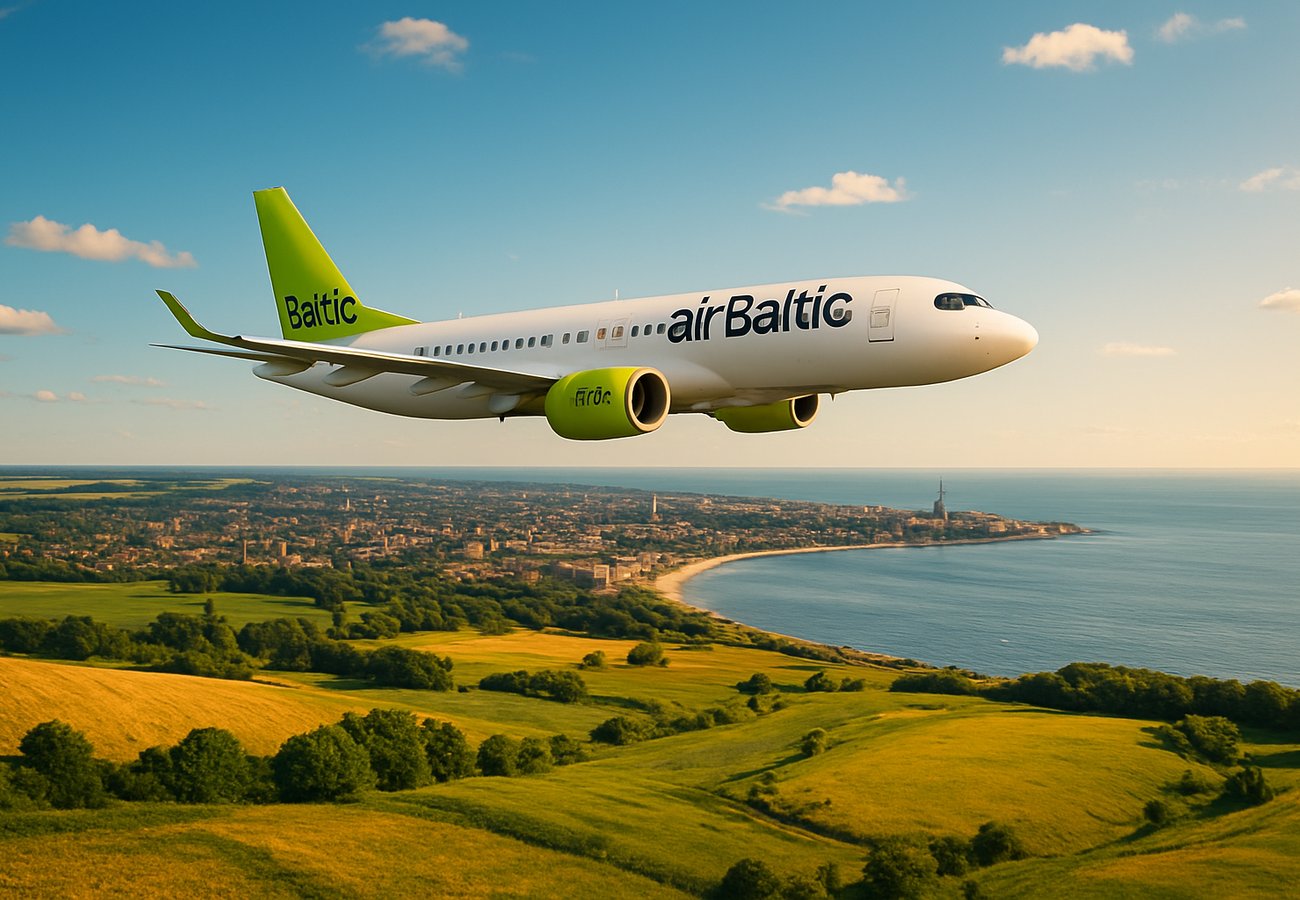
Image generated by AI
airBaltic has reignited a crucial travel corridor between northeast Scotland and Latvia's capital. As of June 2026, the airline now operates twice-weekly direct flights from Aberdeen Airport to Riga, offering passengers something rarely seen on regional European routes: complimentary high-speed Starlink internet onboard.
This isn't just another route revival. It's a strategic reconnection that bridges two regions separated by the North Sea and centuries of economic divergence—and it arrives at a moment when premium, connected travel is no longer a luxury but an expectation.
The Route That Reconnects a Forgotten Travel Corridor
For years, the Aberdeen-Riga connection represented a missed opportunity. Northeast Scotland—home to over 600,000 people and a thriving business hub—lacked direct access to Eastern Europe's cultural and economic centers. Travellers faced tedious connections through London, Dublin, or Copenhagen.
The twice-weekly service launches on Tuesdays and Saturdays, running through September 2026. That's 16 round-trip opportunities per month between two cities that share surprising commercial and cultural affinities yet remain largely disconnected in the travel consciousness.
Reddit: "Finally, a direct route that doesn't force me through a massive hub. Aberdeen deserves better connectivity." — r/unitedkingdom
Why the Airbus A220-300 Matters More Than You Think
airBaltic operates this route exclusively with the Airbus A220-300—a deliberate choice that reveals the airline's strategy.
This aircraft carries up to 149 passengers in a configuration that prioritizes comfort over density. The A220-300 is engineered for fuel efficiency, producing approximately 20-30% fewer emissions than comparable regional jets. In an era where environmental credentials influence corporate booking decisions, this matters.
The cabin experience reflects modern design philosophy: spacious seating, active noise reduction, advanced climate control, and optimized cabin pressure. For a flight time of approximately 2 hours and 45 minutes, these elements transform what could be a cramped experience into something approaching business-class comfort.
Starlink Changes the Flight Experience—Genuinely
Here's where the route becomes genuinely disruptive: complimentary Starlink internet throughout the flight.
On most regional European flights, internet either doesn't exist or arrives behind paywalls. airBaltic's decision to include it reflects a fundamental shift in how airlines compete on underserved routes. Business travellers can join conference calls over the Atlantic. Leisure passengers can stream video or post stories in real time.
This isn't marketing fluff. The latency and bandwidth of SpaceX's Starlink constellation fundamentally changes what passengers can accomplish at 35,000 feet. Remote workers can genuinely work. The flight becomes productive time rather than lost time.
The Economic Calculus Behind the Route
Aberdeen generates approximately £3.2 billion annually in economic output, despite limited air connectivity to continental Europe. The city's workforce spans energy, technology, agriculture, and professional services—all sectors that require regular European engagement.
Riga, meanwhile, functions as the gateway to the Baltic region, a market of 6 million people with growing economic significance. Latvia's capital hosts headquarters for logistics companies, software firms, and fintech startups increasingly attracting investment from UK-based companies.
The route directly addresses this gap. Corporate travellers can maintain productivity while accessing Latvia's economic hubs. Professionals maintain momentum for trade relations, investment opportunities, and collaborative ventures that might otherwise require intermediate stops.
What Riga Offers Beyond the Itinerary
Tourism boards would describe Riga as "architecture meets history meets culture." The reality is more compelling.
The Old Town sits as a UNESCO World Heritage site, its medieval core surrounded by Art Nouveau districts containing over 800 buildings—the highest concentration of Art Nouveau architecture globally. This isn't heritage tourism in the sanitized sense. Riga's cultural scene remains genuinely vibrant, with active galleries, music venues, and literary spaces that haven't been entirely colonized by Instagram tourism.
Direct flights mean leisure travellers can orchestrate meaningful city breaks without exhaustion-inducing connections. A Friday departure from Aberdeen lands in Riga by mid-afternoon Saturday, permitting full weekend immersion. Return flights Tuesday mornings reset the work week for Monday back at Aberdeen.
The Sustainability Angle (And Why It Matters)
Airlines increasingly compete on environmental credentials as much as price. The A220-300 represents a technological commitment to sustainable aviation. Lower fuel consumption translates to reduced operational emissions—meaningful when corporate travel policies increasingly mandate carbon-conscious choices.
Airbus has documented the A220-300's environmental performance across multiple operational contexts. The aircraft delivers this efficiency without compromising passenger experience—a balance that traditional narrow-body jets struggle to achieve.
For environmentally conscious travellers, the route becomes ethically defensible in ways that competing connections aren't. This positioning strengthens airBaltic's appeal to corporate clients with ESG commitments.
The Competitive Landscape: Why This Route Matters for Scottish Travel
Aberdeen has historically been underserved by European route development. London airports monopolize most UK-Europe connections, forcing regional passengers into overnight transfers or ground transportation inefficiency.
This route breaks that pattern. It prioritizes regional connectivity over hub consolidation—a strategy that strengthens Scotland's independence as a travel market rather than subordinating it to English infrastructure.
For business travellers, the time savings are profound. Edinburgh or Glasgow departures require 90-minute ground transportation to reach Aberdeen; the route makes direct city-to-city travel more efficient than federated hub connections through London or Frankfurt.
The Cultural Exchange Dimension
Travel shapes perception. Direct routes between cities historically disconnected create lasting relationships. Scottish visitors to Riga discover emerging talent in photography, cinema, and design. Latvian visitors to Aberdeen encounter unexpected sophistication in Scotland's technology and renewable energy sectors.
This matters at scale. Economic relationships follow cultural familiarity. Investment flows where people have experienced places directly rather than through intermediaries.
The route positions itself as cultural bridge in the most tangible sense: regular, convenient, direct access that permits repeated visits rather than singular, exhausting expeditions.
What Happens Next: Market Development and Expansion
airBaltic's commitment through September 2026 signals confidence but not permanence. Route viability depends on load factors exceeding 75%. The airline's inclusion of premium amenities—Starlink, the A220-300's comfort—suggests they're targeting higher-yield passengers rather than pure price competition.
This positions the route for potential year-round expansion if summer load factors exceed expectations. Winter operations would require different demand dynamics—business travel stability must substitute for seasonal leisure peaks.
Watch for secondary metrics: hotel booking patterns, connecting passenger percentages to broader Baltic destinations, and corporate travel adoption from northeast Scotland's professional sectors.
The Practical Reality for Travellers
For passengers, this route offers something increasingly rare: direct, convenient, connected travel on an underserved corridor without compromising on comfort or technology. Fares remain competitive with connecting alternatives while eliminating transfer friction and layover time loss.
The timing—twice-weekly Tuesday and Saturday departures—accommodates both business Monday-Thursday patterns and weekend leisure travel. The combination makes this genuinely flexible travel infrastructure rather than specialized niche service.
Summer 2026 represents the market testing phase. Route success will determine whether northeast Scotland's connectivity to Eastern Europe finally reaches standards comparable to London's established European dominance.
airBaltic's Aberdeen-Riga corridor transforms regional travel from connection hassle into connected convenience.
Related Travel Guides
The Hidden Economics of Business Class Upgrades: What Airlines Won't Tell You
Sustainable Aviation in 2026: Which Airlines Actually Cut Emissions
Eastern Europe Travel Guide: Beyond Prague—Where Investors and Explorers Are Actually Going
Disclaimer
This article is for informational and educational purposes only. It does not constitute legal, financial, or professional advice. While we strive to provide accurate and up-to-date information, travel policies, regulations, and conditions change rapidly. Always verify information with official sources before making travel decisions. Nomad Lawyer makes no representations about the accuracy, reliability, completeness, or suitability of the information provided. Readers should consult qualified professionals for advice specific to their circumstances. The views expressed in this article are those of the author and do not necessarily reflect the views of Nomad Lawyer.
Kunal K Choudhary
Co-Founder & Contributor
A passionate traveller and tech enthusiast. Kunal contributes to the vision and growth of Nomad Lawyer, bringing fresh perspectives and driving the community forward.
Learn more about our team →