
AirAsia Takes Delivery of First Airbus A321LR Under Massive 2026 Fleet Restructuring Across Malaysia, Thailand, Indonesia, Cambodia, and the Philippines to Safeguard Passengers from Airport Disruptions: New Aviation Updates
AirAsia receives its first Airbus A321LR (9M-XVC), embarking on a 2026 fleet restructuring to optimize medium-haul travel across Southeast Asia.

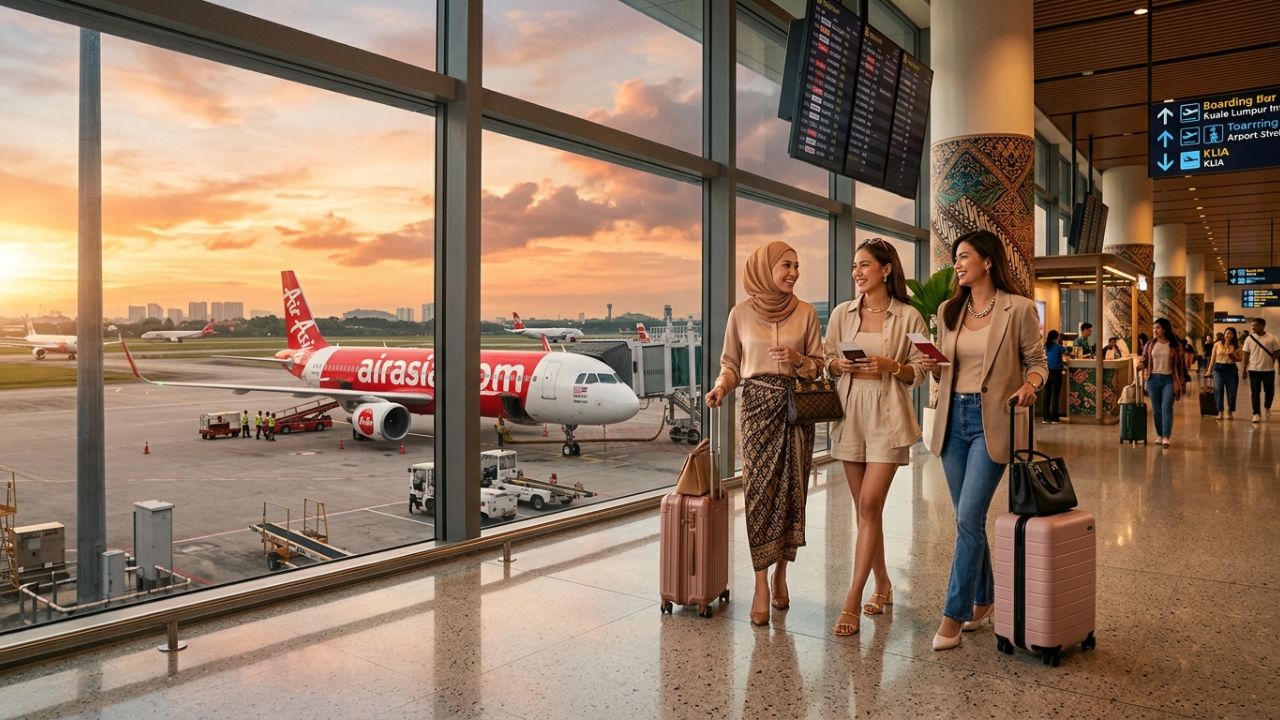
Image generated by AI
In a dramatic move that is set to reshape the competitive low-cost aviation landscape of Southeast Asia, a major regional airline group has entered a new era of single-aisle efficiency. AirAsia has officially taken delivery of its first Airbus A321LR narrow-body aircraft, registered as 9M-XVC. This latest airline news report highlights how the new aircraft—strategically introduced to help passengers bypass standard travel chaos, sudden flight cancellations, and seasonal airport disruptions—will serve as the cornerstone of the airline's massive 2026 fleet restructuring across Malaysia, Thailand, Indonesia, Cambodia, and the Philippines.
Subheading: Low-Cost Carrier Group Unveils Standardized Narrow-Body Fleet Transition, Phasing Out 14 Older Jets to Counter Global Jet Fuel Price Pressures and Travel Chaos
Aviation analysts note that operating large wide-body aircraft on medium-haul regional corridors often leads to higher operational costs, airport gate delays, and localized airport disruptions. By shifting to high-capacity, fuel-efficient single-aisle aircraft, AirAsia is simplifying international travel across its major Southeast Asian networks. The new A321LR officially joined the fleet on April 30, 2026, as the first of an ambitious order of at least 62 A321LR aircraft. The modern single-aisle jet features a flight range of up to seven hours, allowing the carrier to operate medium-haul regional flights profitably without relying on larger twin-aisle wide-bodies, as reported in the latest regional aviation updates.
Section-Wise Breakdown: Strategic Regional Network Impact
AirAsia's transition to the fuel-efficient Airbus A321LR will modernize operations across its five primary Southeast Asian countries:
Malaysia AirAsia Network: Launching the Landmark A321LR Era in Kuala Lumpur
As the primary operations base for the group, Malaysia serves as the launchpad for AirAsia's narrow-body fleet transition:
- Initial Delivery: The first A321LR, registered as 9M-XVC, was delivered on April 30, 2026, to support regional network expansion.
- Standardized Fleet: The carrier plans to receive its second A321LR in June 2026, helping to reduce maintenance complexity.
- Onward Connectivity: Simplifies connections from Kuala Lumpur International Airport to secondary markets in China, India, and Australia.
Thailand AirAsia: Streamlining High-Capacity Medium-Haul Leisure Corridors
Thailand AirAsia leverages the A321LR's extended range to optimize regional leisure routes:
- Medium-Haul Efficiency: The seven-hour flight range enables direct nonstop routes to secondary markets without the high operating costs of twin-aisle jets.
- Bypassing Congestion: Helps the carrier avoid the high airport landing fees and terminal delays common at major regional hubs.
- Stable Scheduling: Standardized aircraft models allow for rapid scheduling and easy aircraft swaps to keep flights on time.
Indonesia AirAsia: Connecting Archipelago Hubs with Unmatched Fuel Efficiency
In Indonesia, the fuel-efficient single-aisle aircraft helps the carrier absorb global jet fuel price shocks:
- Managing Fuel Costs: AirAsia operates without active fuel hedges in 2026, making the fuel-efficient A321LR critical for protecting profit margins.
- Competitive Fares: Lower operating costs allow the airline to maintain affordable fares for passengers flying to Jakarta, Bali, and Surabaya.
- Archipelago Access: Direct nonstop routes simplify domestic and regional travel across Indonesia’s extensive island network.
Cambodia and Philippines AirAsia: Enhancing Cross-Border Regional Connectivity
The single-aisle fleet transition supports regional growth and market stability in Phnom Penh and Manila:
- Standardized Training: Aligns flight training and cockpit layouts across regional teams to improve operational safety.
- Smarter Capacity: Replaces older aircraft with right-sized capacity, reducing the risk of sudden flight cancellations.
- Tourism Growth: The A321LR supports steady passenger arrivals to boost regional tourism and support local businesses.
Strategic Fleet Restructuring and Financial Performance
To counter rising jet fuel costs driven by ongoing instability in the Middle East, AirAsia is carrying out a proactive fleet restructuring. During the first quarter of 2026, the carrier operated 230 active aircraft out of 239 total. In the second quarter, the fleet will shrink to 229 total aircraft (226 active) as AirAsia returns 14 older aircraft to lessors to reduce maintenance costs. By the third quarter of 2026, the airline aims to have 227 operational aircraft in service. To protect profit margins, the carrier also reduced Q2 capacity by 10%.
The group reported a net loss of MYR 129 million (approx. $32.4 million USD) for the quarter ending March 31, despite revenue rising 2% to nearly MYR 6 billion. Under Group Chief Executive Bo Lingam, AirAsia is prioritizing profitability and yield protection over aggressive expansion. The airline's long-term fleet plan includes future Airbus A321XLR aircraft and a landmark order for 150 Airbus A220 jets.
The following tables summarize the strategic fleet restructuring, aircraft orders, and financial statistics established for the 2026 season:
AirAsia 2026 Fleet Restructuring & Orders
| Aircraft Model Variant | Delivery / Active Registration | Fleet Order Volume | Maximum Flight Duration | Strategic Fleet Integration Role | Current Operational Deployment Status |
|---|---|---|---|---|---|
| Airbus A321LR | 9M-XVC (Delivered 30 April) | At least 62 aircraft | Up to 7 hours | Medium-haul single-aisle expansion, replaces wide-bodies | First aircraft delivered; second due in June 2026 |
| Airbus A321XLR | On-order portfolio | Core narrow-body pipeline | Extended range | High-capacity thin transatlantic/regional routing | Scheduled for future phase-in deliveries |
| Airbus A220 | Future contract | 150 aircraft | Short-to-medium haul | Standardized regional fleet integration | Finalized purchase agreement |
| Lessor Returns | Older fleet variants | 14 aircraft phased out | Historical profiles | Phasing out older models, reducing total fleet size | 14 units scheduled for return throughout 2026 |
AirAsia Group 2026 Financial & Fleet Statistics
| Financial & Fleet Metric | First Quarter (Q1 2026) | Second Quarter (Q2 2026) | Third Quarter (Q3 2026) | Operational & Strategic Responses |
|---|---|---|---|---|
| Total Group Fleet Size | 239 aircraft total | 229 aircraft total | Coordinated alignment | Fleet shrinking due to returns of older leased aircraft |
| Active Operational Fleet | 230 aircraft active | 226 aircraft active | 227 aircraft target | All currently stored aircraft returned to service |
| Network Capacity Adjust | Standard operations | 10% capacity reduction | Route optimization | Implemented to protect yields against high oil prices |
| Quarterly Net Earnings | MYR 129 million loss ($32.4M USD) | Active margin monitoring | prioritized yield routes | Revenue rose 2% year-on-year to nearly MYR 6 billion |
Passenger Impact: Balanced Capacity and Reliable Regional Travel
For passengers, AirAsia's fleet transition offers improved travel reliability and stable regional fares. Bypassing older, high-maintenance aircraft reduces the risk of sudden flight cancellations and technical delays. The fuel-efficient Airbus A321LR helps the airline manage fuel costs without raising ticket prices, ensuring that travel across Southeast Asia remains affordable, convenient, and reliable.
Industry Analysis: Narrow-Body Efficiency and Low-Cost Airline Models
Aviation economists note that AirAsia's transition to a standardized narrow-body fleet is key to managing volatile fuel costs:
- Fuel Efficiency Advantages: Modern single-aisle aircraft like the A321LR use significantly less fuel per seat, helping airlines maintain profitable routes even when fuel prices rise.
- Standardized Fleet Maintenance: Operating a uniform fleet reduces maintenance complexity, simplifies crew scheduling, and lowers spare parts inventory costs.
- Smarter Capacity Planning: Right-sizing routes with high-efficiency narrow-body aircraft allows low-cost carriers to protect yields and maintain reliable flight schedules.
Conclusion: A More Efficient and Disciplined Future for AirAsia
The delivery of AirAsia's first Airbus A321LR is a significant milestone for the Southeast Asian aviation market. By combining modern, fuel-efficient single-aisle aircraft, disciplined capacity planning, and a standardized fleet model, the carrier is well-positioned to navigate volatile fuel costs and economic challenges. As AirAsia continues to refine its regional network, its focus on operational efficiency and financial discipline will support stable, reliable, and affordable travel across Southeast Asia.
Key Takeaways
- First A321LR Delivery: AirAsia officially receives its first Airbus A321LR (registered as 9M-XVC) to support regional network efficiency.
- Standardized Narrow-Body Fleet: The airline plans to receive at least 62 A321LR aircraft, with the second unit scheduled for delivery in June 2026.
- Fleet Restructuring: AirAsia is phasing out 14 older leased aircraft in 2026 to optimize fleet utilization and control maintenance costs.
- Capacity Optimization: The carrier implemented a 10% capacity reduction in Q2 to manage rising jet fuel prices and protect profit margins.
- Selective Growth: Group Chief Executive Bo Lingam emphasizes profitability and yield protection over rapid route expansion, ensuring a highly disciplined regional network.
Related Travel Guides
Disclaimer
This article is for informational and educational purposes only. It does not constitute legal, financial, or professional advice. While we strive to provide accurate and up-to-date information, travel policies, regulations, and conditions change rapidly. Always verify information with official sources before making travel decisions. Nomad Lawyer makes no representations about the accuracy, reliability, completeness, or suitability of the information provided. Readers should consult qualified professionals for advice specific to their circumstances. The views expressed in this article are those of the author and do not necessarily reflect the views of Nomad Lawyer.
Kunal K Choudhary
Co-Founder & Contributor
A passionate traveller and tech enthusiast. Kunal contributes to the vision and growth of Nomad Lawyer, bringing fresh perspectives and driving the community forward.
Learn more about our team →