
Air India Fuel Surcharge Starts March 12 — What Every Traveler Must Know Now
Air India is rolling out fuel surcharges in three phases from March 12, 2026, affecting domestic and international fares to Europe, North America, Australia, Southeast Asia, Middle East, and Africa. Here's exactly how much more you'll pay — and how to protect your existing booking.

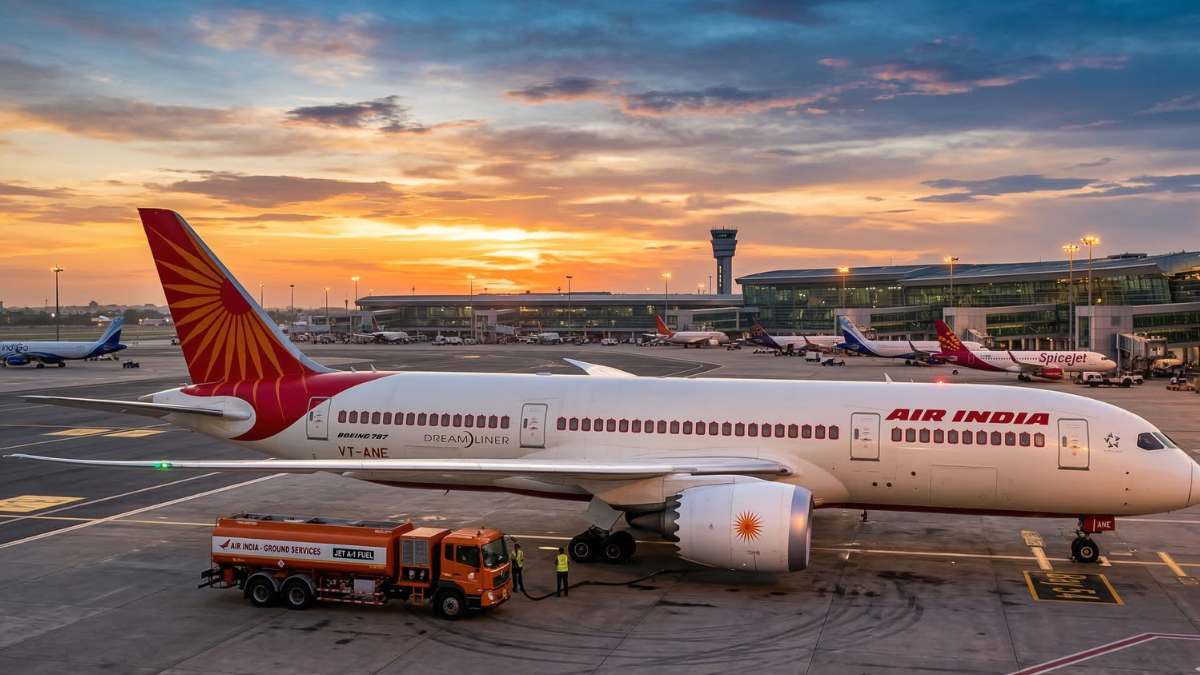
Image generated with AI
If you have an Air India flight coming up — or you're about to book one — you need to read this before you check out. Starting March 12, 2026, Air India has officially introduced fuel surcharges across its domestic and international network in a phased rollout that will push fares higher on routes from India to North America, Europe, Australia, Southeast Asia, the Middle East, and Africa.
This article breaks down every detail: exactly how much the surcharges are, which routes are affected, when each phase kicks in, who gets protected, and what you should do right now if you're planning a trip.
Why Is Air India Introducing a Fuel Surcharge in March 2026?
The short answer: jet fuel has become dramatically more expensive, and airlines can no longer absorb the cost alone.
Aviation turbine fuel (ATF) typically accounts for roughly 40% of an airline's total operating costs — the single largest expense item for any carrier. Since early March 2026, ATF prices have been rising sharply, driven by a combination of forces that have hit simultaneously.
Geopolitical Instability in the Gulf Is the Primary Driver
The Gulf region is central to the global fuel supply chain, and ongoing geopolitical instability there has created real disruptions in oil supply and pricing. For an airline like Air India, which operates extensive routes through and beyond the Middle East, the impact is direct and immediate.
When supply tightens in the Gulf, the price of aviation turbine fuel rises not just for Gulf carriers — it rises for every airline buying in global fuel markets.
India's Tax Structure Makes It Worse
Beyond global markets, Air India faces home-country pressure that most international competitors don't. High excise duties and VAT on aviation turbine fuel in major cities like Delhi and Mumbai have added a domestic surcharge on top of already elevated international prices.
The combination — global supply squeeze plus domestic taxation — created a situation where Air India concluded that some of the additional cost had to be passed on to passengers through a formally structured surcharge.
The Three-Phase Rollout: When Does Each Surcharge Kick In?
Air India is implementing the surcharges in phases rather than all at once — a deliberate strategy to avoid a single large price shock.
Phase 1 — Effective March 12, 2026 (from 12:01 AM IST)
All new bookings made from this date and time onward will carry the following surcharges:
| Route Category | Surcharge |
|---|---|
| Domestic flights within India & SAARC countries | INR 399 |
| West Asia / Middle East flights | USD 10 |
| Southeast Asia flights | USD 60 (increase of USD 20) |
| Africa flights | USD 90 (increase of USD 30) |
| Europe | USD 125 (increase of USD 25) |
| North America | USD 200 (increase of USD 50) |
| Australia | USD 200 (increase of USD 50) |
The Phase 1 surcharges cover Air India's widest range of routes in a single announcement, affecting travellers heading to every major global region the carrier serves.
Phase 2 — Effective March 18, 2026
Phase 2 will come into effect on March 18, 2026, with further increases primarily targeting routes to Europe, North America, and Australia. Air India has confirmed the Phase 2 adjustments but notes these will build on the Phase 1 baseline. Passengers booking after March 18 should expect higher surcharges on long-haul routes to these three regions.
Phase 3 — Far East Routes, Coming Soon
A third phase specifically covering Far East destinations — including Hong Kong, Japan, and South Korea — will follow in the near future. Air India has confirmed Phase 3 is coming but has not yet published the exact date or surcharge amounts. Travellers planning trips to East Asia on Air India should watch for the Phase 3 announcement before booking.
Who Is Protected — and Who Isn't?
This is the question most existing Air India passengers will be asking first, and the answer is clear but has an important catch.
Existing Tickets Are Safe — Unless You Change Them
Air India has confirmed that the fuel surcharge will not be applied retroactively to tickets already issued before the phased implementation dates. If you have a confirmed booking made before March 12, your fare remains as-is.
However — and this is critical — any modification to your existing booking will trigger the surcharge. This includes changes to:
- Travel date
- Route or destination
- Flight class or cabin
If you change any of these elements on a pre-surcharge booking, the updated ticket will be repriced with the new surcharge applied.
The practical takeaway: If you have a booking made before March 12 and you're considering making changes, think carefully. Switching your travel date or upgrading your cabin could result in paying surcharges that your original booking was exempt from.
How Much More Will You Actually Pay?
Let's put the surcharge amounts in plain terms for the routes most commonly booked by international travellers.
For a domestic Indian flight — an extra INR 399 per booking. At current exchange rates, this is roughly USD 4–5. A modest addition.
For a London or Frankfurt flight — an extra USD 125 per booking from Phase 1 (with Phase 2 adding more on top). On a round-trip that's a potentially significant jump.
For New York, Toronto, Los Angeles, or Sydney — an extra USD 200 from Phase 1, with Phase 2 adjustments to follow. This is the most impactful surcharge tier for international long-haul travellers.
For Southeast Asian routes (Bangkok, Singapore, Kuala Lumpur) — an extra USD 60, which represents a USD 20 increase in the existing surcharge.
For African routes — an extra USD 90, which is a USD 30 increase.
Air India's Larger Context: Transformation Under Vihaan.AI
The fuel surcharge announcement doesn't exist in isolation. It comes at a moment when Air India is in the middle of one of the most ambitious transformations in Indian aviation history.
The Tata Sons Acquisition and the Vihaan.AI Program
Air India returned to private ownership under Tata Sons in 2022, ending the airline's years under government control. Since then, the carrier has been executing a sweeping modernisation program known as Vihaan.AI — a Sanskrit word meaning "new dawn." The program spans fleet renewal, cabin upgrades, service improvements, and global network expansion.
600 Aircraft on Order — One of the Largest in History
As part of Vihaan.AI, Air India has placed an order for 600 new aircraft, one of the single largest aircraft orders in global aviation history. The order covers wide-body aircraft for long-haul routes and narrow-body jets for domestic and regional expansion, signalling a commitment to growth rather than retrenchment despite the current fuel cost environment.
Balancing Growth with Financial Reality
The fuel surcharge, viewed against this background, is less a crisis response and more a financial recalibration. Air India's management has been explicit: without the surcharges, certain routes would become financially unviable, potentially resulting in reduced frequencies or outright cancellations. The phased structure gives both the airline and its passengers time to adjust.
Air India has also committed to reviewing the surcharge levels regularly — meaning if global fuel prices fall, surcharges could be reduced or removed.
What This Means for Your Travel Plans
If You're Booking in the Next Few Weeks
- Book immediately for routes to Europe, North America, and Australia if possible — Phase 1 surcharges are lower than what Phase 2 may bring
- Far East travellers (Japan, Korea, Hong Kong) should wait for Phase 3 details before booking, as the surcharge amount is not yet published
- Domestic India and SAARC travellers face only INR 399 extra — the most modest impact
If You Already Have a Booking
- Do not change your booking unnecessarily — any modification will expose your ticket to the new surcharge
- If you need to make changes, weigh the cost of the surcharge against the cost of a change fee to determine the most budget-efficient path
- Contact Air India customer service for confirmation of your specific ticket's surcharge status before modifying
General Tips for Managing Fare Increases
- Set fare alerts on flight comparison platforms for Air India routes and monitor whether Phase 2 brings significant jumps
- Check Air India's official website or verified news sources for the Phase 3 announcement covering Far East routes
- Consider travel insurance that covers fare changes if you're booking long-haul now but haven't secured accommodation yet
Air India Fuel Surcharge at a Glance
- Effective date: March 12, 2026 (Phase 1), March 18, 2026 (Phase 2)
- Phase 3: Far East routes (Hong Kong, Japan, South Korea) — date TBA
- Domestic surcharge: INR 399 per booking
- International surcharge range: USD 10 (Middle East) to USD 200 (North America / Australia)
- Existing tickets: Protected unless modified
- Reason: Rising ATF prices driven by Gulf geopolitical instability + high domestic fuel taxes in Delhi and Mumbai
- Background context: Air India's Vihaan.AI transformation under Tata Sons; 600-aircraft order already placed
The Bottom Line for Travellers
Air India's fuel surcharge rollout is a structured, transparent response to a real and significant cost problem — not a surprise hidden fee applied after the fact. The phased approach gives passengers advance notice and time to act. If you're planning a trip on Air India to Europe, North America, or Australia in 2026, the next few days before Phase 2 kicks in on March 18 represent the best window to lock in Phase 1 surcharge levels.
Watch for the Phase 3 announcement if East Asia is on your itinerary. And if you already have a booking, sit tight — your existing fare is protected as long as you don't modify it.
Frequently Asked Questions
When does Air India's new fuel surcharge start? Air India's Phase 1 fuel surcharge takes effect on March 12, 2026, at 12:01 AM IST for all new bookings. Phase 2 begins March 18, 2026, and Phase 3 (covering Far East routes including Japan, Hong Kong, and South Korea) will be announced separately.
How much is Air India's fuel surcharge for flights to the US, UK, or Australia? For Phase 1, the fuel surcharge is USD 200 for North America and Australia routes, and USD 125 for European routes including the UK. Phase 2 will increase these amounts further, but Air India has not yet published Phase 2 figures. These surcharges are per flight, not per round trip.
Will the fuel surcharge apply to tickets I already bought before March 12? No — existing tickets issued before the Phase 1 implementation date are not subject to the new surcharge. However, if you make any changes to your booking (travel date, route, or cabin class), the updated ticket will be repriced with the current surcharge applied.
Why is Air India introducing a fuel surcharge now? Aviation turbine fuel prices have risen sharply since early March 2026, driven primarily by geopolitical instability in the Gulf region affecting global fuel supply. Air India also faces high excise duties and VAT on jet fuel in Indian cities like Delhi and Mumbai. The airline states that without the surcharges, some routes would become financially unviable.
Will the fuel surcharge be permanent? Air India has stated it will review surcharge levels regularly and will adjust them in line with changes in global fuel prices and market conditions. If fuel prices decrease, the surcharges could be reduced or removed. Passengers are advised to monitor Air India's official communications for updates.
Disclaimer
This article is for informational and educational purposes only. It does not constitute legal, financial, or professional advice. While we strive to provide accurate and up-to-date information, travel policies, regulations, and conditions change rapidly. Always verify information with official sources before making travel decisions. Nomad Lawyer makes no representations about the accuracy, reliability, completeness, or suitability of the information provided. Readers should consult qualified professionals for advice specific to their circumstances. The views expressed in this article are those of the author and do not necessarily reflect the views of Nomad Lawyer.
Kunal K Choudhary
Co-Founder & Contributor
A passionate traveller and tech enthusiast. Kunal contributes to the vision and growth of Nomad Lawyer, bringing fresh perspectives and driving the community forward.
Learn more about our team →