
Aviation Updates: Air China and Singapore Airlines Execute Massive Joint Venture to Shield Asia Transit Networks from Regional Travel Chaos
As intense capacity constraints threaten to trigger massive logistical bottlenecks, Air China and Singapore Airlines deploy a sweeping joint venture designed to aggressively insulate passengers from severe regional airport disruptions.

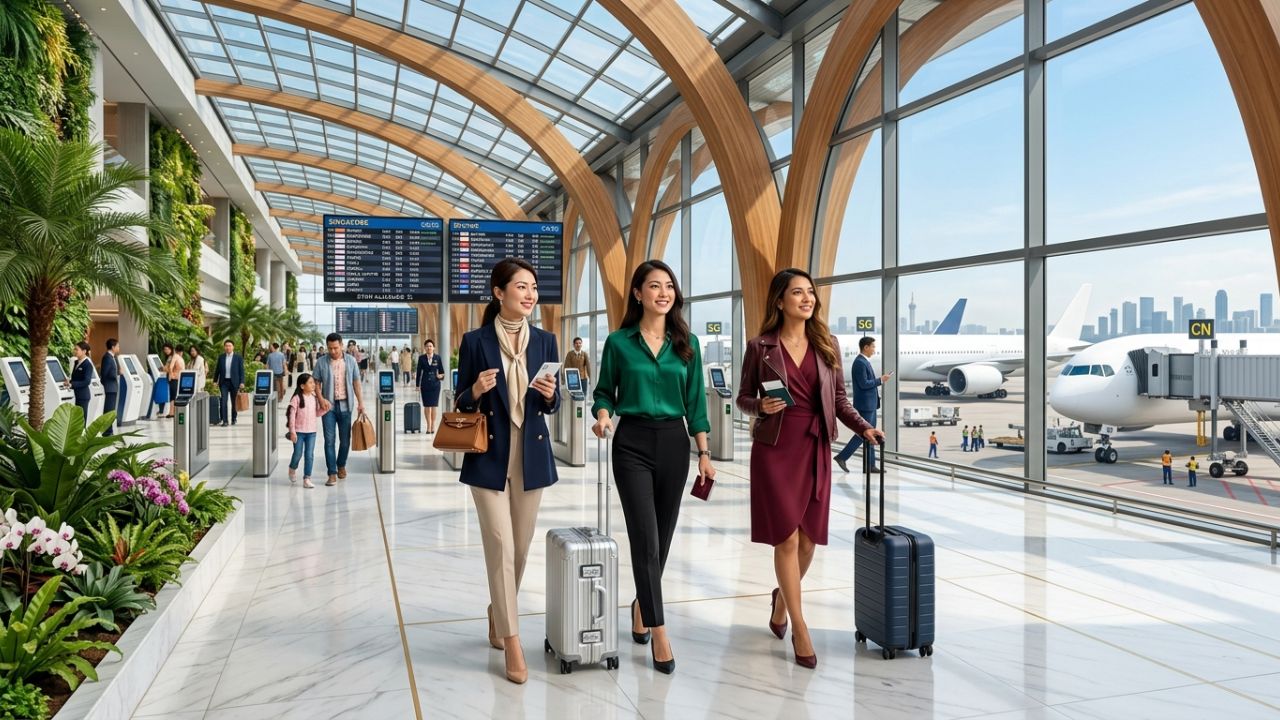
Image generated by AI
Aviation Updates: Air China and Singapore Airlines Execute Massive Joint Venture to Shield Asia Transit Networks from Regional Travel Chaos
As extreme, unrelenting demand actively threatens to physically overwhelm the Asia-Pacific transit corridors, Air China and Singapore Airlines have executed a massive strategic alliance, effectively merging their operational architectures to ruthlessly eradicate the devastating airport disruptions currently paralyzing regional mobility.
Image generated by AI
As high-impact airline news platforms rapidly issue continuous aviation updates regarding the intense logistical friction dominating the Asian aviation market, two of the continent's most powerful carriers have initiated a massive structural defense. Air China and Singapore Airlines (SIA) have formally signed a sweeping Memorandum of Understanding (MoU) to establish a comprehensive commercial joint venture partnership. Rather than fighting capacity limits independently, these two aviation titans are actively merging their strategic network planning, commercial operations, and passenger services. The Singapore–Mainland China corridor is one of the most critical, highly trafficked routes on the planet; when this specific corridor suffers from logistical gridlock, the resulting ripple effect instantly triggers massive flight cancellations and unrecoverable terminal congestion. By aggressively broadening their codeshare agreements and perfectly synchronizing their flight schedules, this landmark joint venture is explicitly designed to shield millions of international travelers from the agonizing travel chaos that routinely plagues deeply fragmented transit itineraries.
Expanded Overview: Securing the Singapore-China Corridor
To fully comprehend the sheer magnitude of this partnership, one must analyze the massive logistical vulnerability inherent in uncoordinated multi-carrier travel.
Historically, passengers navigating between Southeast Asia and deep mainland China via disconnected airlines faced immense operational risks. Unaligned schedules meant extreme layover times or razor-thin connection windows—a logistical nightmare that virtually guaranteed missed connections and severe airport disruptions during peak season. This joint venture completely reconstructs that dynamic. By aggressively expanding their existing codeshare agreement to include a vast array of new destinations beyond their current network, Air China and Singapore Airlines are constructing a highly resilient, unified transit shield. This directly enables smoother, highly secure one-stop travel opportunities that physically prevent passengers from becoming stranded in transit terminals.
Section-Wise Breakdown: Operational Synchronization
The absolute core of this strategic alliance revolves around the ruthless optimization of aircraft scheduling and terminal logistics.
A major, immediate focus of the MoU is the highly synchronized coordination of flight schedules. By flawlessly aligning departure and arrival timings, both carriers are actively reducing minimum connection times and increasing overall network efficiency. This ensures that transit passengers move seamlessly between aircraft, effectively neutralizing terminal congestion. Furthermore, the two carriers are aggressively exploring the development of integrated fare products. Supported by potential revenue-sharing models and coordinated marketing initiatives, this commercial alignment ensures that both airlines prioritize unified route performance, directly insulating passengers from the volatile pricing and scheduling chaos created by disconnected competitors.
Section-Wise Breakdown: Merging Ground and Cabin Operations
Beyond scheduling algorithms, the joint venture demands a massive integration of physical airport and inflight services to eradicate operational friction.
The carriers are actively sharing operational best practices across the most critical failure points of modern aviation: ground handling and baggage logistics. By jointly optimizing airport service workflows, the airlines intend to completely eliminate the baggage transfer failures that routinely cause severe travel chaos for connecting passengers. Simultaneously, Air China and Singapore Airlines are rigorously evaluating their cabin service models, crew training methodologies, and inflight catering standards. This massive exchange of expertise guarantees that passengers receive an identical, premium standard of onboard hospitality, regardless of which carrier’s livery is painted on the aircraft.
Flight Details: Strategic Joint Venture Alignment Matrix
To fully comprehend the specific operational integrations, loyalty mergers, and regulatory dependencies defined by this massive aviation MoU, the verified strategic parameters have been consolidated into the mandatory alignment matrix below.
| Partnership Pillar | Operational Integration Strategy |
|---|---|
| Airlines Involved | Air China & Singapore Airlines (Star Alliance) |
| Network Expansion | Broadened codeshare agreements beyond current network |
| Operational Synergy | Schedule alignment to reduce minimum connection times |
| Commercial Strategy | Integrated fare products and potential revenue-sharing models |
| Loyalty Integration | Synchronization of PhoenixMiles and KrisFlyer programs |
| Service Standardization | Joint optimization of ground handling, baggage, and inflight catering |
| Regulatory Status | Subject to relevant aviation authority approvals |
Passenger Impact: The Loyalty Programme Merger
For high-frequency corporate travelers and premium passengers, the integration of both airlines' loyalty infrastructure provides a massive operational advantage.
Because both carriers are deeply entrenched members of the Star Alliance network, they already share a baseline of operational cooperation. However, this joint venture aggressively escalates that relationship by tightly integrating their respective frequent flyer programs—PhoenixMiles and KrisFlyer. This initiative is designed to massively increase travel flexibility, allowing passengers to earn, track, and redeem miles highly efficiently across the combined mega-network. By improving reward redemption and cross-network benefits, business travelers can navigate the complex China-Singapore corridor with absolute confidence, entirely bypassing the rigid restrictions that normally trigger severe travel delays.
Industry Analysis: The Power of Strategic Alliances
From a broader macroeconomic perspective, this MoU highlights a massive shift in global aviation strategy: aggressive consolidation without extreme capital expenditure.
As airlines battle severe supply chain shortages regarding new aircraft deliveries, forming incredibly deep commercial partnerships allows carriers to massively expand their network reach and dominate market share without requiring large-scale fleet expansion. For Air China and SIA, this joint venture instantly solidifies their market positioning across Asia’s rapidly growing aviation sector. It must be noted, however, that all commercial and revenue-sharing aspects of the joint venture remain strictly subject to regulatory approvals from relevant aviation authorities, ensuring compliance with international competition frameworks before the network integration becomes fully operational.
Conclusion: A Unified Aviation Front
Ultimately, the Memorandum of Understanding executed between Air China and Singapore Airlines represents a massive, highly strategic defense against the escalating threat of global travel chaos. By flawlessly synchronizing flight schedules, merging the PhoenixMiles and KrisFlyer loyalty programs, and aggressively standardizing ground handling protocols, these two Star Alliance titans are building an impenetrable transit network. As Mr Qu Guangji, President of Air China, explicitly stated, the partnership will "vigorously promote our joint venture initiatives... to offer greater convenience and more travel options." Echoing this mandate, Mr Goh Choon Phong, CEO of Singapore Airlines, confirmed the alliance will "offer customers more travel options, seamless connections, and enhanced convenience." Once regulatory approval is secured, this massive joint venture will definitively transform the Singapore-Mainland China corridor into one of the most efficient, highly resilient aviation networks on the planet.
Key Takeaways
- Landmark Joint Venture: Air China and Singapore Airlines have signed a sweeping MoU to merge network planning, commercial operations, and passenger services.
- Schedule Synchronization: The core operational strategy relies on aligning departure and arrival times to severely reduce minimum connection times and prevent transit delays.
- Loyalty Integration: The partnership will deeply synchronize the PhoenixMiles and KrisFlyer frequent flyer programs to provide massive benefits for premium travelers.
- Operational Standardization: Both airlines will aggressively share best practices regarding ground handling, baggage logistics, and inflight catering to eliminate service friction.
- Star Alliance Synergy: As existing Star Alliance members, the CEOs of both airlines confirmed the joint venture will aggressively shield passengers from regional travel chaos.
FAQ: Air China and Singapore Airlines Joint Venture
What exactly did Air China and Singapore Airlines agree to? The two carriers signed a Memorandum of Understanding (MoU) to form a massive commercial joint venture, aggressively integrating their flight schedules, codeshare networks, and ground operations.
How will this prevent travel chaos for passengers? By perfectly aligning their flight schedules and optimizing joint baggage handling procedures, the airlines are explicitly reducing minimum connection times and directly preventing missed transit flights.
Will my frequent flyer miles work on both airlines? Yes. A major pillar of the joint venture is the deep integration of the PhoenixMiles (Air China) and KrisFlyer (Singapore Airlines) loyalty programs, allowing for highly efficient cross-network earning and redemption.
Is the joint venture currently active? While the MoU has been formally signed, all commercial arrangements, revenue-sharing models, and integrated fare products remain strictly subject to regulatory approvals from relevant international aviation authorities.
Related Travel Guides
Western Sydney International Airport WSI Opening Travel Chaos 2026
Singapore Guangzhou Baiyun Airport Travel Chaos 2026
Asia Pacific Regional Flight Disruption Survival Guide 2026
Disclaimer: This article is strictly for informational and socioeconomic aviation analysis purposes. The specific operational integrations (schedule alignment, ground handling), loyalty program mergers (PhoenixMiles, KrisFlyer), and commercial strategies (integrated fares, revenue-sharing) outlined in the Air China and Singapore Airlines joint venture are based on the Memorandum of Understanding (MoU) available at the time of publication. All joint venture activities, route expansions, and codeshare implementations are highly dynamic and remain strictly subject to formal regulatory approval by relevant international aviation authorities. Passengers booking travel on Air China or Singapore Airlines should explicitly verify their flight schedules, codeshare operating carriers, and frequent flyer mileage eligibility directly with the respective airlines prior to travel.
Disclaimer
This article is for informational and educational purposes only. It does not constitute legal, financial, or professional advice. While we strive to provide accurate and up-to-date information, travel policies, regulations, and conditions change rapidly. Always verify information with official sources before making travel decisions. Nomad Lawyer makes no representations about the accuracy, reliability, completeness, or suitability of the information provided. Readers should consult qualified professionals for advice specific to their circumstances. The views expressed in this article are those of the author and do not necessarily reflect the views of Nomad Lawyer.
Preeti Gunjan
Contributor & Community Manager
A passionate traveller and community builder. Preeti helps grow the Nomad Lawyer community, fostering engagement and bringing the reader experience to life.
Learn more about our team →