
Libya Aviation Game Changer: Air Cairo Restores Cairo-Tripoli Direct Service
Air Cairo restarts direct flights between Cairo and Tripoli's Mitiga Airport in March 2026 after years offline. What this route resumption means for North African connectivity and travelers.

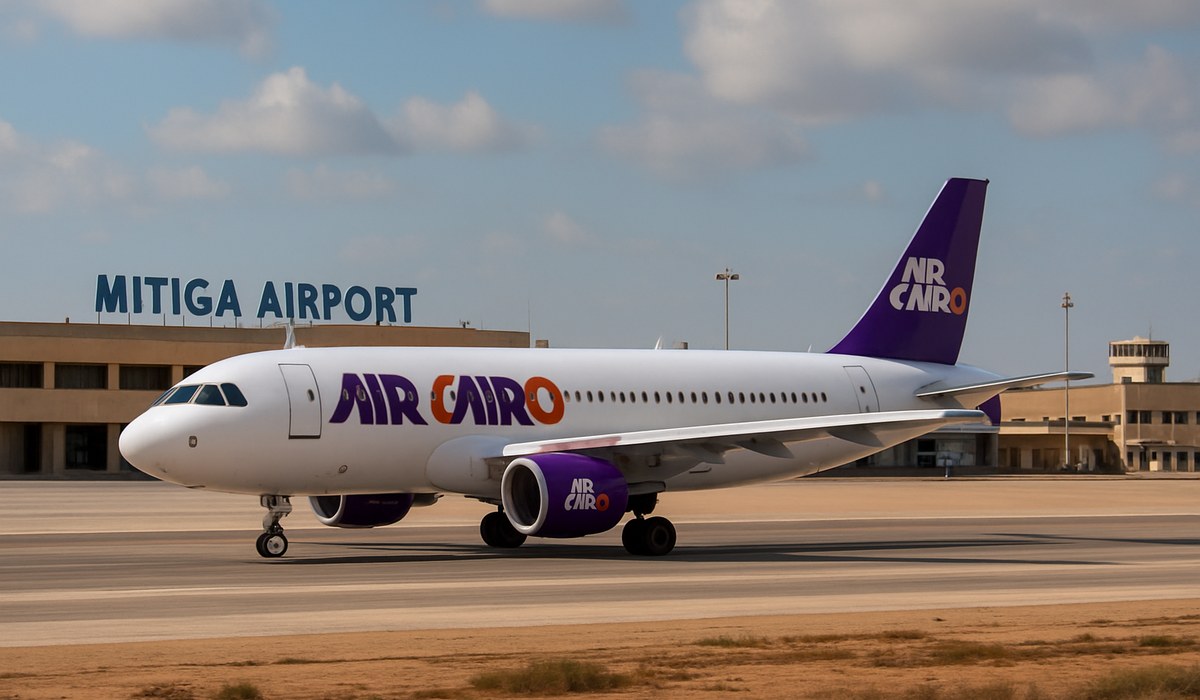
Image generated by AI
**> Quick Summary
- Air Cairo has announced the resumption of nonstop flights linking Cairo International Airport (CAI) to Tripoli's Mitiga International Airport (MJI) following an extended service gap
- This marks a significant milestone for North African aviation recovery and restores connectivity between Egypt's capital and Libya's primary international gateway
- Travelers booking this route should verify current flight schedules through real-time tracking and review their carrier's baggage policies before departure
- The route restart reflects broader stabilization efforts across the Eastern Mediterranean aviation sector and signals investor confidence in Libya's air transport recovery**
What Air Cairo's Tripoli Route Restart Really Means for Regional Connectivity
Air Cairo has switched back on a connection that dormant for years: direct service between Cairo (CAI) and Tripoli's Mitiga International Airport (MJI). The announcement lands at a pivotal moment for North African aviation, where decades of suspended routes have left massive gaps in the region's air infrastructure.
This isn't just airline news. It's a signal that Libya's aviation sector—battered by years of political instability and security concerns—is slowly reconnecting with the broader Mediterranean travel ecosystem. When a major carrier like Air Cairo commits aircraft and crew to a previously closed route, it indicates something has shifted in the risk calculus.
Mitiga Airport, Tripoli's primary international facility, has struggled to attract regular service from major hubs. For years, passengers traveling between Egypt and Libya faced limited options, often requiring connections through Tunis or other regional centers. Those detours added 8 to 14 hours to journeys that should take just over an hour of flight time.
The route's reopening eliminates that friction. Business travelers moving between Cairo's financial district and Tripoli's emerging corporate sectors now have a viable same-day option. Expatriate communities reconnecting with family gain immediate access. Tourism operators can finally offer straightforward itineraries without the logistical headache of multiple connections.
But Air Cairo's confidence extends beyond sentiment. The carrier has evaluated fuel costs, demand forecasting, staffing availability, and ground handling capacity at Mitiga. Each of those factors had to clear internal thresholds before the airline committed to regular operations. When you sum them up, the message is clear: Libya's aviation fundamentals are improving.
The Impact on Travelers: What You Need to Know Before Booking
If you're considering this route, several practical considerations deserve attention before you purchase a ticket.
Flight Schedule and Frequency
Air Cairo typically operates this corridor with regional turboprop equipment or narrow-body jets, depending on market demand. Early service usually launches with 3 to 5 weekly rotations, though frequency may increase if load factors justify additional capacity. Check the airline's official booking portal or FlightRadar24 for real-time confirmation of active departures.
Booking Strategy
Historically, routes reopening after prolonged suspensions experience volatility in pricing and availability. Day-of-week pricing often shifts dramatically—Wednesday and Friday flights tend to command premiums, while mid-week departures offer better value. Book at least 21 days in advance to secure competitive fares and ensure seat availability.
Baggage and Service Expectations
Air Cairo's baggage allowance for this segment typically includes 23 kilograms (50 pounds) of checked luggage plus one personal item, though policies vary by fare class. Verify your specific entitlement during checkout. Onboard catering on this short-haul route (flight time: 65–75 minutes) usually includes beverages and a light snack, but don't expect full meal service.
Ground Handling at Mitiga
Mitiga has invested in terminal infrastructure improvements over the past 18 months. Immigration processing generally runs smoothly, though queues can develop during peak hours (mid-morning and early evening). Arrive 2.5 hours before international departures to allow buffer time for security and boarding procedures.
Travel Documentation
Both Egyptian and Libyan nationals require valid passports. Foreign nationals should verify visa requirements with their nearest Libyan consulate before travel. Egypt's entry requirements depend on your nationality—most Western passport holders receive visa-on-arrival access, but this should be confirmed independently.
Libya's Aviation Recovery: Context and Challenges Ahead
Libya's aviation sector spent the better part of a decade in survival mode. Tripoli International Airport (formerly Mitiga's main facility) endured direct military conflict. Regional carriers pulled out. Fuel supply chains fractured. The International Air Transport Association (IATA) issued repeated safety advisories for operations in and out of Libyan airspace.
The turning point arrived gradually. Security improvements at Mitiga accelerated after 2024. The facility secured upgrades to runway lighting, terminal security systems, and ground service infrastructure. Flight operations resumed with regional carriers first—Tunisair, Royal Air Maroc, and Turkish Airlines leading the charge. Now, with Air Cairo joining the schedule, momentum is accelerating.
Several structural factors support continued recovery:
Economic Motivation: Libya's oil sector, the nation's lifeblood, requires seamless connectivity for international business travel. Direct Egypt routes cut travel costs and time, making Tripoli more accessible to Cairo-based energy traders, consultants, and executives.
Regional Diplomatic Thaw: Although nuanced, political relations between Egypt and Libya have stabilized. Air transport agreements are easier to negotiate. Route authorizations move faster through government channels.
Competitor Entry: When one major carrier opens a route, competitors take notice. If Air Cairo's Tripoli service proves commercially viable, expect announcements from EgyptAir, the dominant Egyptian carrier, within 12–18 months. That competition benefits travelers through improved frequencies and pricing pressure.
However, structural challenges persist. Fuel availability at Mitiga remains tighter than at major hubs. Maintenance capacity for complex aircraft is limited. Weather disruptions during winter months can cascade into delays. These friction points won't disappear overnight, but they're manageable for carriers committed to the market.
The geopolitical dimension also warrants attention. As detailed in our ongoing coverage of the Iran-Israel Conflict Oil Shock, energy market volatility directly affects aviation fuel pricing across the Eastern Mediterranean. Carriers operating Libya routes face unpredictable input costs that influence ticket prices and scheduling decisions.
How This Route Fits Into Broader North African Air Network Expansion
Libya doesn't exist in an aviation vacuum. Its recovery is part of a larger North African connectivity narrative that's reshaping cross-border movement patterns.
Consider the broader context: Tunisia, Morocco, and Algeria are all expanding international routes to secondary cities. Egypt is modernizing its regional hubs. The United Arab Emirates is positioning itself as a transit hub for North African traffic. In this environment, Libya's reopening matters because it fills a geographic void.
The Cairo-Tripoli corridor is just the beginning. Observer airlines are watching whether Air Cairo's profitability on this route supports expansion to other Libyan cities. Benghazi's international airport (BEN) has also undergone modernization. If the Cairo-Tripoli market validates demand, Benghazi service could follow within 24 months.
This route expansion mirrors patterns we've documented elsewhere in global aviation recovery. When we covered Peru Flight Cancellations last month, we noted that isolated route suspensions often give way to rapid service restoration once political and security conditions stabilize. Peru's experience showed that pent-up demand from 3–5 years of suspension can fuel exceptionally strong initial load factors—sometimes exceeding 85
Disclaimer
This article is for informational and educational purposes only. It does not constitute legal, financial, or professional advice. While we strive to provide accurate and up-to-date information, travel policies, regulations, and conditions change rapidly. Always verify information with official sources before making travel decisions. Nomad Lawyer makes no representations about the accuracy, reliability, completeness, or suitability of the information provided. Readers should consult qualified professionals for advice specific to their circumstances. The views expressed in this article are those of the author and do not necessarily reflect the views of Nomad Lawyer.
Raushan Kumar
Founder & Lead Developer
Full-stack developer with 11+ years of experience and a passionate traveller. Raushan built Nomad Lawyer from the ground up with a vision to create the best travel and law experience on the web.
Learn more about our team →