
Abu Dhabi–Northern Thailand Cargo Link Reshapes Global Logistics: K-Mile Air's Direct Freighter Service Boosts UAE Hub Status and Trade Routes to India, UK, Saudi Arabia, and US
Abu Dhabi Airports launches first direct cargo link to Northern Thailand via K-Mile Air, expanding UAE freight network to 36 destinations and strengthening global supply chains.

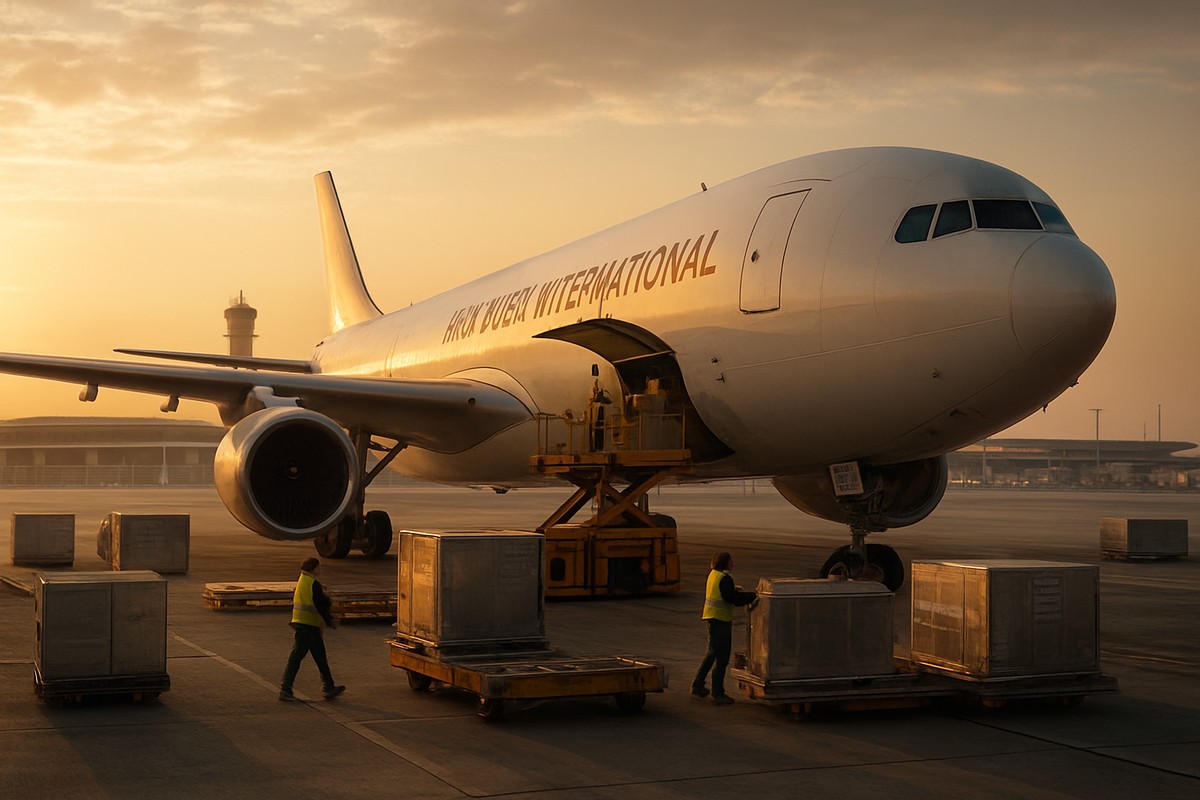
Image generated by AI
Abu Dhabi–Northern Thailand Cargo Link Reshapes Global Logistics: K-Mile Air's Direct Freighter Service Boosts UAE Hub Status and Trade Routes to India, UK, Saudi Arabia, and US
Strategic Cargo Expansion Solidifies UAE Position as Critical Global Logistics Nexus
Abu Dhabi Airports has officially launched its first direct air cargo link to Northern Thailand, marking a watershed moment in global logistics infrastructure. With K-Mile Air now operating five weekly freighter services between Abu Dhabi's Zayed International Airport and both Chiang Mai and Chiang Rai, the UAE has expanded its freight network to 36 global destinations, fundamentally reshaping trade corridors connecting Southeast Asia to Europe, the Middle East, and North America. This development signals the UAE's intensifying dominance as a pivotal logistics hub, with far-reaching implications for passenger connectivity, supply chain efficiency, and international tourism competitiveness.
The Expansion: A Strategic Logistics Milestone
The launch of K-Mile Air's direct freighter services represents far more than a single new route—it embodies a coordinated strategy among UAE's leading carriers to capitalize on surging demand for air cargo across Asia-Pacific and global markets. Abu Dhabi Airports, partnering with the Thailand-based all-cargo specialist, has created a critical connectivity bridge between Northern Thailand's emerging industrial hubs and the UAE's established logistics infrastructure.
This move comes amid unprecedented global demand for fast-tracked freight movement, driven by e-commerce acceleration, perishable goods trade, and just-in-time manufacturing across India, the United Kingdom, Saudi Arabia, and the United States. The five weekly frequency from K-Mile Air—the highest among competitors on this route—underscores the commercial viability and market urgency underpinning this expansion.
Global Context: Why This Matters for Trade and Tourism
The Northern Thailand corridor has emerged as a critical yet underserved logistics nexus. Chiang Mai and Chiang Rai serve as gateways to Thailand's rapidly growing manufacturing and agricultural export zones, yet historically lacked direct premium air cargo connectivity to the Middle East. This bottleneck hindered time-sensitive shipments of electronics, automotive components, perishables, and high-value retail goods destined for European and American markets.
By creating a direct Abu Dhabi–Northern Thailand link, stakeholders have eliminated one of Asia's most consequential supply chain choke points. The UAE, already home to world-class airport infrastructure and zero tariffs on transshipment, becomes the preferred hub for consolidating and redistributing cargo across its 36-destination network. This efficiency gain translates into lower freight premiums, faster delivery times, and improved competitiveness for shippers and manufacturers across the region.
The implications for tourism are equally profound. As cargo frequencies increase, airlines can optimize passenger flight schedules without sacrificing freight capacity—enabling more competitive fares, higher frequencies, and better connectivity for leisure and business travelers from source markets like India and Saudi Arabia to UAE destinations like Dubai and Abu Dhabi.
Impact on Global Supply Chains and Tourism Flows
Supply Chain Acceleration
The new freighter services directly address critical logistics pain points:
- Electronics & Semiconductors: Time-sensitive high-value shipments from Thai manufacturers now reach European and North American distribution centers 2-3 days faster via Abu Dhabi than traditional hub routes.
- Perishables Trade: Thai agricultural exports (fresh produce, seafood, processed goods) gain competitive advantage through faster turnaround and reduced temperature-control duration.
- Fashion & Retail: Seasonal inventory replenishment between Asia and Western markets achieves improved delivery windows, reducing markdown risk.
- Pharmaceutical & Healthcare: Temperature-controlled cargo for medical supplies and biologics benefits from direct routing and premium handling at Abu Dhabi's specialized facilities.
Tourism and Passenger Network Effects
While cargo-focused, this expansion catalyzes indirect passenger benefits:
- Increased aircraft utilization by Etihad, Emirates, and Qatar Airways allows deployment of additional passenger capacity on complementary routes.
- Business travel between UAE and Southeast Asia intensifies, driving demand for premium cabin services and frequent-flyer benefits.
- Tourists from India, Saudi Arabia, and the US gain improved connectivity to Abu Dhabi and Dubai, with potential onward leisure connections to Thailand and Southeast Asia.
- The UAE's position as an international business hub strengthens, attracting more corporate headquarters and regional offices—further boosting business travel demand.
Airline-by-Airline Strategic Response
Etihad Cargo: Expanding the Global Freighter Network
Etihad Cargo is leveraging this development to reinforce its position as a comprehensive global logistics provider. The airline is deploying additional wide-body freighters (Boeing 747-400F and Airbus A330-200F aircraft) on the Abu Dhabi–Chiang Mai/Chiang Rai corridor, capitalizing on five weekly frequencies. This expansion directly serves Etihad's extensive downstream routes to India, the UK, and the US, where cargo demand remains robust.
The airline's strategy involves consolidation at Abu Dhabi hub, allowing it to optimize load factors and reduce cost-per-kilogram on premium long-haul routes. Etihad is also investing in ground-handling infrastructure, including expanded cold-chain facilities and hazmat warehousing at Zayed International Airport—critical for perishables and pharmaceutical cargo.
Emirates SkyCargo: Competing for Market Share
Emirates SkyCargo, already a dominant cargo player, is responding with aggressive capacity additions. The carrier operates four weekly flights on the Abu Dhabi–Chiang Mai/Chiang Rai route, positioning itself as a strong competitor to Etihad while leveraging its broader network to the UK, Europe, and Australia. Emirates is capitalizing on its superior passenger fleet (Boeing 777-300F and Airbus A380F derivatives) to maximize cargo revenue from passenger aircraft, while dedicating freighters to highest-demand, highest-margin routes.
Emirates' competitive advantage lies in its brand recognition and seamless integration of passenger and cargo operations—allowing it to offer bundled logistics solutions for multinational corporations seeking end-to-end supply chain services.
Qatar Airways Cargo: Strategic Positioning
Qatar Airways Cargo, though third on this specific route with three weekly frequencies, is maintaining strategic presence through superior technology and route optimization. The airline has invested heavily in AI-driven cargo management systems, allowing real-time load planning and dynamic pricing. Qatar Airways' network strength in the US and emerging African markets positions it to capture high-margin transatlantic and Africa-bound shipments originating in Thailand.
K-Mile Air: Niche Specialist Strength
K-Mile Air, the Thailand-based all-cargo carrier, is the route operator and primary beneficiary. As the fifth weekly frequency provider, K-Mile dominates the Abu Dhabi–Northern Thailand corridor through sheer frequency and cost efficiency. The carrier's Thailand-based operations provide superior feed from Chiang Mai and Chiang Rai industrial zones, minimizing ground time and maximizing turns. K-Mile's strategy focuses on regional consolidation, capturing intra-Asia cargo flows and feeding them to Abu Dhabi for onward distribution.
Route Expansion Data: Competitive Landscape
| Airline | Route(s) | Affected Markets | Weekly Frequency | Aircraft Type |
|---|---|---|---|---|
| K-Mile Air | Abu Dhabi–Chiang Mai, Chiang Rai | Thailand, UAE, Saudi Arabia | 5 | Narrowbody Freighter |
| Etihad Cargo | Abu Dhabi–Chiang Mai, Chiang Rai | Thailand, UAE, India | 5 | Wide-body (747-400F, A330-200F) |
| Emirates SkyCargo | Abu Dhabi–Chiang Mai, Chiang Rai | Thailand, UAE, UK | 4 | Wide-body (777-300F) |
| Qatar Airways Cargo | Abu Dhabi–Chiang Mai, Chiang Rai | Thailand, UAE, US | 3 | Wide-body Freighter |
Industry Analysis: Structural Drivers and Market Implications
Why This Expansion Succeeds Now
Three macroeconomic factors converge to make this expansion viable:
-
Post-Pandemic Supply Chain Reconstruction: Global manufacturers are rebuilding resilient, multi-sourced supply chains. Thailand's stable industrial base and competitive labor costs position it favorably versus China for nearshoring and friend-shoring strategies.
-
E-Commerce Acceleration: Cross-border B2C logistics demand for Thai-manufactured goods (electronics, clothing, home goods) to Western markets remains elevated post-pandemic. Direct air cargo improves fulfillment speed and competitiveness versus sea freight.
-
Energy & Geopolitical Rebalancing: New trade partnerships and reduced China-centric sourcing create demand for alternative logistics corridors. The UAE–Thailand link serves as a preferred route for US and European importers seeking supply chain diversification.
Competitive Dynamics and Market Saturation Risks
While the expansion is strategically sound, oversupply risks exist. Four major carriers (K-Mile, Etihad, Emirates, Qatar) now compete on a single route. This drives pricing compression—benefiting shippers but pressuring airline margins. Likely outcomes:
- Consolidation Pressure: Smaller carriers may exit regional routes, with K-Mile potentially acquired by or partnered with a larger global player.
- Service Differentiation: Airlines will compete on speed, reliability, and specialized handling (temperature control, hazmat compliance) rather than price alone.
- Seasonal Volatility: Demand for perishables is seasonal, creating potential idle capacity during off-peak periods. Airlines must develop flexible capacity deployment strategies.
Operational Outlook: What Happens Next
Q2-Q3 2026: Stabilization and Optimization
Expect a 90-day stabilization period as all carriers finalize schedules, train ground personnel, and optimize cargo consolidation procedures. Load factors should reach 75-80% by mid-Q3, indicating market efficiency. Airlines will simultaneously launch marketing campaigns targeting shippers in India, Saudi Arabia, and North America, promoting the direct route's speed and cost advantages.
Q4 2026–Q1 2027: Capacity Expansion Signals
If Q3 results meet targets (likely given market demand), carriers will signal expansion intent:
- Etihad & Emirates: Deployment of additional freighters on complementary Asia-Pacific routes.
- Qatar Airways: Expansion to secondary Thai cities (Bangkok, Phuket) or neighboring Vietnam.
- K-Mile Air: Potential acquisition or partnership discussions with global carriers seeking regional capacity.
Medium-Term (2027–2028): Passenger Route Development
Success of cargo operations typically precedes passenger route launches. Monitor for Etihad or Emirates announcements of scheduled passenger service between Abu Dhabi and Chiang Mai or Phuket—a development that would directly boost Thai tourism and align with broader regional tourism recovery initiatives.
Impact on Global Tourism: The Indirect Benefits
Increased Connectivity for Inbound Tourism
The cargo expansion strengthens Abu Dhabi and Dubai's position as premium tourist destinations for:
- Indian travelers: More frequent passenger flights from India to UAE, with easier connections to Southeast Asia.
- Saudi leisure tourists: Growing business presence in UAE generates ancillary leisure travel and family visits.
- US business travelers: More reliable flight schedules support corporate meetings and incentive travel programs.
Tourism Infrastructure Support
Increased cargo capacity enables faster delivery of tourism-related goods—hotel equipment, restaurant supplies, event materials—allowing Abu Dhabi and Dubai to host large-scale international conferences and events more cost-effectively.
Regional Tourism Synergies
The expanded logistics hub positions the UAE as a strategic transit point for tourists traveling between South Asia, the Middle East, and Southeast Asia—potentially increasing stopover tourism and extending average trip length.
What Travelers and Shippers Should Know: Practical Guidance
For International Shippers
-
Booking Strategy: Reserve capacity 2-3 weeks in advance during peak seasons (June-August for electronics, November-December for retail). Direct booking with Etihad or Emirates Cargo offers better rates than consolidators during high-demand periods.
-
Cost-Benefit Analysis: Compare total delivered cost (airfreight + ground handling + insurance) versus sea freight alternatives. For goods with shelf-life constraints or high carrying costs, air cargo becomes cost-neutral at 4-6 week sea freight delays.
-
Documentation Compliance: Ensure customs documentation and certificates of origin are Thailand-compliant and UAE-recognized. Changes to import documentation procedures may occur; monitor Abu Dhabi Airports' website for updates.
-
Consolidation Opportunities: Use Abu Dhabi as a consolidation hub for multi-destination shipments to Europe or North America, leveraging the hub's superior downstream connectivity.
For Leisure and Business Travelers
-
Flight Search Strategy: Check Etihad, Emirates, and Qatar Airways websites for promotional fares on routes benefiting from increased capacity (Abu Dhabi–Dubai–Bangkok–Chiang Mai connections).
-
Booking Timing: Airlines typically release promotional fares 4-6 weeks before departure. Book early, especially for Q4 2026 (peak US/UK travel season).
-
Travel Insurance: Increased cargo operations may occasionally cause flight delays during peak seasons. Travel insurance covering delay-related expenses is recommended.
-
Thailand Tourism Planning: Growing UAE–Thailand connectivity makes multi-destination packages (UAE + Southeast Asia) increasingly viable and cost-effective.
Key Statistics and Market Context
- UAE Cargo Network: Now spans 36 global destinations across six continents.
- **Route
Disclaimer
This article is for informational and educational purposes only. It does not constitute legal, financial, or professional advice. While we strive to provide accurate and up-to-date information, travel policies, regulations, and conditions change rapidly. Always verify information with official sources before making travel decisions. Nomad Lawyer makes no representations about the accuracy, reliability, completeness, or suitability of the information provided. Readers should consult qualified professionals for advice specific to their circumstances. The views expressed in this article are those of the author and do not necessarily reflect the views of Nomad Lawyer.
Kunal K Choudhary
Co-Founder & Contributor
A passionate traveller and tech enthusiast. Kunal contributes to the vision and growth of Nomad Lawyer, bringing fresh perspectives and driving the community forward.
Learn more about our team →