
Boeing 737 MAX 8 Completes Historic Transatlantic Journey From Seattle to Madrid
Breaking airline news and aviation industry updates for 2026.

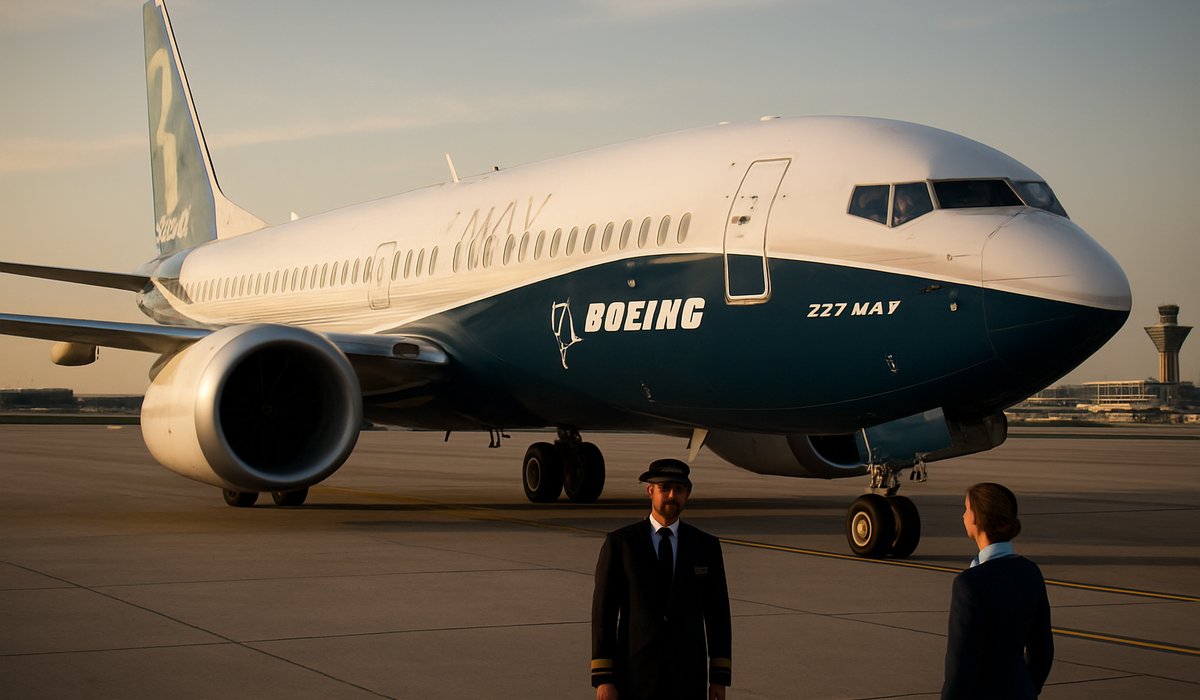
Image generated by AI
Boeing 737 MAX 8 Completes Historic Transatlantic Journey From Seattle to Madrid
Air Europa's newly delivered aircraft sets potential distance record for single-aisle aircraft, marking a significant milestone in modern aviation capabilities
Record-Breaking Transatlantic Flight Achieves New Heights
Air Europa has achieved what aviation experts are calling a landmark operational feat: a newly delivered Boeing 737 MAX 8 has successfully completed a direct nonstop flight from Seattle to Madrid, covering approximately 5,000 nautical miles in a single journey. The aircraft, registered as EG-OCC, departed from Boeing Field in Seattle and arrived at Adolfo Suárez Madrid-Barajas Airport, establishing what may represent the longest nonstop distance ever flown by a 737 MAX 8 variant.
The unprecedented routing was tracked in real-time via Flightradar24 and has generated considerable discussion within the global aviation community, particularly on industry forums and social media platforms. The flight underscores the extended operational range capabilities of Boeing's re-certified narrow-body aircraft and highlights how modern aviation engineering is pushing the boundaries of what single-aisle jets can accomplish.
Pushing the 737 MAX's Operational Limits
The transatlantic crossing approaches the absolute maximum range parameters for the 737 MAX 8, an aircraft traditionally designed for medium-haul regional and transcontinental operations rather than extended oceanic flights. The aircraft's ability to execute this journey reveals the technical advances incorporated into the MAX platform since its return to commercial service following the 2019 grounding.
Air Europa's decision to conduct this test flight—likely a ferry operation or delivery verification mission—demonstrates the aircraft's fuel efficiency improvements and extended range capabilities. These enhancements have made the 737 MAX increasingly competitive in markets previously dominated by larger wide-body aircraft, allowing carriers to optimize route planning and operational efficiency.
Implications for the Aviation Industry
The successful completion of this transatlantic mission carries significant implications for the aviation sector. Airlines operating 737 MAX fleets may now consider long-haul routes previously requiring larger, less fuel-efficient aircraft. This development comes at a critical time when carriers face escalating jet fuel prices and increasing pressure to reduce operational costs while maintaining service quality.
The flight also reinforces the 737 MAX's market position as Boeing continues its recovery from reputational challenges. For Air Europa and other carriers investing in the aircraft type, such achievements provide tangible proof of the platform's reliability and capability for diverse operational scenarios.
Industry Context
The aviation industry has witnessed remarkable technological progress in narrow-body aircraft design over the past decade. Enhanced engines, lighter composite materials, and optimized aerodynamics have extended range capabilities beyond previous limitations. This transatlantic demonstration suggests the future of international aviation may involve greater flexibility in aircraft deployment and route planning for single-aisle operators.
Frequently Asked Questions
What is the Boeing 737 MAX 8's maximum range? The 737 MAX 8 has a maximum range of approximately 3,550 nautical miles under standard operating conditions, though this Seattle-to-Madrid flight suggests extended range is achievable under specific circumstances.
Why would Air Europa fly a ferry route from Seattle to Madrid? Ferry flights typically occur during aircraft delivery, maintenance validation, or operational testing. This particular flight likely served as a delivery verification or range capability demonstration for the newly manufactured aircraft.
How does this flight impact airline route planning? The successful transatlantic crossing could enable carriers to deploy 737 MAX aircraft on longer routes, potentially reducing reliance on larger, more costly wide-body jets for select transatlantic services.
What advantages does the 737 MAX offer over previous narrow-body models? The MAX platform features advanced engines, improved fuel efficiency, lighter construction materials, and enhanced avionics, collectively extending range and reducing operating costs by approximately 20% compared to predecessor models.
Could this lead to more single-aisle transatlantic routes? Potentially, though regulatory, operational, and commercial factors would influence widespread adoption. The demonstrated capability opens strategic possibilities for carriers seeking cost-effective transatlantic service options.
Related Travel Guides
- Breaking Airline News: Severe Travel Chaos Engulfs Bucharest Henri Coandă Airport as 10 Flight Cancellations Paralyze the European Transit Network
- Aviation Updates: Massive Delta Air Lines Capacity Freeze Explodes Across Atlanta Triggering Terrifying Summer Travel Chaos and Airport Disruptions
- Aviation Updates: Massive Travel Chaos Engulfs Brussels Airport as Brussels Airlines, easyJet, and Air Baltic Suffer 101 Flight Cancellations and Delays
Disclaimer
This article is for informational and educational purposes only. It does not constitute legal, financial, or professional advice. While we strive to provide accurate and up-to-date information, travel policies, regulations, and conditions change rapidly. Always verify information with official sources before making travel decisions. Nomad Lawyer makes no representations about the accuracy, reliability, completeness, or suitability of the information provided. Readers should consult qualified professionals for advice specific to their circumstances. The views expressed in this article are those of the author and do not necessarily reflect the views of Nomad Lawyer.
Raushan Kumar
Founder & Lead Developer
Full-stack developer with 11+ years of experience and a passionate traveller. Raushan built Nomad Lawyer from the ground up with a vision to create the best travel and law experience on the web.
Learn more about our team →