
Southwest Airlines Extends Reach with Record-Breaking Seven-Hour Nonstop Routes, Reshaping Low-Cost Long-Haul Travel
Breaking airline news and aviation industry updates for 2026.

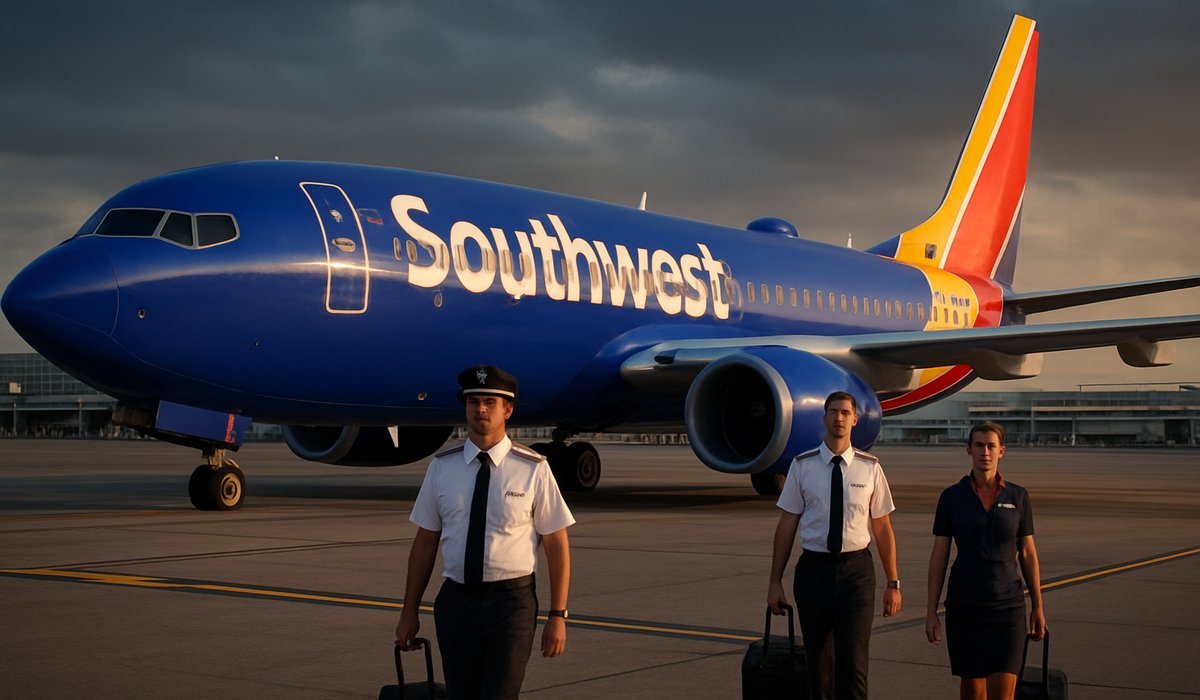
Image generated by AI
Southwest Airlines Extends Reach with Record-Breaking Seven-Hour Nonstop Routes, Reshaping Low-Cost Long-Haul Travel
The carrier pushes operational limits of its Boeing 737 fleet, signaling aggressive expansion into extended-range markets
Southwest Breaks Its Own Duration Records
Southwest Airlines has significantly expanded its operational envelope, now operating ten nonstop routes that push nearly to the seven-hour ceiling—a remarkable milestone for a carrier traditionally defined by short-haul, point-to-point service. The achievement underscores a fundamental shift in the low-cost carrier's strategy, as Boeing 737 aircraft increasingly log extended flight times previously reserved for larger, wide-body operators.
The longest journeys in Southwest's network demand nearly seven hours of block time—a substantial commitment for passengers accustomed to the airline's sub-four-hour average. Yet despite cramped narrowbody cabins and the traditional Southwest operating model, demand remains robust, with travelers prioritizing price-competitive fares over cabin amenities.
Strategic Expansion into Long-Haul Markets
This operational evolution reflects broader industry trends accelerating across the aviation sector. As major carriers optimize fuel efficiency through improved aircraft technology and route planning, legacy constraints on narrowbody range have dissolved. Southwest's expansion into extended-range markets directly competes with traditional network carriers while maintaining its celebrated cost advantage—a competitive positioning that reshapes traveler expectations around affordable long-distance air travel.
The carrier's longest routes connect major metropolitan hubs to emerging leisure and business destinations, leveraging fuel price stability and operational efficiency gains to make previously uneconomical routes financially viable. This strategic push allows Southwest to capture market share in segments dominated by higher-cost competitors.
Implications for Aviation Industry
The trend carries significant implications for the broader aviation landscape. As low-cost carriers demonstrate capacity to operate extended-range services profitably on narrowbody platforms, pressure intensifies on legacy carriers' pricing strategies. Airline fees—historically a revenue stabilizer for network carriers—face renewed competitive pressure as Southwest's model relies on bundled fares rather than ancillary charges.
Industry observers note that elevated jet fuel prices, while impacting all operators, have driven efficiency improvements that paradoxically enable longer routes on smaller aircraft. Route optimization technology and improved flight planning reduce block times, narrowing the operational gap between narrowbody and wide-body efficiency on extended flights.
Market Response and Passenger Demand
Despite the operational challenges of seven-hour narrowbody flights, Southwest reports consistent passenger demand for these routes, indicating shifting consumer priorities post-pandemic. Business and leisure travelers increasingly accept trade-offs between comfort and cost, accelerating the viability of budget long-haul operations.
The carrier's capacity to simultaneously expand route networks while maintaining operational margins demonstrates the competitive pressure reshaping aviation economics. As other low-cost operators evaluate similar expansion strategies, the traditional hierarchy of airline service models continues fragmenting.
FAQ: Southwest Airlines' Extended-Range Strategy
What are Southwest Airlines' longest routes by flight time? Southwest's ten longest nonstop routes approach seven hours of block time, representing the outer operational limits for the carrier's Boeing 737 fleet.
Why is Southwest operating such long flights on narrowbody aircraft? Modern Boeing 737 variants offer improved fuel efficiency and range, while low-cost operational models enable profitable long-haul service without premium cabin revenue.
How do airline fees factor into Southwest's long-haul pricing strategy? Southwest's bundled-fare model differs from legacy carriers' ancillary revenue structures, allowing competitive pricing without baggage charges or seat fees on these extended routes.
What impact does jet fuel price volatility have on these route operations? Fuel cost fluctuations directly influence route viability; improved aircraft efficiency and route optimization have made extended narrowbody flights economically sustainable.
Will other low-cost carriers expand similar seven-hour routes? Industry trends suggest growing competition in extended-range narrowbody operations, as carriers seek efficiency advantages and market expansion beyond traditional short-haul networks.
Related Travel Guides
External Resources
Disclaimer
This article is for informational and educational purposes only. It does not constitute legal, financial, or professional advice. While we strive to provide accurate and up-to-date information, travel policies, regulations, and conditions change rapidly. Always verify information with official sources before making travel decisions. Nomad Lawyer makes no representations about the accuracy, reliability, completeness, or suitability of the information provided. Readers should consult qualified professionals for advice specific to their circumstances. The views expressed in this article are those of the author and do not necessarily reflect the views of Nomad Lawyer.
Kunal K Choudhary
Co-Founder & Contributor
A passionate traveller and tech enthusiast. Kunal contributes to the vision and growth of Nomad Lawyer, bringing fresh perspectives and driving the community forward.
Learn more about our team →