
Southwest Airlines Operates 16-Hour Multi-Stop Marathon Flights Across Its Most Grueling Route Network
Southwest Airlines Operates 16-Hour Multi-Stop Marathon Flights Across Its Most Grueling Route Network

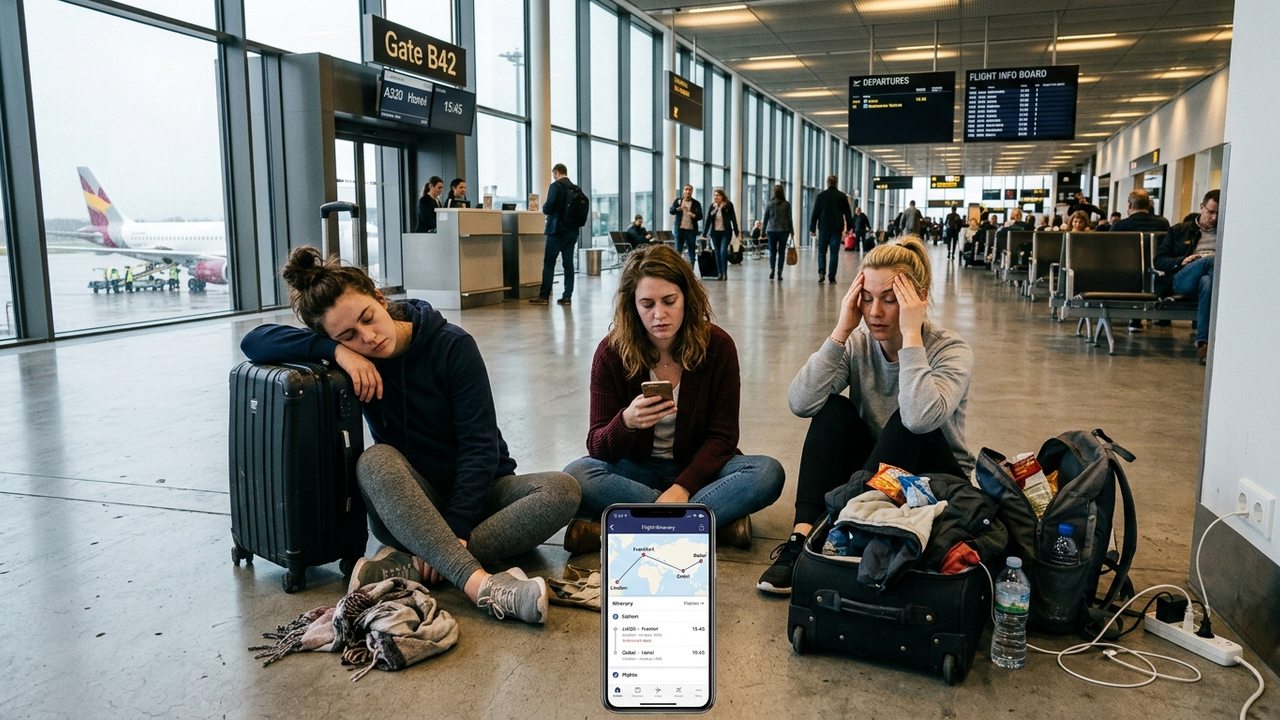
Image generated by AI
[Dallas, June 26, 2026] — Southwest Airlines, the United States' largest domestic carrier by passenger volume, continues to operate some of the most endurance-testing multi-stop routes in modern commercial aviation, with certain itineraries stretching to approximately 16 hours of total travel time including layovers. These marathon journeys, built around the airline's signature point-to-point network model, stand in stark contrast to the hub-and-spoke systems favored by legacy competitors and highlight a unique operational philosophy that has defined Southwest for decades.
The Dallas-based low-cost carrier has long structured its schedule around short-haul, high-frequency flights with quick turnaround times. However, when multiple segments are chained together on a single itinerary, the cumulative travel time can rival that of long-haul international flights — all without ever leaving United States airspace or boarding a wide-body aircraft.
Southwest's Point-to-Point Model Creates Extended Multi-Segment Journeys
Southwest Airlines operates a distinctive point-to-point route network rather than the hub-and-spoke architecture used by carriers such as American Airlines, Delta Air Lines, and United Airlines. This means flights connect cities directly without routing passengers through a central mega-hub. While this approach reduces single-leg travel times for many routes, it also means that cross-country or multi-region itineraries frequently require several intermediate stops, each adding taxi, boarding, deplaning, and potential delay time to the total journey.
The airline's fleet consists exclusively of Boeing 737 family aircraft, primarily the 737-700, 737-800, and 737 MAX 8 variants. This single-type fleet strategy simplifies maintenance and crew scheduling but limits the carrier to narrow-body operations with maximum ranges that preclude true long-haul nonstop flying. As a result, coast-to-coast or border-to-border travel on Southwest often involves two, three, or even four flight segments.
According to industry reports, the most grueling of these multi-stop itineraries can total approximately 16 hours from first departure to final arrival, including scheduled layover periods at intermediate airports. These journeys typically span cities across multiple time zones and may touch regions as far apart as the West Coast and the East Coast or the Southeast.
The Mechanics Behind Southwest's Longest Multi-Stop Itineraries
A typical marathon Southwest routing might begin with an early morning departure from a West Coast city such as Los Angeles (LAX), Las Vegas (LAS), or Phoenix (PHX), followed by stops at intermediate cities in the central United States, and concluding at an East Coast or Southeastern destination. Each segment generally ranges from one to three hours of flight time, but the cumulative effect — including ground time at each stop — extends the total journey dramatically.
Passengers booked on through-flights may remain on the same aircraft for multiple segments, though Southwest's open-seating policy means they may need to reposition themselves between legs. At certain stops, aircraft changes are required, adding further time as passengers deplane, wait, and reboard a different aircraft.
The 16-hour figure represents the extreme end of Southwest's scheduling spectrum. Most multi-stop itineraries on the carrier range from six to ten hours of total travel time. The longest routes typically occur when passengers book connecting itineraries that link multiple short-haul segments across the carrier's extensive domestic network, which serves over 120 airports across the United States and select nearby international destinations.
How Southwest's Marathon Routes Compare to Legacy Carrier Alternatives
Competing airlines operating hub-and-spoke networks can offer cross-country nonstop flights between major city pairs — for example, New York (JFK) to Los Angeles (LAX) — in approximately five to six hours. Southwest does operate some transcontinental nonstop routes, including services between cities such as Baltimore (BWI) and Los Angeles (LAX), or Oakland (OAK) and Baltimore (BWI). However, for many city pairs not connected by nonstop service, the multi-stop alternative becomes the only option on Southwest metal.
Industry observers note that passengers choosing Southwest for these marathon journeys typically do so for cost savings, loyalty program benefits, or the absence of change fees — a hallmark of the carrier's customer-friendly policy structure. The trade-off is significantly longer total travel time compared to legacy competitors offering nonstop or single-stop alternatives through their hubs.
Southwest's Rapid Rewards loyalty program, which allows passengers to earn and redeem points based on fare value rather than distance flown, means that a 16-hour multi-stop journey costs the same number of points as a shorter nonstop flight on the same fare class. This dynamic creates an interesting value proposition for budget-conscious travelers willing to trade time for savings.
Operational Factors Driving Extended Multi-Stop Schedules
Several factors contribute to the existence of these extended multi-stop routes within Southwest's network. The carrier's route planners optimize for aircraft utilization and gate efficiency rather than minimum travel time for any individual passenger. By keeping aircraft in the air with quick turnarounds — often as short as 25 to 35 minutes at gate — Southwest maximizes the revenue-generating hours of each Boeing 737 in its fleet.
Additionally, Southwest serves many secondary airports that lack nonstop connectivity to distant markets. Cities such as Albuquerque (ABQ), Tulsa (TUL), Little Rock (LIT), and El Paso (ELP) rely on connecting service through larger Southwest focus cities like Dallas Love Field (DAL), Chicago Midway (MDW), Denver (DEN), or Houston Hobby (HOU). Passengers originating in or destined for these smaller markets may face multi-stop itineraries as the default option.
Seasonal schedule adjustments also play a role. During off-peak periods, Southwest may reduce frequencies on certain routes or eliminate nonstop service temporarily, forcing passengers onto connecting itineraries that add hours to their total travel time.
Passenger Experience on Ultra-Long Multi-Stop Flights
Travelers enduring a 16-hour Southwest journey face a distinctly different experience from passengers on long-haul international flights of similar duration. Southwest's Boeing 737 aircraft feature all-economy seating with a 3-3 configuration, no in-seat entertainment screens, and no meal service. The airline offers free beverage service and a modest snack selection, along with complimentary Wi-Fi on most aircraft — available for a fee for streaming and higher-bandwidth usage.
Each intermediate stop introduces variables that can further extend total travel time. Weather delays, air traffic control holds, mechanical issues, or late-arriving connecting aircraft can add minutes or hours to an already lengthy itinerary. Passengers on through-flights who remain on the same aircraft during stops may also experience cabin cleaning and boarding of new passengers, creating a less restful environment during ground time.
Southwest's policy of not assigning seats means that passengers on multi-segment journeys must compete for preferred seating at each boarding, unless they purchase EarlyBird Check-In or hold A-List elite status, which grants priority boarding positions.
Why Southwest's Multi-Stop Marathon Routes Matter for the Aviation Industry
The existence of 16-hour multi-stop itineraries within a domestic low-cost carrier's network reveals important truths about the current state of American commercial aviation and the trade-offs inherent in different business models. Southwest's approach demonstrates that ultra-low base fares and operational efficiency can attract sufficient demand to fill seats even on journeys that consume an entire waking day.
For the broader aviation industry, Southwest's marathon routes underscore the persistent connectivity gap in the United States air transport system. While major metropolitan areas enjoy frequent nonstop service from multiple carriers, smaller cities and secondary airports remain dependent on multi-stop itineraries that impose significant time costs on travelers. This dynamic has implications for business travel productivity, regional economic development, and equitable access to air transportation.
The endurance of these routes also highlights the competitive tension between cost and convenience in passenger choice. Legacy carriers have increasingly relied on premium-cabin revenue and long-haul international flying for profitability, while Southwest has maintained its focus on high-frequency, low-cost domestic operations. The fact that enough passengers willingly accept 16-hour multi-stop journeys to make such routes viable suggests that price sensitivity remains a powerful force in the domestic travel market.
Furthermore, as the airline industry navigates post-pandemic capacity adjustments, fleet renewal programs, and pilot shortages, the availability of nonstop service on many routes remains constrained. Southwest's decision to maintain and even grow its point-to-point network — rather than retreating to a simplified hub model — signals confidence that demand for affordable, if time-consuming, domestic air travel will persist.
Related Travel Guides
Disclaimer
This article is for informational and educational purposes only. It does not constitute legal, financial, or professional advice. While we strive to provide accurate and up-to-date information, travel policies, regulations, and conditions change rapidly. Always verify information with official sources before making travel decisions. Nomad Lawyer makes no representations about the accuracy, reliability, completeness, or suitability of the information provided. Readers should consult qualified professionals for advice specific to their circumstances. The views expressed in this article are those of the author and do not necessarily reflect the views of Nomad Lawyer.
Preeti Gunjan
Contributor & Community Manager
A passionate traveller and community builder. Preeti helps grow the Nomad Lawyer community, fostering engagement and bringing the reader experience to life.
Learn more about our team →