
15 Lakh Vehicles Flood Shimla in 45 Days: How Police Are Managing India's Summer Tourist Crisis
Shimla faces unprecedented traffic chaos as 15 lakh vehicles enter the hill station in 45 days. Police deploy five-point strategy including interceptors, alternative routes, and 210 additional personnel to manage summer holiday surge.

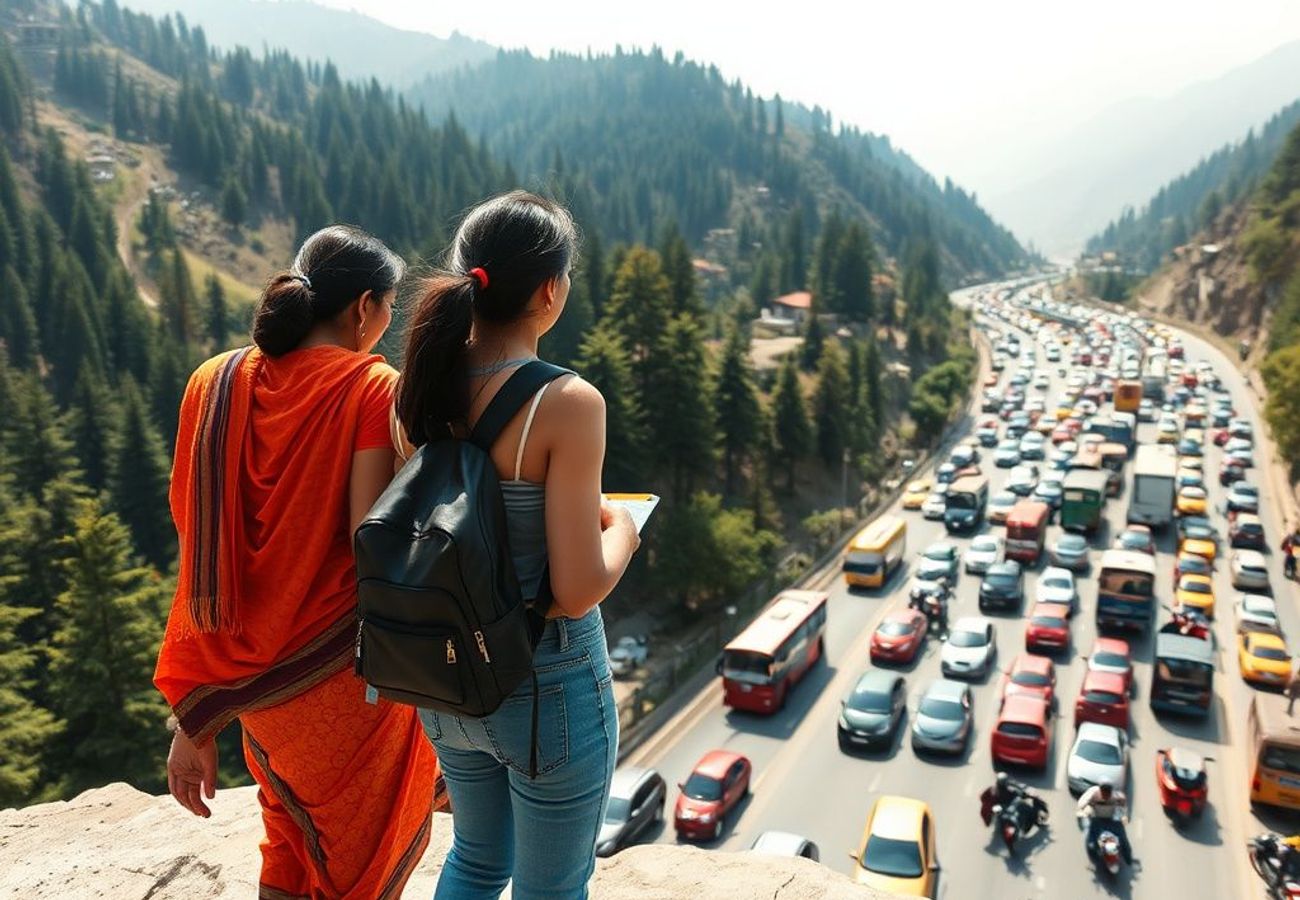
Image generated by AI
The Perfect Storm: When 15 Lakh Vehicles Descend on One Hill Station
Picture this: 15 lakh vehicles entering a single city within just 45 days. Between May 1 and June 15, 2026, Shimla witnessed an unprecedented surge of tourism that transformed its scenic highways into parking lots and turned traffic management into an all-hands-on-deck crisis.
This isn't hyperbole. This is what happens when India's school summer holidays coincide with one of the country's most beloved hill destinations. And authorities? They're scrambling to keep the wheels turning—literally.
Why Shimla Became the Unexpected Traffic Battleground
Summer holidays are sacred in India. Schools close. Families pack. And everyone apparently decides that Shimla, Kufri, Narkanda, and Theog are the places to be. According to hoteliers on the ground, accommodation occupancy surged to 60-70 percent on weekdays and 80-90 percent on weekends across Himachal Pradesh last week.
Reddit: "I visited Shimla last summer and couldn't believe the traffic. Spent more time in my car than actually exploring." — r/IndiaTravel
The influx is real. The chaos is real. And the solution? Well, that's where things get interesting.
Shimla Police Rolls Out a Five-Point Emergency Strategy
Superintendent of Police Gaurav Singh didn't mince words when addressing PTI: managing the tourist influx isn't inherently a problem—it's the internal bottlenecks that create havoc.
Enter the five-point strategy that Shimla Police implemented to wrestle back control:
Strategic Move #1: Boots on the Ground (And Bikes)
Shimla Police deployed an additional 210 personnel and home guards, alongside volunteers stationed at major parking sites. But here's the twist—they specifically increased bike-borne traffic personnel to 32 units for rapid-response capabilities.
Why bikes? In congested hill terrain, motorcycles can navigate where cars can't. They're deployed for swift action against violations and to manage traffic flow in bottleneck areas. Traffic cops positioned at key parking zones now ensure smooth entry and exit of vehicles, preventing the domino-effect congestion that chokes hill stations.
Strategic Move #2: Interceptor Vehicles and Sector-Based Enforcement
The city was divided into five sectors, each assigned to a gazetted officer. This isn't just bureaucratic theater—it's accountability with teeth. Each officer owns their sector's traffic flow entirely.
Interceptor vehicles now patrol high-congestion zones to enforce regulations in real-time. This decentralized approach means violations get caught faster and traffic patterns are monitored continuously rather than sporadically.
Strategic Move #3: The Cart Road Crisis and the Crane Solution
Here's where things get painful. The Cart Road—Shimla's literal lifeline—becomes a nightmare when a single bus or truck breaks down. Hauling a disabled heavy vehicle off a single-lane mountain road consumes hours. One breakdown equals miles of backed-up traffic.
Shimla's answer? Station three cranes across different sectors. On just one Tuesday, five vehicles malfunctioned on the Cart Road. Without these strategically placed cranes, that's potentially five separate traffic catastrophes. This infrastructure investment directly addresses what Singh identified as the primary traffic impediment.
Strategic Move #4: The Bypass Route That's Saving Hours
Smart routing is unglamorous but devastatingly effective. Tourists heading toward Kufri, Narkanda, Theog, and Kinnaur were redirected via the Shoghi-Mehli bypass route. The result? Approximately 800 vehicles diverted daily, reducing pressure within the city itself and cutting travel times significantly.
This isn't forcing tourists onto longer routes—the bypass is actually faster. Authorities are leveraging geography and infrastructure to create win-win scenarios for both traffic flow and visitor experience.
Strategic Move #5: Public Transport as Congestion Therapy
Shimla Police made a tactical decision to permit large public transport vehicles—Travellers and buses—to operate on Cart Road. The rationale is straightforward: if a single bus replaces 30-40 private cars, congestion drops exponentially while moving the same number of people.
This incentivizes public transport usage rather than punishing it, which is a sustainable approach to managing future surges.
The Unauthorized Parking Problem Nobody's Talking About
Beyond vehicle breakdowns, unauthorized parking remains a persistent headache. Private buses stopping at non-designated points create unpredictable bottlenecks. Shimla Police is now cracking down on illegal parking with dedicated enforcement, recognizing that even a handful of improperly parked vehicles can cascade into city-wide delays.
Social Media Gets Weaponized (For Good)
In a surprisingly modern touch, Shimla Police created and distributed educational videos on social media platforms. Traffic awareness isn't a one-time PSA—it's ongoing digital communication to tourists and residents about regulations, alternative routes, and parking guidelines.
This approach acknowledges that information asymmetry amplifies congestion. Tourists who don't know about the bypass route can't use it. Videos change that.
The Numbers That Matter
- 15 lakh vehicles in 45 days
- 210 additional police and home guard personnel
- 32 bike-borne traffic units
- 3 strategically placed cranes
- 800 vehicles diverted daily via bypass routes
- 60-90% accommodation occupancy across Himachal Pradesh
What This Means for Future Summer Seasons
Shimla's approach offers a template for overtouristed destinations globally. The strategy combines personnel deployment, infrastructure investment (cranes), geographic routing solutions (bypass routes), modal shift incentives (public transport access), and data-driven monitoring (sector-based accountability).
Most crucially, Shimla Police pivoted from treating tourism as a burden to managing it as a systems problem. Breakdowns aren't unpredictable—they're inevitable. So prepare infrastructure. Tourists won't know alternate routes—so inform them digitally. Private vehicles will dominate—so make public transport viable.
It's not perfect. But for a hill station absorbing the equivalent of a mid-sized city's vehicle traffic in six weeks, it's surprisingly competent crisis management.
Shimla Police's closing message to visitors carries unexpected weight: "Follow traffic regulations, use designated parking areas, and adhere to alternative routes." In other words—be a responsible traveler, and the destination can actually breathe.
The real question isn't whether Shimla can handle 15 lakh vehicles. It's whether India's other beloved hill destinations are paying attention.
Related Travel Guides
Disclaimer
This article is for informational and educational purposes only. It does not constitute legal, financial, or professional advice. While we strive to provide accurate and up-to-date information, travel policies, regulations, and conditions change rapidly. Always verify information with official sources before making travel decisions. Nomad Lawyer makes no representations about the accuracy, reliability, completeness, or suitability of the information provided. Readers should consult qualified professionals for advice specific to their circumstances. The views expressed in this article are those of the author and do not necessarily reflect the views of Nomad Lawyer.
Preeti Gunjan
Contributor & Community Manager
A passionate traveller and community builder. Preeti helps grow the Nomad Lawyer community, fostering engagement and bringing the reader experience to life.
Learn more about our team →