
10 Things To Know Before Carrying A Self-Defense Weapon
California has strict laws regarding self-defense weapons. Learn what is legal to carry, from pepper spray and pocket knives to switchblades.

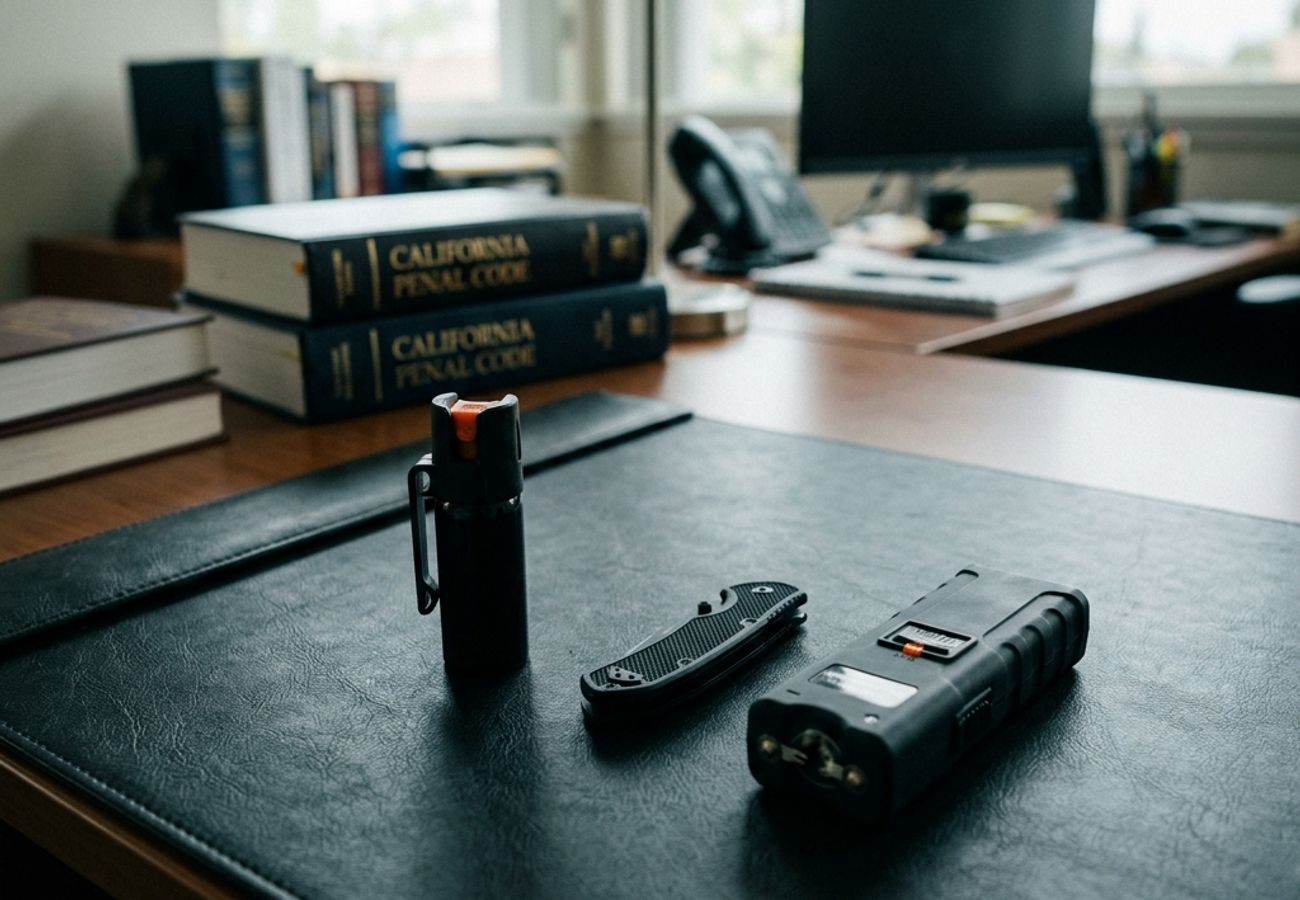
Image generated by AI
10 Things To Know Before Carrying A Self-Defense Weapon
California has some of the strictest gun laws in the country, and most people carrying something for self-defense have no idea where the legal lines actually sit. Pepper spray? Legal, but with restrictions on size. A pocket knife? Depends on the type and how you carry it. A stun gun? Legal in most situations since 2019, but banned in certain locations. Brass knuckles? Felony. The rules aren’t intuitive, and the difference between a legal self-defense tool and a criminal charge often comes down to details nobody bothered to look up before they dropped something in their bag.
Understanding legal self-defense weapons in California isn’t just smart. It’s the difference between protecting yourself and accidentally handing a prosecutor a weapons charge. The California Penal Code covers everything from what you can carry to where you can carry it to how much force you’re allowed to use. Here are 10 things worth knowing before you clip, holster, or pocket anything.
1. Pepper Spray is Legal
Pepper spray is legal in California, but the canister can’t exceed 2.5 ounces. That’s about the size of the small personal-safety sprays you see at drugstores. Anything bigger and you’ve crossed a line. You also can’t carry it if you’ve been convicted of a felony or certain assault crimes.
2. Civilians Can Keep Stun Guns and Tasers
Stun guns and tasers became legal for civilians in California after a 2019 court ruling struck down the previous ban. But you still can’t carry one if you’re a convicted felon, addicted to narcotics, or a minor. And certain locations like schools, government buildings, and airports remain off-limits.
3. Most Folding Knives are Legal
Folding knives are generally legal to carry openly or concealed. Fixed-blade knives are legal to carry openly but can’t be concealed. That distinction trips people up constantly. A hunting knife on your belt? Fine. That same knife hidden under your jacket? That’s a concealed dirk or dagger charge under Penal Code 21310.
4. Switchblades Below 2 Inches are Legal
Switchblades with a blade over two inches are illegal in California. Period. Doesn’t matter if it’s for self-defense, work, or your knife collection. Under two inches? Legal. Over two? You’re looking at a misdemeanor.
5. Brass Knuckles are Illegal
Brass knuckles are a felony in California. Possessing them, manufacturing them, selling them, importing them. Doesn’t matter if they never leave your glove compartment. Having them at all is the crime. Some people buy them online, not realizing California banned them outright.
6. Civilians Can’t Have Batons
Batons and billy clubs are illegal for civilians to carry. Law enforcement gets an exemption. You don’t. This includes telescoping batons, which many people assume are fine because they’re sold openly online. Being sold online doesn’t mean being legal in California.
7. You can Only Keep Reasonable Defense Tools
California law lets you use reasonable force to defend yourself. The keyword is “reasonable.” You can meet force with equal and opposite force. Someone shoves you, and you shove back? Probably fine. Someone shoves you, and you pull a weapon? Now you’re in a grey area that depends heavily on what a prosecutor and a jury decide “reasonable” means in that moment.
8. No Stand-Your-Ground Law
California does not have a stand-your-ground law, unlike states like Florida or Texas. But you’re also not required to retreat before using force in self-defense if you’re somewhere you have a right to be. It’s a middle ground that confuses people who’ve read about other states’ laws and assume California works the same way.
9. Don’t Carry Weapons in Restricted Areas
Carrying any weapon into a school, courthouse, airport, or government building is illegal, regardless of whether the weapon is otherwise legal to carry in California. Pepper spray included. The location restrictions apply on top of the general rules.
11. Some Weapons Need Special Permits
Concealed carry permits exist in California, but the process varies by county. Some counties issue them relatively freely. Others make it nearly impossible. If you’re carrying a concealed firearm without a permit, that’s a serious criminal charge regardless of your reason.
Knowing The Law Is Part Of Carrying Responsibly
Carrying something for self-defense is a personal decision. But in California, that decision comes with legal boundaries that shift based on the weapon, the location, your age, your criminal history, and how you use it. The people who get into trouble aren’t always the ones who intended harm. They’re often the ones who didn’t know the rules before they needed to.
Related Travel Guides
How a Criminal Defense Lawyer Builds a Strong Case for You
What You Should Know When Facing an Assault Charge
The Best Safety Devices for Solo Travelers, According to Reddit
Disclaimer
This article is for informational and educational purposes only. It does not constitute legal, financial, or professional advice. While we strive to provide accurate and up-to-date information, travel policies, regulations, and conditions change rapidly. Always verify information with official sources before making travel decisions. Nomad Lawyer makes no representations about the accuracy, reliability, completeness, or suitability of the information provided. Readers should consult qualified professionals for advice specific to their circumstances. The views expressed in this article are those of the author and do not necessarily reflect the views of Nomad Lawyer.
Preeti Gunjan
Contributor & Community Manager
A passionate traveller and community builder. Preeti helps grow the Nomad Lawyer community, fostering engagement and bringing the reader experience to life.
Learn more about our team →