UK Winter Tourism Targets After-Dark Economy as Coastal Trips Slump 18% Amid £312 Off-Peak Spend Squeeze

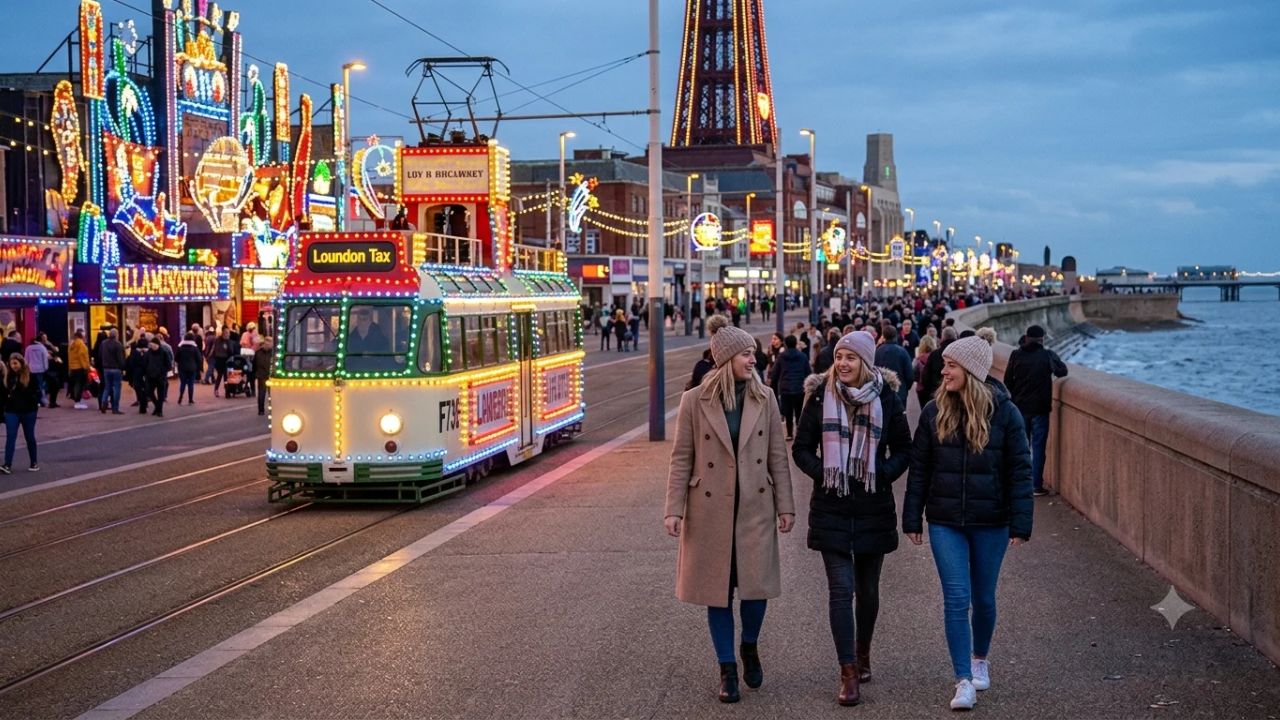
Seafront illuminations and seasonal evening attractions along the British coastline
[BLACKPOOL, Oct 21, 2026] — An 18% collapse in coastal domestic overnight trips—dropping from 11.1 million to 9.1 million across England in 2025—has accelerated an aggressive nationwide pivot toward the after-dark visitor economy as seaside resorts and rural destinations scramble to salvage off-peak occupancy. Official national tourism accounts published by VisitEngland confirm that while total domestic tourism expenditure edged up 3% to £78 billion across 87 million overall overnight journeys (down 3% from 2024), the final quarter exposed widening commercial fractures. October–December 2025 domestic overnight journeys climbed 5% to 23 million, yet corresponding expenditure dropped 3% to £7 billion, pulling average spend per overnight trip down 8% to £312, with dedicated holiday trips sliding to £370.
[!NOTE] Quick Overview: UK Winter Tourism & After-Dark Strategy
- Coastal Downturn: Domestic coastal overnight trips fell 18% from 11.1 million to 9.1 million in 2025, underscoring acute off-season exposure.
- The Q4 Expenditure Paradox: While fourth-quarter trips grew 5% to 23 million, overall Q4 expenditure dropped 3% to £7 billion, driving average spend down 8% to £312 per trip (£370 for holidays).
- Consumer Headwinds: VisitBritain's September 2026 tracker reports 78% travel intent, but trip volume is constrained by unpredictable weather (35%), living costs (29%), and recreation inflation (28%).
- Strategic Models: Blackpool’s four-month light festival (4 Sept 2026–3 Jan 2027), Cornwall’s Eden Project Halloweden (24 Oct–1 Nov 2026), Northumberland’s 572-square-mile Gold Tier dark sky stays, and Yorkshire’s dual urban-rural festivals.
- Operational Challenge: Converting single-evening spectators into overnight lodging guests requires coordinated transit, open winter amenities, and bundled experiential pricing.
This economic divergence demonstrates that while British travelers continue taking autumnal and winter weekend excursions, they are spending noticeably less on lodging, dining, and retail. To counter this margin squeeze, regional tourism boards and municipal authorities from Lancashire to Cornwall are betting on extended illumination trails, heritage festivals, and astronomical dark-sky parks to convert fleeting day-trippers into paying overnight hotel guests.
The Off-Peak Spending Paradox: Domestic Trip Volumes vs. Plummeting Margins
The core structural challenge facing the British winter visitor economy is not a deficit of footfall, but an inability to generate high-value overnight stays. The final quarter of 2025 revealed that a 5% volume expansion in domestic trips can comfortably coexist with an 8% contraction in per-trip expenditure. Holidaymakers are actively curtailing multi-course restaurant dining, downgrading room categories, or bypassing overnight stays entirely in favor of same-day round trips.
Official national accounts demonstrate that while top-line domestic tourism expenditure reached £78 billion across England in 2025, this 3% cash uplift was driven primarily by statutory inflation rather than genuine commercial volume growth. The total number of domestic overnight journeys across England fell 3% to 87 million. Coastal destinations bore the brunt of this contraction, suffering an 18% drop in overnight visits, tumbling from 11.1 million to 9.1 million trips in a single year.
| Domestic Tourism Performance Metric | Reported National Volume / Spend | Percentage Change (YoY) | Operational Significance for Regional Hospitality |
|---|---|---|---|
| England Annual Overnight Trips (2025) | 87 million trips | -3% YoY | Overall domestic travel volumes remain constrained across key regions |
| England Annual Domestic Tourism Spend | £78 billion | +3% YoY | Top-line expenditure elevated primarily by statutory inflation rather than demand |
| Coastal Destination Overnight Trips | 9.1 million trips (down from 11.1M) | -18% YoY | Severe contraction in traditional seaside lodging demand outside summer peaks |
| Fourth-Quarter (Q4) Overnight Trips | 23 million trips | +5% YoY | Autumn half-term and festive periods sustain robust traveler intent |
| Q4 Total Overnight Expenditure | £7 billion | -3% YoY | Aggregate seasonal expenditure shrinks despite higher physical travel volume |
| Average Q4 Spend Per Overnight Trip | £312 | -8% YoY | Indicates severe consumer budgeting on lodging, entertainment, and dining |
| Average Q4 Holiday Trip Spend | £370 | -1% YoY | Dedicated holidaymakers shave margins across discretionary activities |
| UK Domestic Travel Intention (Sept 2026) | 78% of UK adults | +3 percentage points | Demonstrates resilient consumer appetite hindered by weather (35%) and inflation (29%) |
The final-quarter figures offer an instructive case study in traveler behavior. October through December represents the prime window for school half-term breaks, Halloween celebrations, Christmas markets, and New Year festivities. During this three-month span, English destinations recorded 23 million overnight journeys, an increase of 5% compared to the same period in 2024. Yet total spending across these journeys fell 3% to £7 billion.
When broken down to an individual journey level, average expenditure slid from £339 to £312 per trip—an 8% drop. Even among dedicated holiday travelers, where discretionary spending is traditionally most resilient, average outlay dropped 1% to £370. Travelers are traveling, but they are scrutinizing every line item on their holiday bill.
These figures do not prove that after-dark attractions can single-handedly reverse macroeconomic pressures. However, they establish a clear commercial priority for regional destination managers. Attractions can no longer rely on vanity attendance metrics; they must prove whether seasonal spectacles generate genuinely additional overnight bookings, extend length of stay, or simply shift pre-existing trips onto different dates.
Consumer Sentiment Realities: Weather, Inflation, and Booking Hesitation
Consumer sentiment research published in the September 2026 Domestic Sentiment Tracker by VisitBritain illuminates the psychological and financial forces shaping holiday planning. The survey revealed that 78% of UK adults intended to take an overnight domestic journey over the subsequent 12 months. This marked a three percentage point gain over August 2026 and outperformed sentiment recorded in September 2025.
However, translating travel intention into confirmed hotel reservations remains exceptionally difficult. When asked about specific obstacles preventing them from booking an overnight UK break, consumers highlighted three dominant factors:
| Reported Barrier to an Overnight UK Trip | Share of Survey Respondents (Sept 2026) | Direct Impact on Winter Travel Decision-Making |
|---|---|---|
| Unpredictable UK Weather | 35% | Causes late bookings, short lead times, and cancellations during rain or cold snaps |
| Rising Cost of Living | 29% | Squeezes household leisure budgets and forces prioritization of essential expenses |
| Rising Holiday and Leisure Costs | 28% | Heightens price sensitivity toward accommodation rates, dining, and attraction tickets |
These findings uncover a fundamental tension for winter tourism operators. The expansion of nighttime hours during late autumn and winter creates the physical canvas necessary to stage elaborate light festivals, projection mapping displays, and stargazing sessions. Yet adverse weather conditions—such as heavy rain, dense fog, and sub-zero temperatures—threaten the consumer experience. When 35% of prospective travelers cite British weather as their chief deterrent, an outdoor evening spectacle that lacks weather-resilient infrastructure risks high cancellation rates and soft last-minute sales.
Simultaneously, the combination of general living cost pressures (29%) and perceived leisure price inflation (28%) means consumers are actively resisting unbundled pricing. A family evaluating a weekend trip to an illuminated trail must weigh admission tickets against fuel or rail fares, parking, evening meals, and accommodation. If a hotel room costs £150 per night and event admission costs another £60 for a family of four, the total cost quickly approaches £300 before food and travel are calculated. Because average fourth-quarter trip spending stands at £312, such pricing leaves almost no room for local restaurant or retail spend.
From an analytical standpoint, tourism analysts must also account for methodological realities within official data sets. VisitBritain's regional and subregional datasets covering overnight journeys, visitor bed-nights, and expenditure are classified as "statistics in development." Due to substantial methodological refinements introduced in 2022, recent results cannot be compared directly to pre-2020 historical benchmarks. Regional estimates for smaller municipal districts frequently rely on multi-year rolling averages, requiring hospitality operators to cross-reference national surveys with localized occupancy registers and payment processing data.
Four Regional Strategies: Comparing Light Displays, Stargazing, and Seasonal Networks
To capture consumer spend during the coldest and darkest months of the year, regional tourism agencies have deployed four distinct operational models:
| Destination | Confirmed Seasonal Example | Principal Strength | Main Limitation to Investigate |
|---|---|---|---|
| Blackpool | Illuminations: 4 September 2026–3 January 2027 | Long operating window (4 months) and highly recognizable seafront attraction | High proportion of evening drive-through day-trippers failing to book overnight lodging |
| Cornwall | Halloweden: 24 October–1 November 2026 | High-profile autumn half-term event within an established coastal holiday region | Short nine-day event window and widespread seasonal closures of hospitality businesses |
| Northumberland | Dark-sky tourism and planned stargazing hotel breaks | Specialist, high-yield experiences based on natural darkness and Gold Tier status | Acute weather sensitivity (cloud cover) and limited late-night rural public transport |
| Yorkshire | Winter Wonderland: 13 November 2026–3 January 2027 | Concentrated urban festive core combined with rural Dark Skies Fringe festival | Significant physical travel distances separating urban city stays from remote moorland trails |
Blackpool: The High-Volume Infrastructure Benchmark
Blackpool offers the clearest example of a destination utilizing darkness as an extended visitor proposition. Operating from 4 September 2026 to 3 January 2027, the Blackpool Illuminations transform a six-mile coastal promenade with more than 500 individual light designs. Promoted by VisitEngland, the spectacle is accessible on foot along the wide promenade, by personal vehicle via public highway lanes, or aboard dedicated illuminated tramcars operated by Blackpool Transport.
The chief asset of Blackpool’s model is its four-month operating calendar. Unlike weekend festivals, this extensive duration gives travelers broad flexibility to plan early-autumn weekend breaks, half-term getaways, pre-Christmas shopping trips, or New Year escapes without depending on a single switch-on date.
Yet Blackpool’s greatest commercial vulnerability is conversion. Thousands of motorists drive the six-mile display in an evening, purchase fish and chips or hot drinks, and return home along the M55 motorway without reserving a hotel room. This creates substantial traffic congestion and municipal maintenance costs while generating negligible room yield for local accommodation providers.
To turn spectators into paying overnight guests, Blackpool hoteliers must offer compelling value propositions that combine dinner, live cabaret entertainment, and breakfast. In addition, transport logistics dictate evening conversion: while illuminated trams run along the promenade, regional rail links departing Blackpool North and Blackpool South toward Preston, Manchester, and Liverpool often taper off in the late evening, forcing visitors who rely on trains to depart before the displays reach peak visual impact.
Cornwall: Concentrated Event Windows in a Dispersed Geography
Cornwall faces an entirely different set of operational realities. Unlike Blackpool's concentrated urban promenade, Cornwall's attractions, heritage sites, and accommodations are distributed across hundreds of square miles of rugged coastline and rural countryside. The county's winter strategy relies on persuading travelers that a journey to the far southwest remains worthwhile even when Atlantic beaches, surfing schools, and summer beach cafes are closed.
The Eden Project provides the anchor for Cornwall’s autumn half-term campaign. VisitEngland's seasonal calendar highlights Halloweden, staged from 24 October to 1 November 2026. By utilizing its biomes for evening light trails, theatrical storytelling, and pumpkin carving displays, the Eden Project creates an immediate draw for family holidaymakers during the school holiday.
However, a nine-day festival creates an intense, temporary demand spike rather than a sustainable winter tourism model. Once the half-term concludes in early November, footfall recedes sharply. For Cornwall, the central economic issue is whether event-driven visits can stimulate broader regional itineraries. A family traveling to the Eden Project may book one night in St Austell, but if nearby restaurants, coastal pubs, and heritage attractions are shuttered for the season, they will not extend their stay.
Transport across Cornwall also presents major obstacles. Rail connections along the Cornish Main Line serve major hubs like Truro, St Austell, and Penzance, but reaching peripheral fishing villages requires private vehicles or sparse rural bus services. A discounted winter room rate offers limited consumer appeal if the surrounding visitor economy has largely entered hibernation.
Northumberland: Commercializing Natural Darkness
Northumberland has established the most distinctive alternative to artificial illumination displays. Rather than installing artificial light trails, the county commercializes the pristine quality of its unpolluted night skies. According to Visit Northumberland, the region protects 572 square miles of designated Gold Tier International Dark Sky status across Northumberland National Park and Kielder Water & Forest Park.
This natural resource underpins a growing astronomy and astro-tourism ecosystem. Specialist visitor programs combine wilderness landscapes with guided telescope sessions, astrophotography workshops, and observatory visits. A notable commercial development for the 2026–2027 season is the partnership between luxury country hotel The Tempus and Kielder Observatory, offering structured stargazing overnight packages between September 2026 and March 2027.
The astro-tourism model appeals to high-spending enthusiasts seeking experiential travel rather than commercialized festive funfairs. Longer winter nights provide extended observation windows, while the educational and scientific character of the visits supports strong pricing power.
Nevertheless, Northumberland’s model contends with significant operational dependencies, including unpredictable cloud cover that can disrupt scheduled telescope observations, rural transport deficits requiring private cars or private shuttles, and strict venue capacity caps that limit overall volume compared to open coastal promenades.
Yorkshire: Dual-Track Urban Festive Markets and Moorland Night Trails
Yorkshire leverages its diverse geography by operating a dual-tier winter strategy that bridges urban festive tourism and rural nocturnal recreation. In North Yorkshire, the City of York provides a concentrated urban core. The Yorkshire Winter Wonderland, scheduled at the York Designer Outlet from 13 November 2026 to 3 January 2027, incorporates an outdoor ice rink, an illuminated vintage funfair, and alpine-themed food chalets. Supported by direct rail links along the East Coast Main Line, York attracts dense volumes of festive day-trippers and weekend city-break visitors.
Simultaneously, the North York Moors National Park stages its Dark Skies Fringe Festival from 23 October to 1 November 2026. The festival showcases creative nocturnal experiences that go far beyond passive stargazing. Scheduled events include ultraviolet fungi woodland walks, dark-sky-themed silent discos, guided night navigation treks, and nocturnal wildlife walks.
The operational distinction between these two offerings is significant. York delivers a high-density, rail-accessible festive experience with abundant city-center hotels, restaurants, and retail outlets within walking distance. In contrast, the North York Moors require private transport, specialized outdoor gear, and careful coordination between remote villages like Danby, Helmsley, and Goathland. Yorkshire’s opportunity lies in linking these components into multi-day breaks, allowing travelers to combine city dining with moorland stargazing.
Economic Conversion Mechanics: Turning Evening Footfall into Hotel Bed-Nights
The data establishes an unmistakable reality for the British tourism industry: crowd attendance is no longer a reliable indicator of economic prosperity. An illuminated seafront or a festive market can attract tens of thousands of visitors without delivering a meaningful uplift in local hotel occupancy or independent business revenue.
A drive-through visitor arriving at Blackpool at 6:00 PM, driving the promenade, purchasing fish and chips, and departing at 8:30 PM generates approximately £15 to £25 in gross expenditure. After deducting product costs, the net economic retention for the local community is minimal, while the municipality incurs traffic management and cleanup costs. Conversely, an overnight guest booking a hotel package, dining at an independent restaurant, attending an illuminated evening trail, and exploring local daytime heritage attractions the following morning generates between £250 and £450 across the local supply chain.
With average fourth-quarter expenditure dropping 8% to £312 per journey, hotels cannot expect guests to absorb premium room rates without added value. Independent guest houses and seaside boutique hotels that offer only room-only accommodation are experiencing severe margin compression. Conversely, properties that curate complete itineraries—bundling admission tickets, evening transfers, table reservations, and hearty breakfasts—are sustaining profitable room rates.
Transit connectivity remains the primary operational bottleneck. While Blackpool’s tram network moves passengers smoothly along the coast, regional rail services across northern and southwestern England often wind down early in the evening. When rail passengers cannot find dependable return train services past 9:30 PM, they are forced to either bring personal vehicles—which suppresses evening alcohol and restaurant spending—or abandon the trip altogether. Aligning late-night public transport schedules with major seasonal attractions is essential for unlocking off-peak visitor revenue.
Practical Travel Advisory: Essential Planning and Due Diligence Checklist
Travelers planning an off-peak winter break across Britain should assess the entire journey rather than booking an attraction in isolation. While an evening light trail or stargazing session provides an attractive focal point, transport availability, opening hours, and accommodation conditions dictate whether a trip succeeds:
| Trip Planning Dimension | Critical Due Diligence Checklist for Travelers | Practical Advisory Notes |
|---|---|---|
| Confirmed Event Operating Dates | Check exact dates, daily start times, last entry slots, and off-peak operating days | Many winter light trails operate only Thursday through Sunday outside school holidays |
| Ticketing & Reservation Terms | Verify advance booking mandates, timed entry requirements, and cancellation policies | Popular time slots sell out weeks in advance; check if tickets are refundable if weather forces closure |
| Accommodation Availability | Confirm seasonal opening dates, heating standards, and minimum-stay rules | Coastal hotels often enforce two-night weekend minimums; verify whether hotel dining rooms operate mid-week |
| Return Public Transport | Check timetable of the last scheduled train, bus, or tram departure | Regional rail branch lines often terminate before 10:00 PM; verify evening replacement bus schedules |
| Weather Contingency Plans | Review inclement weather policies and nearby indoor attractions | Look for venues offering covered viewing or flexible rescheduling in the event of persistent rain or gales |
| Integrated Daytime Itineraries | Identify open cafes, museums, and shops for daytime hours | Seasonal seaside businesses frequently close from November to February; verify daytime operating hours |
For budget-minded travelers, comparing total package costs is far more informative than looking at entry fees alone:
- Free Displays (e.g., Blackpool Promenade): While access to the promenade is free, parking fees (£10–£18 per evening), fuel costs, and peak-weekend hotel markups can quickly escalate the total trip budget.
- Paid Light Festivals (e.g., Eden Project Halloweden): Admission fees are higher, but ticket prices often include daytime access to biomes and educational exhibits, delivering superior daylight value.
- Dark-Sky Packages (e.g., Northumberland Stargazing Stays): These carry a premium upfront cost, but bundled packages including accommodation, dinner, and expert astronomer guides eliminate hidden transport and dining expenses.
Structural Outlook: Can Night-Time Attractions Reshape Britain's Off-Peak Tourism Economy?
The strategic imperative for Britain’s domestic tourism sector is clear: after-dark attractions must evolve from standalone novelties into integrated components of year-round regional economic strategies. Light festivals and dark-sky parks cannot compensate for structural cost-of-living pressures, but they can alter seasonal demand curves when supported by collaborative destination marketing.
The four destinations examined illustrate divergent approaches:
- Blackpool proves that an established municipal attraction can sustain four months of consistent footfall, but highlights the ongoing struggle to convert motorists into overnight hotel guests.
- Cornwall demonstrates how a high-profile half-term event can draw families to the southwest, but underlines the difficulty of maintaining momentum across a dispersed region after school holidays end.
- Northumberland establishes that pristine natural assets like unpolluted night skies can attract high-spending experiential travelers, provided operators manage weather risks and rural accessibility.
- Yorkshire shows the commercial advantage of connecting rail-accessible city festive attractions with surrounding rural landscapes and nocturnal national park trails.
For destination management organizations, the path forward requires rigorous measurement. Monitoring ticket sales and promenade footfall is no longer sufficient; authorities must track hotel occupancy rates, average length of stay, and per-visitor spending in local shops and restaurants.
The core question facing Britain’s regional tourism industry is not simply whether towns can illuminate winter evenings. It is whether those displays can provide travelers with a compelling commercial reason to book a room, dine locally, and extend their stay. Destinations that successfully align evening spectacle with high-quality hospitality, dependable transit, and fair pricing will capture the greatest share of Britain's £78 billion domestic visitor economy.
Frequently Asked Questions (FAQ)
Why are British coastal destinations investing heavily in after-dark winter attractions?
Facing an 18% annual collapse in coastal overnight journeys—falling from 11.1 million to 9.1 million in 2025—destinations are utilizing evening light displays, dark-sky parks, and festive events to attract visitors outside summer months, fill vacant hotel rooms, and support local hospitality jobs.
What are the scheduled dates and operational details for the 2026–2027 Blackpool Illuminations?
The Blackpool Illuminations run from 4 September 2026 through 3 January 2027. The display covers six miles of promenade with more than 500 installations, accessible free of charge on foot or by car, with dedicated heritage illuminated tram tours operating throughout the evening.
Why did domestic holiday spending drop during late 2025 despite higher trip numbers?
While fourth-quarter domestic journeys rose 5% to 23 million in 2025, total spending fell 3% to £7 billion, driving average spend down 8% to £312 per trip. Rising living costs and holiday inflation led travelers to shorten stays, downgrade lodging, and reduce discretionary dining out.
Where can tourists find dedicated dark-sky stargazing experiences in northern England?
Northumberland offers 572 square miles of protected Gold Tier dark skies across Kielder Forest and Northumberland National Park, with hotel packages at venues like The Tempus. Additionally, the North York Moors National Park hosts the Dark Skies Fringe Festival, featuring night walks, UV fungi trails, and astronomy workshops.
What practical factors should travelers check before booking a winter break in the UK?
Travelers should verify attraction operating days (many operate Thursday to Sunday only), ticket cancellation policies for bad weather, winter opening hours of nearby restaurants, minimum-stay rules at hotels, and the scheduled departure times of late-night return trains or buses.
Related Travel Guides
Dumfries and Galloway Dark Sky Tourism: National Geographic Global Destination Guide
Scotland Highland Main Line Rail Upgrades: Dalwhinnie Closures and Passenger Travel Guide
10 Best Winter Illuminations and Coastal Getaways Across the UK, According To Reddit
This article is for informational purposes. Flight routes, passenger regulations, visa rules, and transit advisories are subject to change by airlines and aviation authorities. Readers are advised to verify schedules and travel documentation with relevant carriers and border agencies before departure.
Related Stories
Spain, France, Austria, and Thailand Top Global Winter Tourist Rankings as Seasonal Migration Surges