Pacific Tourism Breaks Free from Gated Enclaves as PSTPF 2030 and Indigenous Corridors Reshape Island Wealth Dispersal

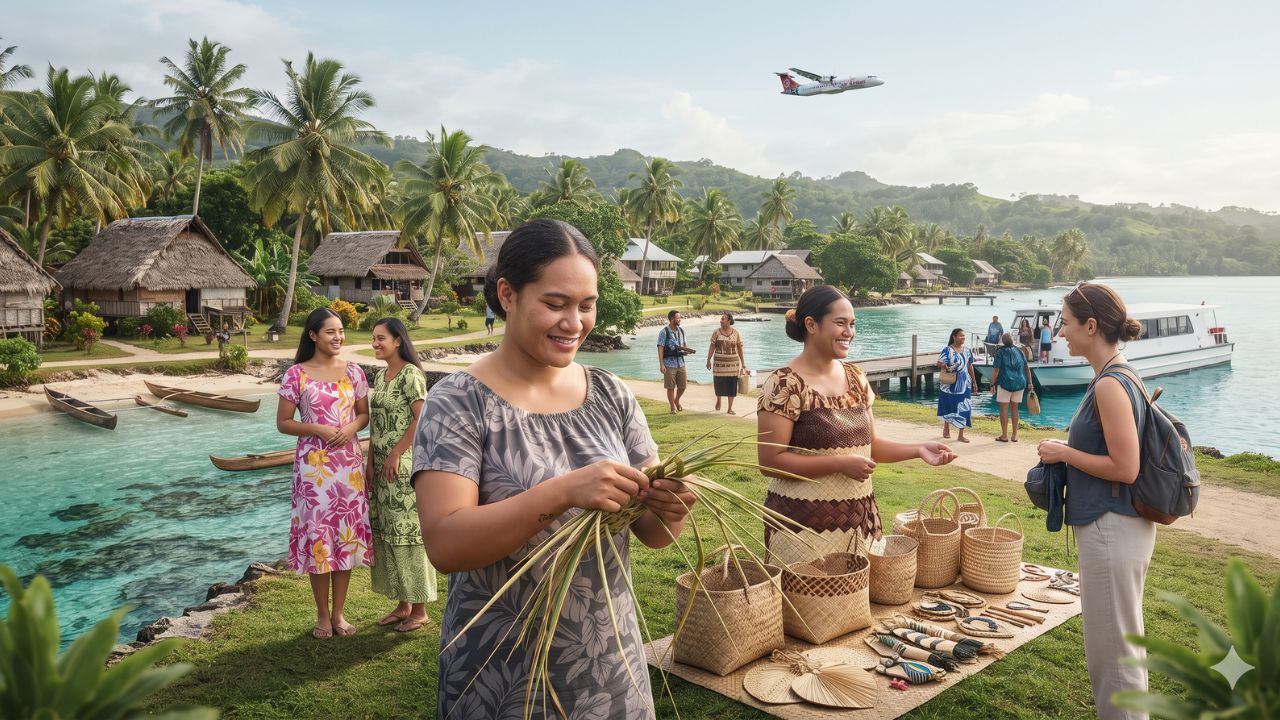
Customary maritime navigation routes connecting remote island communities across Oceania
With foreign corporate leakage historically siphoning off up to 80% of visitor expenditure from Pacific Small Island Developing States (SIDS), the Pacific Sustainable Tourism Policy Framework (PSTPF 2030) is driving an unprecedented structural overhaul across Oceania. Mandated by the intergovernmental Pacific Tourism Organisation (SPTO) and aligned with the Global Sustainable Tourism Council (GSTC) criteria, the regional blueprint establishes four mandatory operational pillars: economic resilience, community empowerment, cultural amplification, and accelerated climate action. By systematically dismantling the legacy enclave resort model that confined international travelers to isolated coastal compounds in Nadi, Tahiti, and eastern Australia, indigenous custodians and regional aviation networks are rerouting traveler capital into community-governed heritage circuits across Melanesia, Polynesia, and Australasia.
For over half a century, the political economy of Pacific tourism resembled an extractive funnel. SIDS governments accumulated substantial sovereign debt to finance deep-water cruise berths, runway expansions, and municipal utility grids, while foreign hotel conglomerates, offshore cruise operators, and overseas tour wholesalers captured the overwhelming majority of traveler spending. Gateway perimeters like Nadi and Denarau in Fiji suffered heavy ecological burdens—exhausting municipal water tables and degrading barrier reefs—while outer islands experienced chronic depopulation and capital deficits. The PSTPF 2030 fundamentally reverses this dynamic, converting regional transport grids into operational instruments for geographical wealth redistribution.
Indigenous Cultural Sovereignty and Intellectual Property Defenses
The foundation of Oceania's decentralized tourism model rests upon transforming traditional art forms from passive decorative motifs into functional, cognitive wayfinding infrastructure. Across the Pacific, visual arts have historically documented genealogical lineages, customary alliances, and maritime sailing paths:
- Beaten Barkcloth Traditions: Known as masi in Fiji, ngatu in Tonga, and siapo in Samoa, ancestral geometric motifs are embedded into regional signage to chart customary trade corridors rather than colonial borders.
- Architectural Carvings: Traditional kōwhaiwhai rafters and whakairo carvings across Aotearoa New Zealand guide travelers between geothermal craft hubs in Rotorua and marine sanctuaries in Kaikōura.
- Ancestral Songline Cartographies: Across northern and central Australia, indigenous songlines connect Darwin, Katherine, and Alice Springs directly to remote cultural epicenters like Jabiru in Kakadu and Yulara adjacent to Uluṟu-Kata Tjuṯa.
Protecting this cultural infrastructure requires strict statutory enforcement of Indigenous Cultural and Intellectual Property (ICIP). Following inquiries by the Australian Productivity Commission revealing that mass-produced, imported counterfeits dominated the First Nations souvenir market, regional governments established legal barriers against cultural appropriation.
In Fiji, the Ministry of Trade administers the statutory "Fijian Made, Fijian Crafted and Fijian Grown" certification program. The "Fijian Crafted" seal is granted exclusively to verified village artisans producing authentic paper-mulberry masi on outer islands like Vatulele, Lakeba, and Moce, legally blocking factory reproductions and ensuring retail premiums flow directly to rural households. Similarly, Aotearoa New Zealand enforces the "Toi Iho" trademark, administered by the Toi Iho Charitable Trust. This certification guarantees authentic Māori provenance for whakairo (carving) and raranga (weaving), ensuring commercial proceeds from ventures like Te Puia in Rotorua and Whale Watch Kaikōura—operated by the Ngāti Kurī hapū of Ngāi Tahu—are reinvested into tribal social housing, educational grants, and coastal marine stewardship.
Multimodal Transit Logistics: Feeder Aviation and Maritime Corridors
Overcoming the friction of vast oceanic distances requires viable feeder transport economics. Operating short-haul island routes involves high seat-distance costs, limited fleet capacities, and volatile imported jet fuel expenses. To resolve these hurdles, national flag carriers and regional operators have constructed integrated multi-hub passes that eliminate expensive backtracking through capital gateways.
In French Polynesia, Air Tahiti's multi-island airpass disperses arrivals from Papeete across the Society, Tuamotu, and Marquesas archipelagos. In the Cook Islands, Air Rarotonga deploys regional turboprops to connect Rarotonga with Aitutaki and the ancient makatea limestone island of Atiu. Crucially, Air Rarotonga and Air Tahiti revived the historic "Coral Route," operating non-stop commercial services between Rarotonga and Papeete. This trans-Polynesian corridor bypasses Australian and New Zealand transit hubs entirely, allowing international travelers to experience multiple island nations on a single regional ticket.
| Economic & Supply Chain Vector | Legacy Enclave Resort Model | Sovereignty-Led Decentralized Corridor | Local Governance & Wealth Capture Mechanism |
|---|---|---|---|
| Direct Lodging Revenue | 70%–85% captured by foreign hotel parent companies | Over 80% retained by village lodges and family homestays | Turaga-ni-Koro (Village Council) & Ali’i / Faipule (Chiefs) |
| Cultural Craft Production | Mass-imported, machine-made counterfeit curios | 100% authentic, certified indigenous production | Certified artisan guilds (Toi Iho, Fijian Crafted) |
| Guided Excursions & Trekking | Foreign wholesale subcontractors capture margins | Community-owned, certified indigenous guiding associations | Youth and ecological ranger trusts in ancestral territories |
| Marine & Land Concessions | Blanket central state licensing fees bypass villages | Direct customary tabu and lagoon conservation levies | Village Resource Committees & Traditional Clan Trusts |
| Agricultural & Food Sourcing | High-carbon imported frozen food and foreign liquor | Local organic agriculture, island fisheries, and bush harvests | Women’s cooperative farming and artisanal processing |
Maritime networks provide the second critical transit link. In Samoa, the roll-on/roll-off ferry crossing across the Apolima Strait links Mulifanua Wharf on Upolu with Salelologa on Savai’i. This sea-air junction enables independent travelers landing at Faleolo International Airport to transition directly into rural coastal villages, staying in family-owned beach fales under the cultural framework of Fa’a Samoa.
In Vanuatu, the Department of Tourism and Provincial Tourism Offices resolved transit bottlenecks by coordinating feeder flights with licensed water taxis. This structured approach connects the Tafea Volcano Corridor on Tanna—anchored by the community-run Mt. Yasur Volcano Cultural Trek—with the Sanma Marine Corridor on Espiritu Santo, where customary landowners manage access to freshwater blue holes and Champagne Beach.
Customary Marine Conservation and Environmental Carrying Capacities
Decentralizing visitor footfall into remote archipelagos introduces serious environmental risks if infrastructure is overwhelmed. Outer islands frequently lack industrial wastewater plants, power grids, and advanced waste management facilities.
To prevent ecological degradation, island communities enforce ancestral conservation decrees. In Fiji, traditional tabu closures have been integrated into the Fiji Locally Managed Marine Area (FLMMA) network. Grounded in customary sea tenure (iQoliqoli), a tabu is an ancestral order declared by traditional chiefs (Ratu) prohibiting fishing and harvesting within designated lagoon sanctuaries. When eco-tourism circuits enter these waters in Taveuni or the Lau archipelago, they operate within strictly zoned zero-impact marine reserves. Scientific surveys confirm that these community-policed tabu sanctuaries generate rapid recoveries in reef fish biomass and coral health, funding local patrol boats while replenishing food fisheries in adjacent harvesting zones.
In Galoa village, the Bulikula Women’s Community Group partnered with the SPTO and the United Nations Development Programme (UNDP) under the Pacific Tourism Waste Action Initiative. The cooperative collects ocean plastic debris and processes it into upcycled cultural crafts, creating independent cash income for maternal healthcare and education while keeping lagoons pristine. Similarly, in the Cook Islands, the traditional House of Ariki (customary high chiefs) enforces strict municipal bylaws on Aitutaki, capping commercial resort expansion to preserve lagoon water quality, while on Atiu, small-group visitor quotas protect endemic bird sanctuaries and customary tumunu bush-beer gathering traditions.
Expert Analysis: The High-Yield Mechanics of Customary Tourism Networks
For travelers booking this route, the direct consequence is that multi-island regional itineraries require significant flexibility and cash liquidity, as outer-island airstrips and community homestays operate without centralized booking engines or credit terminal connections. Regional feeder flights to outer airstrips like Matei or Atiu enforce stringent luggage restrictions of 15 kilograms per passenger due to short runway thresholds, requiring expedition travelers to pack compact, durable gear.
The pricing pressure this creates means foreign resort conglomerates must adapt their supply chains to incorporate local village-grown produce and authentic crafts, or face growing regulatory exclusion from indigenous-managed conservation zones. Travelers entering customary tribal territories (Vanua) must observe ancestral etiquette: in Fiji, visitors must perform the sevusevu protocol, presenting dried kava roots to the village headman (Turaga-ni-Koro) and paying modest entry tariffs directly to the village treasury.
Under the Pacific Islands Forum’s 2050 Strategy for the Blue Pacific Continent, regional governments are progressing toward a unified Trans-Pacific Tourism Pass with shared digital biosecurity screening. By matching modern multilateral border coordination with customary indigenous authority, Oceania is proving that sustainable tourism does not require sacrificing cultural integrity to foreign capital.
Key Takeaways
- PSTPF 2030 Mandate: The Pacific Tourism Organisation's regional framework coordinates economic resilience, community autonomy, cultural amplification, and climate action across member states.
- Dismantling Enclaves: The policy shifts capital away from gated foreign-owned resorts in Nadi and Tahiti toward decentralized, village-managed island circuits.
- ICIP Legal Defenses: Statutory trademarks—including "Fijian Crafted" and New Zealand's "Toi Iho"—protect authentic artisans from counterfeit souvenir dumping.
- Feeder Route Economics: Regional airpasses and the revived "Coral Route" between Rarotonga and Tahiti bypass continental hubs to connect remote archipelagos directly.
- Customary Marine Stewardship: Ancestral tabu sanctuaries under the FLMMA network enforce ecological carrying capacities, replenishing reef biomass while funding community infrastructure.
FAQ: Pacific Sovereignty Travel 2026
What is the Pacific Sustainable Tourism Policy Framework (PSTPF 2030)?
Mandated by the Pacific Tourism Organisation, it is an intergovernmental policy blueprint designed to disperse tourism spending into rural communities, enforce sustainable destination standards, and protect indigenous cultural assets across Oceania.
What is the "Coral Route" flight connection in Polynesia?
It is a direct commercial aviation corridor operated by Air Rarotonga and Air Tahiti connecting Rarotonga (Cook Islands) with Papeete (French Polynesia), enabling travelers to move between Polynesian nations without transiting Australia or New Zealand.
How do traditional tabu marine zones protect Pacific reefs from overtourism?
Enforced by traditional chiefs under customary sea tenure, tabu zones ban fishing and commercial exploitation, establishing zero-impact eco-tourism reserves where visitor fees fund local conservation patrols.
What cultural protocols must visitors follow when entering rural Fijian villages?
Visitors must participate in the sevusevu ceremony, presenting kava roots to the village headman (Turaga-ni-Koro), dressing modestly with shoulders covered, and paying local community conservation fees directly to the village fund.
[By tethering modern aviation networks to ancient wayfinding heritage, Oceania is proving that true travel luxury lies in genuine cultural sovereignty, not gated isolation.]
Related Travel Guides
- Singapore and Bangkok Clash for Concert Travel Supremacy as Tokyo and Seoul Redefine Asia's Music Tourism Yields
- Thailand Advances Dual Tourist Fee and Departure Tax Review as 24.4M Arrivals Expose 4.1% Slump Against Annual Targets
- 10 Essential Outer-Island Pacific Travel Tips from Reddit Explorers 2026
This article is for informational purposes. Flight routes, passenger regulations, visa rules, and transit advisories are subject to change by airlines and aviation authorities. Readers are advised to verify schedules and travel documentation with relevant carriers and border agencies before departure.
Related Stories

WTTC Tourism Rankings 2026: US, China, and India Lead Global Power Index as New Environmental and Opportunity Benchmarks Unveiled

Italy and Five European Nations Pivot to High-Yield Luxury Tourism, Replacing Mass Crowds With Ultra-High-Net-Worth Loyalty